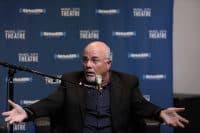
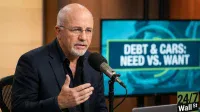
Ramsey Everyday Millionaires: Why Waiting for Markets to “Settle” Usually Means Waiting Forever
The dilemma comes from a caller on Ramsey Everyday Millionaires, but it captures something nearly every investor with a lump sum has felt: the cash is in hand, the headlines are loud, and every day spent deciding feels like another…


The dilemma comes from a caller on Ramsey Everyday Millionaires, but it captures something nearly every investor with a lump sum has felt: the cash is in hand, the headlines are loud, and every day spent deciding feels like another day of being wrong.
The caller had just sold her primary residence and walked away with approximately $300,000 tax-free by using the capital gains exclusion. She put the first $50,000 into stocks, then froze. “There’s obviously some fluctuations on a day-to-day basis based on, you know, what the President of the United States sometimes also tweets,” she said, describing a feeling of “playing hopscotch” with the remaining $250,000. She and her husband carry no debt, he covers expenses, and a home purchase in their high-cost area is years away. A high-yield savings account felt like “money left on the table.”
The Host’s Answer: Stop Judging by 30 Days
The Ramsey host set a clear bar for putting money into equities: a “4-year kind of benchmark” to ride out volatility. Anything shorter belongs in cash. Anything longer can absorb a rough quarter.
Then came the reframe: “If you looked at the last 30 days, yeah, it looks insane, but that’s not always the case. In fact, last year the market was what, over 20%, 20% last year, which is just exactly crazy.”
The data backs the point. SPDR S&P 500 ETF (NYSEARCA:SPY) returns over the past year clocked in at 24.31%, with the index up 4.01% over the past month alone. Ten-year returns sit at 259.46%. The “insanity” of the last 30 days, in context, has been upside.
Is the Market Actually Unsettled?
The VIX, Wall Street’s fear gauge, sits at 17.82, squarely inside the normal 15-20 band. The real stress test happened in March, when the VIX peaked at 31.05 on March 27, 2026. That episode has already normalized. Waiting for the market to “settle” usually means waiting for a feeling that never quite arrives.
The Cost of Waiting
Sitting in cash carries an opportunity cost, but it also pays something. The Fed Funds upper bound is 3.75%, where it has held since December 11, 2025. The 10-year Treasury yields 4.59%. Money parked in a money market earns a real return while a buyer decides. The caller’s instinct that cash is “money left on the table” ignores that guaranteed yield, and ignores that core PCE inflation is running at a 12-month high, eating purchasing power either way.
What To Watch
The host’s framework is simple. If the money is genuinely earmarked for four or five years out, lump-sum or dollar-cost averaging into a diversified index is a defensible plan supported by long-run market history. If a home purchase or other near-term goal is realistically on the table, liquidity wins. Consumer sentiment at 53.3 says households are nervous; the unemployment rate at 4.3% says the economy is steady. Pick the time horizon first. The market noise sorts itself out from there.
Contact [email protected] for any questions or corrections.
Don Lair writes about options income, dividend strategy, and the kind of boring-but-durable investing that actually funds retirement. He's the founder of FITools.com, an independent contributor to 24/7 Wall St., and a former writer for The Motley Fool.