




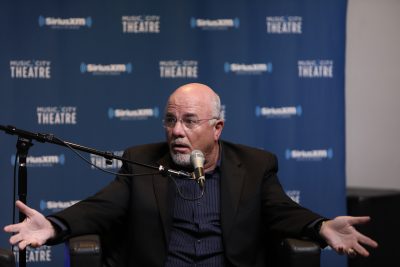
On a recent episode of Ramsey Everyday Millionaires titled “How Do I Invest When the News Keeps Shaking the Market?”, a caller named Sally explained that she had $300,000 in cash and only $50,000 invested in Vanguard S&P 500 ETF (NYSEARCA:VOO). The guidance from the show was direct: stop trying to time the market and put the cash to work. “Right now, Sally, it’s stressful because you’re trying to time the market and only God knows what’s going to happen,” the caller said. He estimated that deploying the lump sum and adding $3,000 monthly could put her “closer to $700,000” in five to seven years, enough for a serious Los Angeles down payment.
The host endorsed the hands-off approach, saying “I look maybe once a year at what’s going on because I would give myself a panic attack every time I looked at the market.” The point about media-driven anxiety landed too: “It was not like flashing all over everywhere of how amazing the last 2 years were” despite record highs.
What Waiting Has Actually Cost
The Vanguard S&P 500 ETF closed at $674.59 on May 19, 2026. Over the past year, it has returned 24.85%. Over the trailing two-year period, it has climbed 42.01%, and over the past decade it has returned 322.83%. Anyone who held $300,000 in cash since May 2024 watched a meaningful chunk of compounding pass them by.
The fund itself remains one of the cheapest broad-market vehicles available, with a gross expense ratio of 0.03% as of March 25, 2026. On $300,000, that fee is essentially rounding error.
The Macro Backdrop Looks Stable
Sally’s hesitation has company. The University of Michigan Consumer Sentiment index sat at 53.3 in March 2026, well into pessimistic territory. The VIX, however, closed at 17.82 on May 18, 2026, squarely in the normal range after spiking to 31.05 on March 27, 2026. The 10-year minus 2-year Treasury spread sits at 0.54%, positive and nowhere near recessionary inversion.
Meanwhile, the Fed Funds upper bound is 3.75%, held steady since December 11, 2025. Money-market yields are real, but the spread between them and recent equity returns remains wide.
Apple, the Fund’s Largest Holding
Roughly seven cents of every dollar in the S&P 500 ETF tracks a single name: Apple (NASDAQ:AAPL | AAPL Price Prediction). The company carries a market capitalization of $4.39 trillion and trades at a P/E of 39, with shares closing at $298.97 on May 19, 2026. Apple shares are up 43.77% over the past year and 1,279.29% over the past decade.
The fundamentals behind that weighting matter. In its most recent quarterly filing, Apple reported Q2 FY26 revenue of $111.18 billion, up 16.6% year over year, with diluted EPS of $2.01 versus a $1.94 consensus. Tim Cook called it “our best March quarter ever”, citing “extraordinary demand for the iPhone 17 lineup.” Services posted an all-time record at $30.98 billion, and the board raised the dividend 4% while authorizing a fresh $100 billion buyback.

What to Watch From Here
The Reddit community on r/investing and r/stocks has been debating Sally’s exact scenario. One thread asking whether anyone is actually outperforming a simple S&P 500 ETF strategy drew 51 comments, and a related post on staying invested rather than optimizing pulled 373 upvotes. Aggregate sentiment toward the fund leaned bullish to very bullish for much of the past month, peaking at 85 on May 14.
None of this guarantees the next 12 months will look like the last 12. The variables worth tracking are straightforward: the Fed’s next move on rates, whether consumer sentiment recovers from its current 27.3 percentile reading, and whether the largest constituent in the index keeps delivering double-digit revenue growth. For Sally and anyone else sitting on a six-figure cash pile, the math of compounding rewards time in the market more than perfect entry points.
Contact [email protected] for any questions or corrections.












 Top Gaining Stocks
 Top Losing Stocks