XRP Price Prediction: Can XRP Reach $1,000?
XRP’s (CRYPTO: XRP) price reaction this year has been below people’s expectations. The token hit $3.65 last year, got officially classified as a digital commodity by the SEC and CFTC on March 17, 2026, yet trades more than 62% below…

This post may contain links from our sponsors and affiliates, and Flywheel Publishing may receive compensation for actions taken through them.

XRP’s (CRYPTO: XRP) price reaction this year has been below people’s expectations. The token hit $3.65 last year, got officially classified as a digital commodity by the SEC and CFTC on March 17, 2026, yet trades more than 62% below its all-time high at around $1.36 as of May 22, 2026.
Although the XRP price has a history of plunging very low and then exploding. So, it begs the question: Can XRP ever reach $1,000? The $1,000 per token question has been circulating in crypto circles for years, largely because of XRP’s growing role in global payments.
The price sounds too big to take seriously, but institutional money is flowing in through spot ETFs that launched in November 2025, and a major U.S. crypto bill just passed a key Senate committee vote on May 14, 2026. So, even the doubters are paying closer attention. So what would the market need to look like for XRP to hit a thousand-dollar price?
Breaking Down the $1,000 Ripple (XRP) Price Target
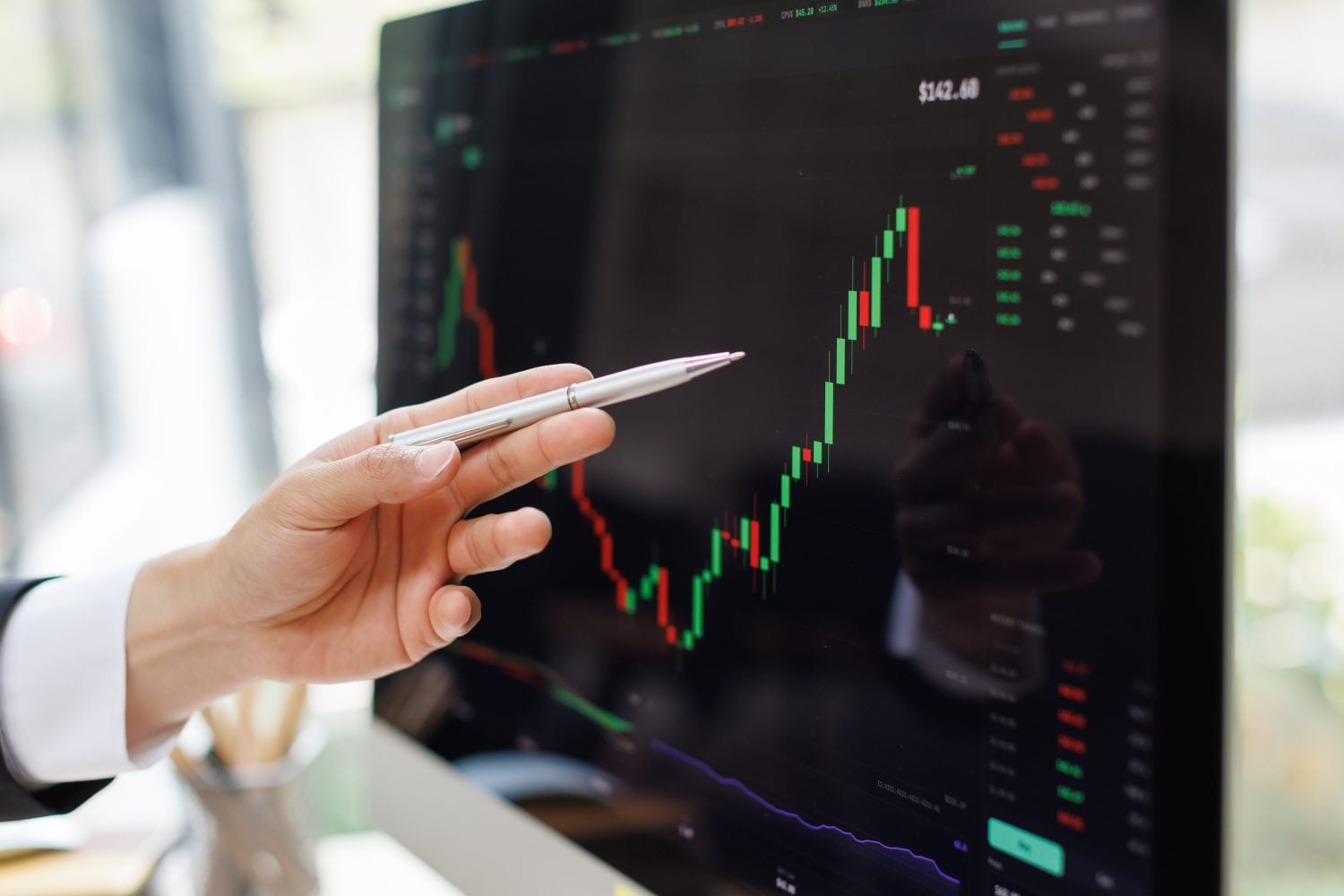
Before any price target makes sense, you have to look at the token supply. There are approximately 61.8 billion XRP tokens in circulation right now. Multiply that by $1,000 and you get a market cap of roughly $61 trillion. That is more than double the entire U.S. economy, and more than 20 times the size of the whole crypto market today.
Asides the $1,000 XRP price projection, even lower price targets seem ridiculous when you calculate the market cap. At $500 per token, XRP’s market cap would reach $31 trillion, which is larger than the entire U.S. economy. At $100, it clears $6 trillion, which alone would make XRP worth more than Apple—the most valuable consumer tech company on earth with a market cap of approximately $4.5 trillion as of May 2026.
Even long term-projections, like the XRP price prediction for 2030, range from under $1 to around $40. That says a lot about XRP’s potential and reflects what’s more realistic.
That said, the $1,000 XRP price target isn’t out of reach because the crypto lacks utility. It’s out of reach because no single asset has ever been worth that much in the history of global finance.
What Could Stop Ripple (XRP) From Reaching $1,000?
Even if everything goes right—if the CLARITY Act clears the full Senate after passing the Banking Committee 15-9 on May 14, 2026, ETF inflows surge from the multiple spot products now trading, and banks adopt XRP at scale—the token could still run into problems that most price predictions skip over.
The first is supply pressure. Ripple releases 1 billion XRP from escrow every month, then relocks between 60% and 80% of those tokens. That leaves roughly 300 to 400 million XRP entering circulation each cycle. The steady drip of fresh supply makes it hard for the price to spike, because new sellers keep showing up as demand rises.
The second problem is that XRP’s speed works against its own price. Ripple’s On-Demand Liquidity service lets institutions use XRP as a bridge currency without holding it. Tokens are bought, used for settlement, and sold within seconds. Even with broader usage, XRP may never build up enough demand to push the price significantly higher.
The third is the supply wall right around $1.44 to $1.46. Glassnode data shows roughly 60% of XRP holders bought in at that price range. That means a large group of sellers are waiting to break even right there, and they keep absorbing buy orders before any real breakout can develop.
What Past XRP Cycles Show

XRP does not move like most cryptocurrencies. It goes quiet for months and gets ignored, then explodes the moment a major regulatory news is announced. The routine has played out so many times across multiple cycles.
The 2017-2018 cycle was the first proof of this concept. From mid-2015 through early 2017, XRP traded around $0.006 for roughly 18 months. Then it surged over 1,200% to its then all-time high. The move was pushed by retail demand and the belief that major banks would adopt XRP overnight.
Next was the 2021 cycle that showed how fast regulation can stop everything. The SEC lawsuit filed in December 2020 caused XRP to fall behind the broader bull market completely. While Bitcoin and Ethereum hit new highs, XRP went nowhere.
Meanwhile, the 2024-2025 cycle was different. XRP rallied 420% in November 2024 alone, moving from $0.50 to $2.63, then surged past $3.40 by January 2025 before hitting a cycle high of $3.65 on July 18, 2025, marking a 630% return in under a year.
The resolved lawsuit, a spot in the U.S. crypto strategic reserve, and the launch of regulated ETFs drove the move. This shows XRP responds to legal and regulatory news more than any other large-cap crypto.
Is Real-World Usage Actually Moving XRP’s Price?
Ripple has been building real-world infrastructure for years, and in 2026 that work is more visible than ever. However, none of these adoptions and developments have significantly impacted the token price.
Ripple works with over 300 financial institutions through RippleNet and received conditional approval for a federal trust bank charter in December 2025. At least 30 SWIFT-connected banks are already part of its network as of early 2026. XRP moves cross-border payments in 3 to 5 seconds, with each transaction costing an average of $0.0002.
Banks using On-Demand Liquidity no longer need to park money in foreign accounts ahead of time, which frees up capital they would otherwise have tied up across different markets. However, the problem is that RippleNet can grow while XRP usage falls, because the token is optional, not required. Banks can use Ripple’s messaging and settlement tools without touching XRP at all.
Of the 300-plus institutions on RippleNet, roughly 40% actively use XRP through ODL. The rest treat Ripple like a regular payments provider. That gap between Ripple adoption and XRP token demand is the most important thing investors need to understand. The day banks stop treating XRP as optional and start treating it as essential is the day the price conversation changes.
What Would XRP Actually Need To Hit $1,000?
For XRP to reach $1,000, the token would have to underpin most of global finance, and no credible roadmap points there. Most analysts forecast XRP at $5 to $10 if the CLARITY Act clears Congress following its May 14 Senate Banking Committee approval. Anything beyond that would need a second push, like Ripple’s Federal Reserve master account application coming through, which would let banks settle in XRP directly.
That master account is the catalyst that matters most. If it comes through, it would embed XRP into the settlement rails banks already use every day, changing the demand equation in a way no analyst price target has accounted for yet. For now, the application remains under review with no public timeline, which is exactly why $1,000 stays a thought experiment rather than a forecast.
Contact [email protected] for any questions or corrections.
Sam Daodu is a crypto analyst who's spent nearly a decade making blockchain understandable—no easy task when most whitepapers read like fever dreams. He writes for 24/7 Wall St., covering Bitcoin, altcoins, and crypto market analysis for investors. Before crypto, he was a tech writer (back when explaining "the cloud" was peak innovation). Since 2018, he's written for CoinTelegraph, Yahoo Finance, The Block, Cryptonews, Zypto, Rain, and more—basically anywhere people want crypto news without the headache. Sam runs MacLabs Marketing, a content agency for crypto brands tired of sounding like AI wrote their website. He also publishes free crypto education on his site for Web3 enthusiasts who think "gas fees" is a typo. When he's not writing or staring at charts, Sam's either: - Watching anime (currently convinced One Piece has better tokenomics than most altcoins) - At the gym sculpting himself into a Greek god - Listening to the music your mum warned you only bad boys listen to Connect: LinkedIn | Email | MacLabs Marketing