Bitcoin (BTC) News: Why BlackRock Sold $1 Billion in Bitcoin
One number set crypto X/Twitter on edge over the weekend. On-chain tracker Arkham posted that BlackRock had sold Bitcoin every single day last week—$1.01 billion worth in total—and ended with the line everyone latched onto: “If BlackRock is selling, who’s…

This post may contain links from our sponsors and affiliates, and Flywheel Publishing may receive compensation for actions taken through them.
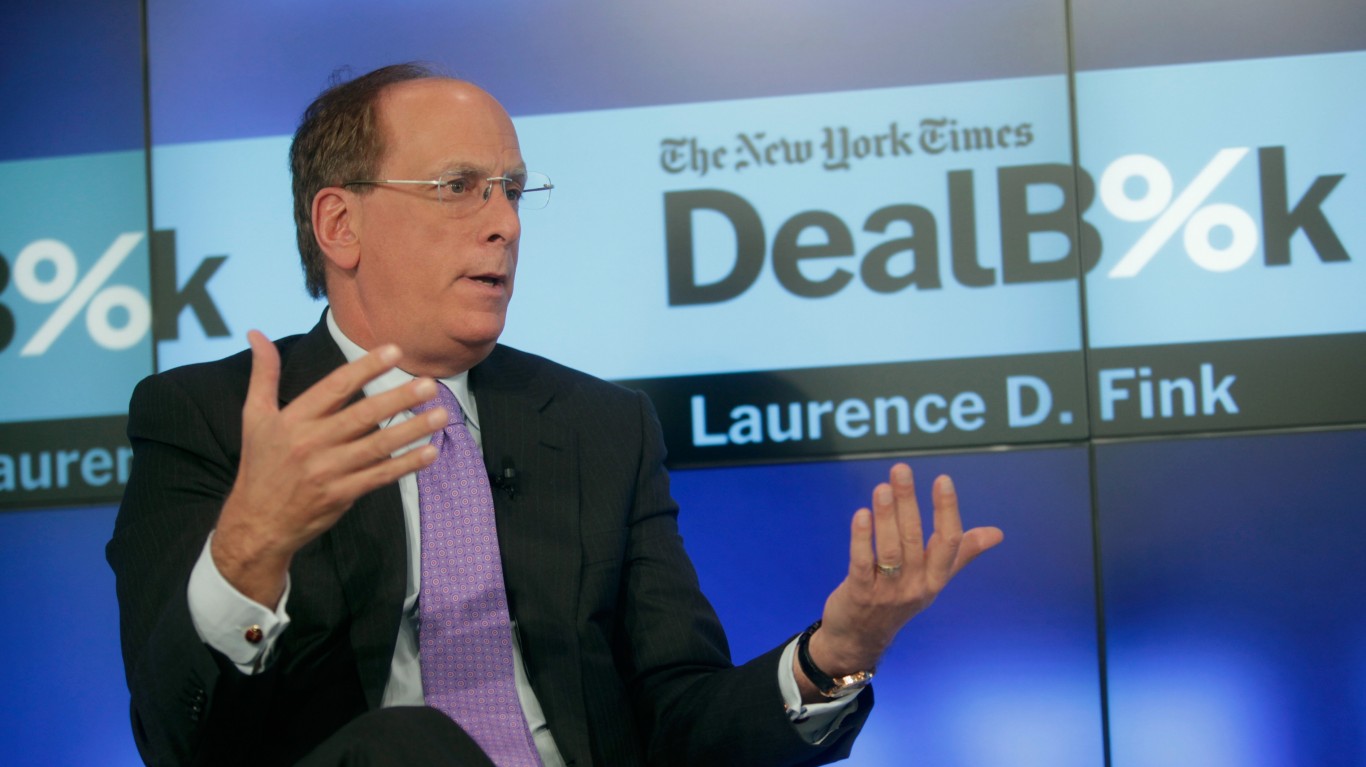
One number set crypto X/Twitter on edge over the weekend. On-chain tracker Arkham posted that BlackRock had sold Bitcoin every single day last week—$1.01 billion worth in total—and ended with the line everyone latched onto: “If BlackRock is selling, who’s buying?”
The easy read is that the world’s largest asset manager is losing faith in Bitcoin. However, the real reason is more ordinary, and it says more about BlackRock’s customers than about BlackRock itself.
BlackRock Didn’t Turn Bearish on Bitcoin

The selling did happen, but the reason behind it is routine. BlackRock runs the iShares Bitcoin Trust, or IBIT, the largest spot Bitcoin ETF in the world. When you buy a share of IBIT, BlackRock holds an equivalent slice of Bitcoin for you. When you sell that share, BlackRock has to hand the Bitcoin back. Multiply that across thousands of investors cashing out in a single week, and the fund has to sell a large amount of Bitcoin to settle the redemptions.
That is exactly what the on-chain data showed. The roughly 15,000 BTC BlackRock moved last week went out in daily deposits to Coinbase Prime, the institutional exchange used to settle these sales. The decision to sell came from IBIT’s shareholders, not from BlackRock.
This is where the headline and the reality split. A firm that had soured on Bitcoin would sell quickly and get out. But BlackRock did the opposite, spreading the selling evenly across five days—the measured rhythm of routine settlement, not a firm racing for the door.
Its own behavior the same week backs that up. While IBIT was settling those redemptions, BlackRock filed a second tokenized fund with the SEC. A company calling the top on Bitcoin doesn’t expand its digital-asset business in the same breath. BlackRock is leaning further into crypto, not backing away from it.
BlackRock Wasn’t the Only One Selling

Across the week of May 18 to 22, every U.S. spot Bitcoin ETF combined bled about $1.26 billion, the heaviest weekly outflow of 2026. It capped a six-day losing streak, with the worst day, May 18, seeing $648 million pulled out. As the biggest fund, BlackRock’s IBIT accounted for the bulk of it.
The redemptions tracked a jittery market. Bitcoin had already been sliding for weeks, and investors were pulling back from risk amid Middle East tensions and stubborn Treasury yields—the usual flight to safety when the outlook clouds over.
However, the bigger shift is who else was selling. Jane Street, one of the most active firms in the ETF market, cut its Bitcoin ETF holdings by about 70% in the first quarter, and Goldman Sachs trimmed its position too. The selling reflected a cooling across the institutional side of the market, not a single firm’s call.
Just weeks earlier, April had been the strongest month of 2026 for spot Bitcoin ETFs, pulling in $1.97 billion as Bitcoin pushed above $80,000. That momentum has reversed so sharply that the year’s net inflows have shrunk to around $536 million. The same crowd that chased Bitcoin above $80,000 in April is the crowd cashing out now.
If Everyone’s Selling, Why Is Bitcoin Still Above $77,000?

That leaves the question Arkham ended on—if BlackRock is selling, who’s buying? Bitcoin’s price action gives a partial answer. Through a week of billion-dollar outflows, Bitcoin didn’t crater. It dipped below $75,000 over the weekend for the first time in over a month, touched a low near $74,300, then climbed back to around $77,000 by Monday. For an asset shedding institutional support, holding a key level counts for something.
Part of the reason a billion-dollar sale doesn’t sink the price is sheer scale. One analyst pointed out that even Strategy’s recent 25,000 BTC purchasea was less than 1% of Bitcoin’s weekly trading volume. A billion dollars sounds enormous, but against the size of the global market, it gets absorbed.
The floor under Bitcoin, though, looks thinner than the price suggests. Much of the recent resilience leaned on speculative traders in the futures market—people betting on Bitcoin’s price rather than buying actual coins. That speculative demand peaked when Bitcoin neared $80,000 and has been fading since, while demand from long-term buyers has been shrinking at its fastest pace since early in the year.
That said, the redemptions have been orderly rather than forced, ETF trading stayed liquid, and not every institution sold—Bank of America actually added to its IBIT position. So, this looks like investors trimming risk, not a stampede. The price is holding, but what’s weakening is the conviction underneath it.
Will Bitcoin Recover?
Striping away the alarming headline and the whole picture is far less dramatic. BlackRock didn’t lose faith in Bitcoin—its customers cashed out, and the fund did what it was built to do. Spot ETFs still hold around 1.3 million BTC, close to 7% of all the Bitcoin that exists, and cumulative inflows since 2024 stand past $57 billion. The structure that institutional money built is still standing.
What matters now is whether the buyers come back. The levels to watch are $75,000, which Bitcoin just defended, and $78,000 resistance above it—but the number that counts most is ETF flows, since those are what drove the market down in the first place.
The sell-off was genuine, but it came from investors trimming risk rather than fleeing in fear. What happens next depends less on what BlackRock does than on when its customers decide to buy again.
Contact [email protected] for any questions or corrections.
Sam Daodu is a crypto analyst and the editor of 24/7 Wall St.'s Crypto Desk, where he covers Bitcoin, XRP, Ethereum, Solana and the altcoins investors search for most. His work focuses on price levels, spot ETF flows, on-chain data and the regulatory decisions that move crypto markets, written so a first-time buyer and a seasoned trader can both use it.
Sam has written about crypto professionally since 2019 and has published more than 2,000 articles. Before joining 24/7 Wall St., he wrote for crypto media outlets and Web3 companies and ghostwrote for crypto founders and token launches. His analysis is syndicated on Yahoo Finance, MSN and AOL and has been cited by other crypto news sites. He also founded MacLabs Marketing, a content and personal branding agency for crypto founders and executives.
When he isn't reading charts, Sam is usually at the gym or watching One Piece, a series he maintains has better tokenomics than most altcoins.