5 Stocks With Real Revenue From Physical AI Today (Not 2030 Promises)
Jensen Huang keeps quoting a $40 trillion humanoid robot TAM, and the market is rewarding every concept video and 2030 roadmap that mentions the word robot. I have been studying physical AI deployments for the better part of two years,…

Jensen Huang keeps quoting a $40 trillion humanoid robot TAM, and the market is rewarding every concept video and 2030 roadmap that mentions the word robot. I have been studying physical AI deployments for the better part of two years, and here is what I keep coming back to: the names that survive the inevitable shakeout will be the ones already booking revenue from machines that move, see, cut, fly, or scan. Real income statements, not pitch decks. Five of them are below.
1. Cognex (CGNX): The Eyes Behind Every Robot You Have Never Heard Of
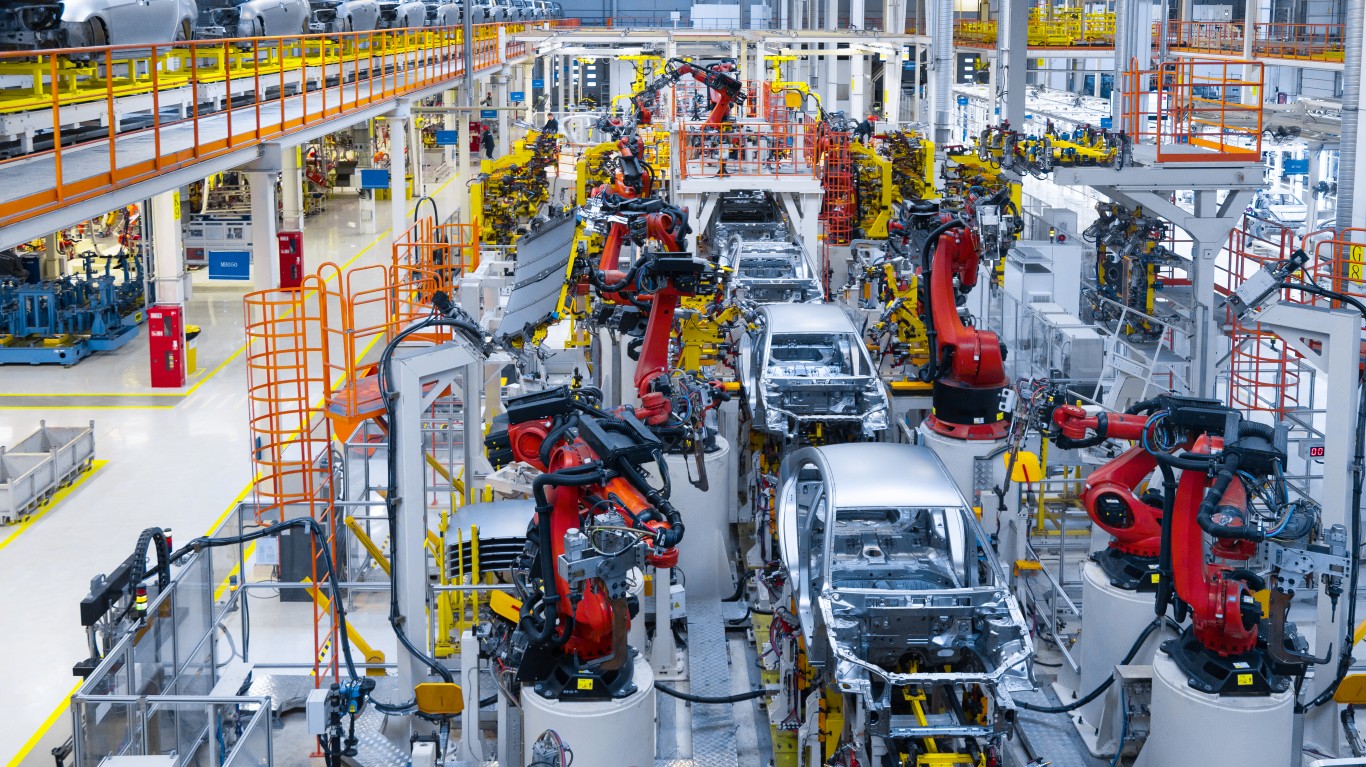
Every robot needs to see. Cognex builds the machine-vision systems that let factory arms, logistics sorters, and quality-control lines actually perceive the physical world, and the company just shipped two new platforms (In-Sight 6900 powered by NVIDIA and In-Sight 3900 powered by Qualcomm) that drop AI inference directly onto the camera. This is the boring layer of physical AI nobody tweets about, and it is exactly why I am putting it at #1.
The Q1 results left no room for doubt. Cognex (NASDAQ:CGNX | CGNX Price Prediction) posted revenue of $268.44 million, up 24.3% year over year, with adjusted EPS of $0.34 beating the $0.25 estimate, and Q2 guidance pointing to adjusted EPS of $0.40 to $0.44, roughly 68% growth at the midpoint. CEO Matt Moschner said the goal is “becoming the #1 provider of AI-powered machine vision.”
The stock has already started catching up. Shares are up roughly 86% year to date, and yet the most obvious AI-chip beneficiary of all has been compounding even faster, which brings us to #2.
2. Teradyne (TER): The Toll Booth on Every AI Chip in Existence
If you make an AI accelerator, an HBM stack, or a custom hyperscaler ASIC, Teradyne tests it before it ever sees a data center. The company also owns Universal Robots, giving it a foot in industrial automation. CEO Greg Smith calls it the “wafer to AI data center” strategy, and approximately 70% of Q1 revenue was tied to AI-related demand.
Teradyne (NASDAQ:TER) just delivered what may be the cleanest AI infrastructure quarter of the cycle: Q1 2026 revenue of $1.282 billion, up 87% year over year, with EPS growth of 241%. Smith disclosed Teradyne received its first multi-system production test orders for merchant GPU in Q1, with shipments expected to ramp in Q2. The robotics segment delivered $91 million, up 32% year over year, with AI revenue rising to 15% of segment sales.

Shares are up roughly 94% year to date. That is what happens when the toll booth gets to charge every traveler. But the toll booth analogy applies just as cleanly to a very different kind of physical AI, one where the machines are not testing chips but operating on human bodies.
3. Intuitive Surgical (ISRG): Robotic Surgery Is Already Here
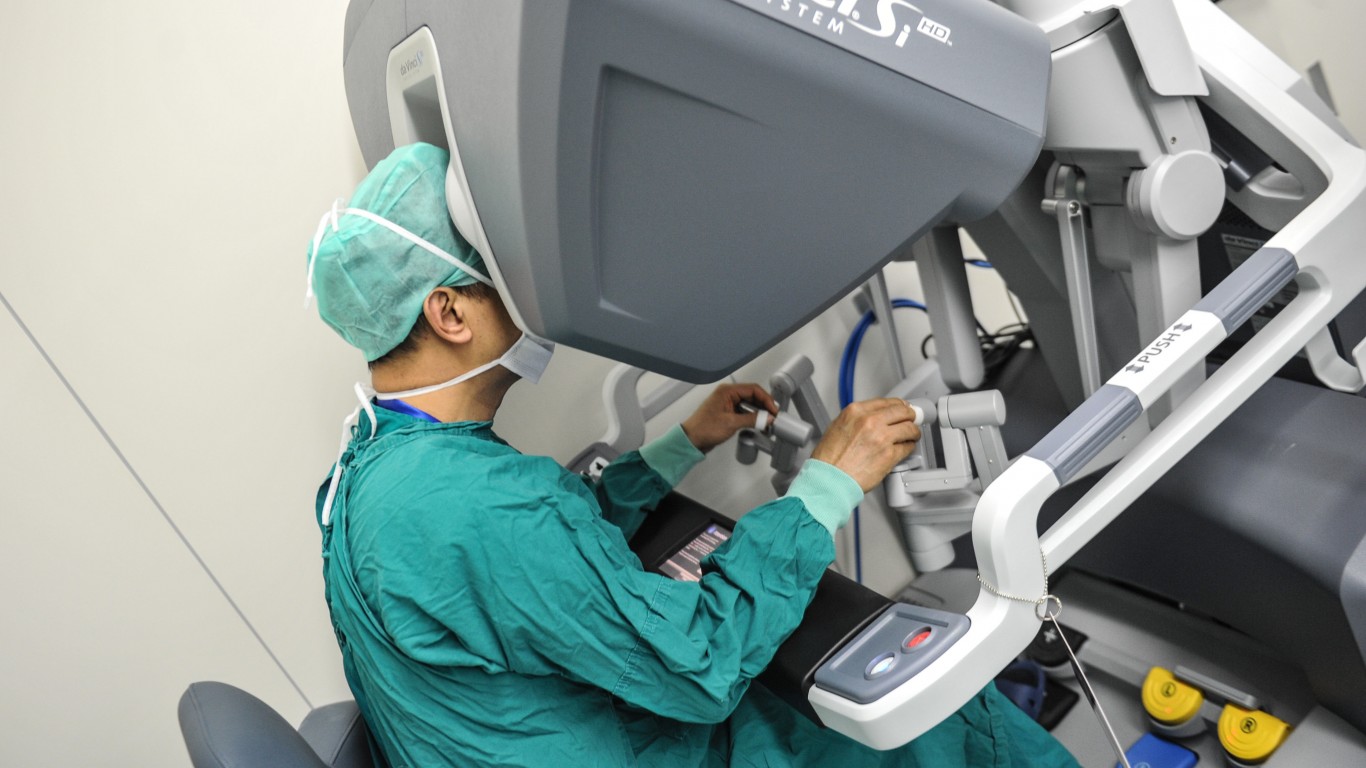
The da Vinci robot has been in operating rooms for two decades, but the AI-assisted da Vinci 5 platform is what is driving the current adoption curve. Every system placed creates a recurring annuity of instruments, accessories, and services. This is physical AI with a razor-blade model attached.
Intuitive Surgical (NASDAQ:ISRG) posted Q1 2026 revenue of $2.77 billion, up 23% year over year, with non-GAAP EPS of $2.50 beating the $2.11 estimate. Three numbers tell the story: da Vinci procedures grew ~16% with Ion procedures up ~39%; 431 da Vinci systems placed, of which 232 were the AI-enabled da Vinci 5; and the installed base is now 11,395 da Vinci units plus 1,041 Ion systems.
Shares are down roughly 26% year to date, which is exactly why this one deserves a fresh look. The selloff reflects valuation reset and tariff worry, while surgeon demand for the robot remains strong. They do. The next name extends the same logic from the OR to the warehouse floor.
4. Zebra Technologies (ZBRA): Physical AI on the Frontline
Zebra’s CEO uses the words physical AI without prompting, and the company’s portfolio (RFID, scanners, mobile computers, machine vision via the Photoneo acquisition, touchscreens via Elo Touch) is the data-capture nervous system for every Fortune 500 distribution center, hospital, and retailer. CEO Bill Burns said on the most recent call: “AI needs data from the physical world” and Zebra collects it 30 times per item across the supply chain.
Q1 came in with revenue of $1.50 billion, up 14.3%, and non-GAAP EPS of $4.75 beating the $4.25 estimate. Management raised the full-year outlook to non-GAAP EPS of $18.30 to $18.70 with free cash flow above $900 million. The machine vision business specifically grew double digits in Q1, with the CEO calling it “an inflection point in the market”.

Burns framed the opportunity bluntly: “roughly 75% of warehouses around the world are in the early stages of an automation journey” with a served market of $35 billion. That is a multi-year runway. Which sets up the punchline at #5, where physical AI stops sorting packages and starts flying alongside fighter jets.
5. Kratos Defense (KTOS): The Autonomous Drones Are Already Flying
The Valkyrie is a real, AI-piloted Collaborative Combat Aircraft that flies alongside manned fighters. Northrop Grumman just won the MUX TACAIR Collaborative Combat Aircraft program with Kratos Valkyrie as the platform, and CEO Eric DeMarco confirmed the company is “executing a plan in 2026 to increase our rate of production up to approximately 40 Valkyries annually by the end of 2027.” This is autonomous combat aircraft revenue showing up on the income statement now.
Q1 FY26 delivered revenue of $371.0 million, up 22.6% year over year, beating the roughly $345 million estimate. Three things stand out: the Unmanned Systems segment grew 30.9% organically to $82.6 million, driven by Valkyrie; bookings of $605.2 million produced a 1.6x book-to-bill ratio with backlog at $2.01 billion; and management raised FY26 guidance to $1.70 to $1.76 billion in revenue. DeMarco described what is happening as a “generational recapitalization of the U.S. defense industrial base.”
And here is the kicker: shares are down roughly 25% year to date even as bookings hit a record. The market has temporarily forgotten that the drones are already in production. I do not expect that disconnect to last.
The Bottom Line
Cognex sees, Teradyne tests, Intuitive cuts, Zebra scans, and Kratos flies. Five companies, five different layers of the physical-AI stack, every one of them booking real revenue today rather than promising it in 2030. When the speculative names get repriced (and they will), capital rotates to operators with backlog, recurring revenue, and installed bases. These five have all three. The window where the market still confuses them with the storytellers is the window worth paying attention to.
Contact [email protected] for any questions or corrections.
I've been writing about stocks and personal finance for 20+ years. I believe all great companies are tech companies in the long run, and I invest accordingly.