South Korea Is Up Nearly 96 Percent in 2026 and These 3 ETFs Let You Play the Chip Nation Story at Different Risk Levels
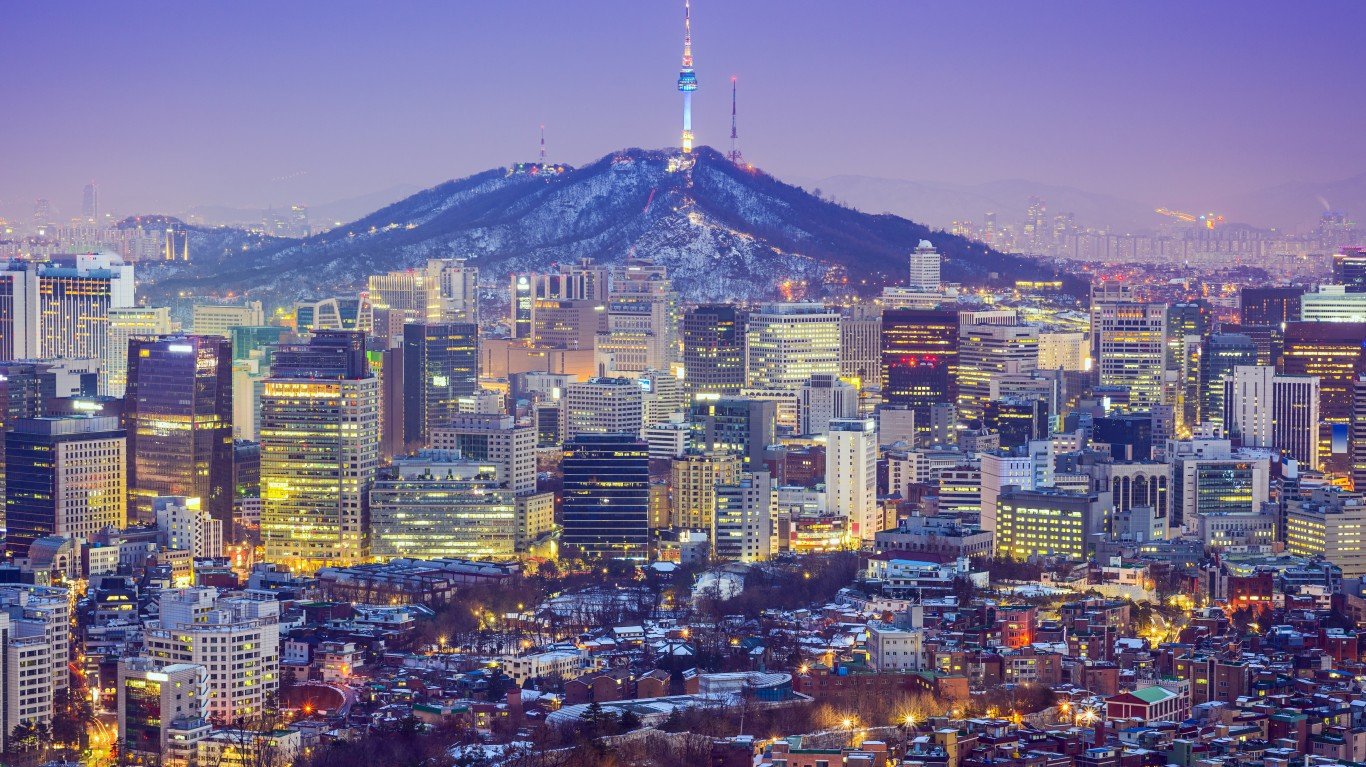
South Korea’s KOSPI has gone from emerging-markets afterthought to the best major equity story of 2026, and the engine is sitting inside every advanced AI server on Earth. Samsung Electronics and SK Hynix produce the lion’s share of the world’s…


South Korea’s KOSPI has gone from emerging-markets afterthought to the best major equity story of 2026, and the engine is sitting inside every advanced AI server on Earth. Samsung Electronics and SK Hynix produce the lion’s share of the world’s high-bandwidth memory (HBM), the stacked DRAM that NVIDIA, AMD, and the hyperscalers cannot build accelerators without. That single supply chain choke point has rerated an entire country. The iShares MSCI South Korea ETF (NYSEARCA:EWY) is up about 87% year to date and roughly 219% over the past year, the kind of move that forces every global allocator to look again at Seoul.
EWY is the long-term core position. The Invesco PHLX Semiconductor ETF (NASDAQ:SOXQ) is the demand-side complement that owns the customers buying all that Korean memory. And the Direxion Daily MSCI South Korea Bull 3X Shares (NYSEARCA:KORU) is the tactical accelerant for traders who understand exactly what daily-reset leverage does to a portfolio over time.
Why the Korea trade is really an HBM trade
AI capex is still climbing, with infrastructure equipment growth expected to compound at roughly 25% annually for the next four to five years on locked-in datacenter demand. Memory is the binding constraint inside that buildout. Industry commentary suggests AI memory demand is growing at a roughly 55% rate this year, and SK Hynix has guided to a 30% CAGR through the end of the decade. About 40% of DRAM demand now comes from AI, which is why Korean memory pricing has gone vertical and dragged the broader KOSPI with it. That is the cause-and-effect chain. Every fund below connects to it through a different mechanism.
EWY: the core position for the Korea thesis
EWY is the most direct, lowest-friction way to own the Korean rally as a multi-year position. The fund tracks the MSCI Korea 25/50 Index, has been around since May 2000, and carries an expense ratio of 0.59%. It is the most liquid Korea vehicle in the U.S. market, and liquidity matters when pension and endowment money tries to get exposure to a country suddenly central to every AI conference.
The portfolio is the country in microcosm. Samsung Electronics, SK Hynix, and Hyundai dominate the top weights, with the two memory names alone representing an enormous share of the fund’s risk and return. That concentration cuts both ways. When HBM pricing runs, EWY runs harder than most diversified emerging-market funds. When the memory cycle turns, that same concentration becomes the drag. Shares closed at $182 after a 17% gain over the past month alone.
You are taking won exposure and a portfolio where two stocks effectively decide the outcome. For investors who believe HBM is a multi-year story rather than a 2026 sugar high, that concentration is the feature investors are paying for. The Reddit conversation reflects the split. The most-commented retail thread on r/wallstreetbets ran with the headline “Samsung and SK Hynix Still Look Like Bargains Compared to Tech Peers” and scored a bullish sentiment reading of 74, while r/stocks and r/stockmarket leaned cautious.
SOXQ: own the customer, not just the supplier
SOXQ tracks the PHLX Semiconductor Sector Index, the same SOX benchmark behind the better-known SOXX and SMH funds. Invesco’s version is the low-cost member of that trio. Rather than owning the suppliers of HBM, SOXQ owns the buyers and the broader chip ecosystem. NVIDIA, Broadcom, AMD, Taiwan Semiconductor, and the U.S.-listed ADRs of Korean and Taiwanese names sit alongside the equipment makers.
The mechanism connecting SOXQ to the Korea story is straightforward. Samsung and SK Hynix are minting cash because NVIDIA and the hyperscalers cannot get enough memory, and Korean memory ASPs are set by that scarcity. If you believe the HBM cycle, you almost have to believe the GPU cycle, because they are the same cycle viewed from two sides. SOXQ has returned about 72% year to date and 157% over the past year, with shares now near $96.
SOXQ tracks the global chip cycle, so if the Korea rally is driven by a specific won-denominated rerating, currency moves, or governance reform catalysts, SOXQ will miss most of it. What SOXQ gives you is participation in the global semiconductor cycle with diversification across geographies and across the picks-and-shovels layer that is expected to see rising wafer fabrication equipment spending in 2026 on the back of memory recovery and advanced logic investment.
KORU: tactical only, and read this carefully
KORU is built to deliver three times the daily return of the MSCI Korea index. That word, daily, is the entire story. The fund resets its leverage every trading day, which means returns over any longer holding period are a path-dependent function of compounding rather than a simple 3x of the underlying’s cumulative move. In a steady uptrend, the compounding works in the holder’s favor, which is why KORU is up about 330% year to date and roughly 1,652% over the past year against EWY’s far more modest gains. In a choppy or sideways market, the same daily reset eats the position alive through volatility decay.
KORU is appropriate only for short-term tactical positions and is not a long-term hold under any circumstances. A 3x daily fund held through a sharp drawdown can lose ground that the underlying index recovers without it ever coming back. The recent one-day move of negative 7% against EWY’s 2% slip is exactly how that math shows up in real time. Shares trade near $780, and Direxion has reverse-split the fund several times to keep the share price functional, which signals that long holding periods are a structural mismatch for the product.
KORU exists for traders who want to express a high-conviction directional view on Korea over days or weeks, with a stop discipline. Anyone planning to buy and forget it should look at EWY instead.
Picking the fund that fits the investor
- Long-term Korea believer. EWY is the answer. It is the cleanest way to own the HBM-driven rerating of the KOSPI without taking single-stock risk on Samsung or SK Hynix and without paying for daily-reset leverage.
- AI infrastructure generalist. SOXQ makes more sense. It captures the demand pulling on Korean memory without concentrating the portfolio in a single country, and the lower expense ratio relative to SOXX and SMH compounds meaningfully over time.
- Active trader with a defined timeframe. KORU is the tool, with the understanding that it is a position to be managed actively rather than held. If you cannot watch it daily and would not set a stop, do not own it.
The Korea rally is real, the HBM story underneath it is structural, and there is more than one way to participate. Each fund does a different job, and matching the vehicle to the holding period and conviction level is what makes the trade work.
Contact [email protected] for any questions or corrections.
After 15 years on Wall Street with 7 of them as Director of Corporate and Municipal Bond Trading for a NYSE member firm, I started my own project and corporate finance consultancy. Much of the work involves writing business plans, presentations, white papers and marketing materials for companies seeking budgetary allocations for spinoffs and new initiatives or for raising capital for expansion or startup companies and entrepreneurs. On financial topics, I have been published under my own byline at The Motley Fool, 247wallst.com, DealFlow Events’ Healthcare Services Investment Newsletter and The Microcap Newsletter, among others. Additionally, I have done freelance ghostwriting writing and editing for several financial websites, such as Seeking Alpha and Shmoop Financial. I have also written and been published on a variety of other topics from music, audiophile sound and film to musical instrument history, martial arts, and current events. Publications include Copper Magazine, Fidelity (Germany), Blasting News, Inside Kung-Fu, and other periodicals.