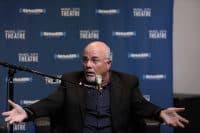
Dave Ramsey: “There’s No Possible Way I Would Pull Money Out of a Roth and Pay Off a Mortgage.” Here’s Why
A 28-year-old per diem nurse called The Ramsey Show looking for a second opinion after her husband proposed using part of her $143,000 Roth 403(b) to pay off the couple’s remaining $125,000 mortgage. While both wanted to become debt-free, she…

This post may contain links from our sponsors and affiliates, and Flywheel Publishing may receive compensation for actions taken through them.

A 28-year-old per diem nurse called The Ramsey Show looking for a second opinion after her husband proposed using part of her $143,000 Roth 403(b) to pay off the couple’s remaining $125,000 mortgage. While both wanted to become debt-free, she wasn’t convinced tapping retirement savings was the right move.
Dave Ramsey didn’t hesitate: “Your husband’s wrong. There’s no possible way I would pull money out of a Roth and pay off a mortgage. I want your mortgage paid off worse than he does. But I don’t want to be stupid in paying it off.”
Dave Ramsey: “I Want Your Mortgage Paid Off… But I Don’t Want to Be Stupid Doing It.”
Ramsey’s advice comes down to two factors: taxes and penalties as well as long-term compounding.
With a Roth 403(b), your own contributions can generally be withdrawn tax-free. However, any investment earnings withdrawn before age 59½ are typically subject to ordinary income tax and a 10% early-withdrawal penalty unless an exception applies. For someone who has been contributing for several years, a meaningful portion of the account may consist of investment gains rather than original contributions.
Even more important is the long-term growth those dollars could generate if left invested. During the call, Ramsey used a historical illustration, saying, “You should be earning 10-12% average on your money, and if you are, you’re going to double that money every 7 years.” Even at more conservative assumptions, money left inside a Roth for 30+ years does the heaviest lifting in the final decade, when the balance is largest. Pulling $125,000 out at 28 removes the base that would have doubled several times by retirement.
Paying off a mortgage produces a guaranteed return equal to the loan’s interest rate, which is a legitimate financial benefit. However, for a young investor with decades until retirement, that guaranteed return is often lower than the long-term expected return of a diversified investment portfolio held inside a tax-advantaged Roth account. That tradeoff is why Ramsey argued the retirement account should remain intact while the mortgage is paid down through future cash flow instead.
How Ramsey Would Pay Off This Mortgage in Four to Five Years
Ramsey pointed at the emergency fund, not the retirement account. “You’re fat on your emergency fund. You don’t need $54,000 in there.” On a $110,000 household income, that cash cushion is well above a standard 3-to-6-month reserve. For context, the national personal savings rate is running around 4%, so this couple is already saving at a pace most households are not.
His plan was concrete. Redirect $25,000 of that cash to principal, leaving a still-healthy reserve. That drops the mortgage to $100,000. Then keep the current cash flow going. She said she had roughly $1,600 available in most months, except June and July. “You put $20,000 a year on $100,000, it’s gone in 5 years,” Ramsey said, adding: “You’re going to be not even 40 and you have a paid-for house.”
He rejected extreme frugality as the accelerator. Instead, aim “found money” at the loan: bonuses, overtime, tax refunds, side-gig income. His projection: “You’re probably gonna pay the house off in about 4 years without doing rice and beans.” Co-host George Kamel put it plainly: “Let’s make a plan that doesn’t involve decimating our nest egg.”
The Retirement Account Warning Most Healthcare Workers Never Hear
Ramsey flagged a separate issue worth checking before her balance grows any larger. “Make sure it’s invested in good mutual funds because a lot of them aren’t in 403s. They get into insurance products. Be careful with those.”
Many 403(b) investment menus, especially in healthcare and education, lean heavily on variable annuities with layered fees. A high-fee wrapper can easily eat up one or two percentage points of return per year, which can erode a meaningful portion of investment returns.
Key Takeaways
The lesson is that how a family goes about paying off their mortgage matters just as much as making the move to be debt-free. A Roth retirement account is one of the most valuable tax shelters many workers will ever own, and once those dollars leave, penalties and decades of tax-free compounding disappear forever. Ramsey’s solution preserves that long-term growth while still putting the couple on track to own their home outright before turning 40.
Contact [email protected] for any questions or corrections.
Thomas Richmond is a financial writer and content strategist with 5+ years of experience covering stocks and financial markets. He has published over 500 articles focused on individual stock analysis, helping investors better understand business fundamentals, stock valuations, and long-term opportunities.
Thomas previously served as a Content Lead at TIKR, a stock research platform, where he helped scale the company’s blog to hundreds of articles per month and contributed to a weekly newsletter reaching more than 100,000 investors.
Outside of work, Thomas enjoys weight lifting and soccer.