David Tepper’s Most Ignored Trade of 2026 Is a $400 Million Bet on an Entire Country’s Economy
David Tepper added to his position in the iShares MSCI South Korea ETF (NYSEARCA:EWY) during the first quarter of 2026, building on a stake he first established in the fourth quarter of 2025. He bought Micron Technology (NASDAQ:MU | MU…


David Tepper added to his position in the iShares MSCI South Korea ETF (NYSEARCA:EWY) during the first quarter of 2026, building on a stake he first established in the fourth quarter of 2025. He bought Micron Technology (NASDAQ:MU | MU Price Prediction) at the same time.
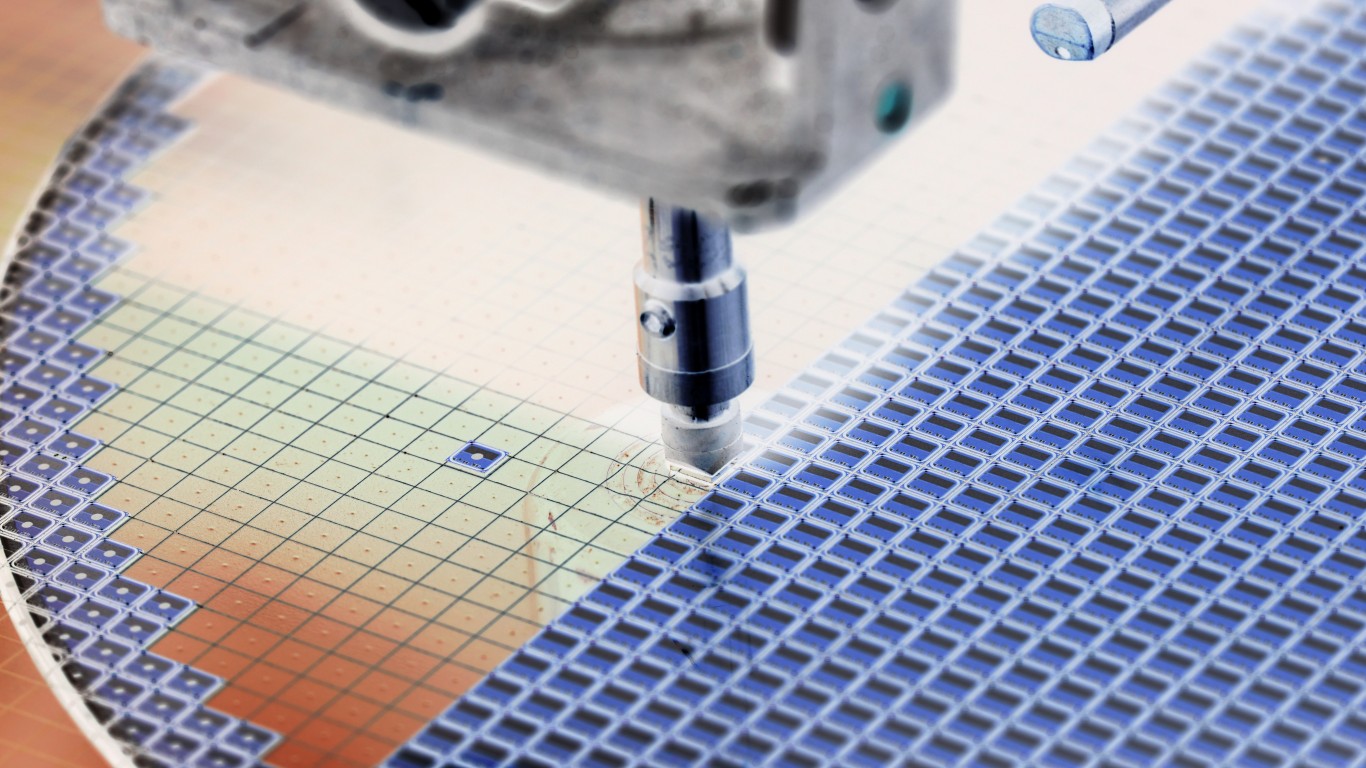
The pairing tells you what the trade actually is. One memory bet wears American clothes, the other wears Korean clothes, and both are wagers on the same physical commodity becoming scarce in the AI buildout.
The backdoor memory trade hiding inside a country fund
EWY tracks South Korea, but functions as a concentrated memory fund. Samsung Electronics and SK Hynix together account for roughly half of the portfolio, so buying EWY is functionally buying two memory chip companies with a side of Korean banks and conglomerates. Tepper appears to want that concentration. EWY has returned 114% year to date and 215% over the past year. That outpaces the Nasdaq 100 by the widest margin since 2001.
Micron’s last earnings report shows where the demand is coming from. Revenue hit $23.86 billion, up 196.3% year over year, GAAP gross margin expanded to 74.4% from 36.8%, and management guided next quarter to $33.5 billion in revenue at roughly 81% gross margins. CEO Sanjay Mehrotra called memory “a strategic asset” for AI customers. Samsung and SK Hynix are selling the same high-bandwidth memory into the same data centers, much of it destined for NVIDIA (NASDAQ:NVDA), whose data center revenue grew 92% year over year to $75.25 billion last quarter.
Why a country ETF behaves like an industry bet
Most country ETFs are diversified almost by accident. Korea is the exception. Its public equity market is dominated by two memory businesses that happen to be national champions, and the MSCI South Korea Index inherits that concentration. Buy EWY and you get exposure to the Korean won, to corporate governance reforms (the “Value Up” program), and to a portfolio where energy-intensive semiconductor companies represent 44.5% of holdings. The exposure is memory dressed in a country-fund wrapper.
That layering has consequences. When Broadcom guided AI semiconductor revenue lower on June 5, EWY tumbled 7.7%. When the Iran conflict spooked energy markets in March, the KOSPI tripped circuit breakers and EWY suffered its biggest one-day decline since 2020. Country risk and chip risk stack on top of each other.
What a retirement-focused investor should take from this
Tepper is running two versions of the same trade. Micron offers a US-listed, dollar-denominated pure play trading at 9x forward earnings with an analyst target of $866.60 against a current price near $1,133.99. EWY offers Samsung and SK Hynix at lower multiples than US peers, a 0.59% expense ratio, and optionality on MSCI upgrading Korea to developed-market status. The downside is the same downside Micron has, which is the memory cycle turning. The 2025 super cycle delivered EWY a 95% total return, and super cycles end.
For a retirement portfolio, the real question is whether you already own this exposure through US tech and don’t know it. If your largest positions are NVIDIA and the S&P 500, adding EWY layers Korean memory beta on top of American AI beta in the same direction. Following Tepper into EWY makes sense only if you understand that you are buying memory exposure denominated in won, with Korean governance risk attached, rather than diversifying away from the AI trade. The thesis holds even if the label obscures it.
Contact [email protected] for any questions or corrections.
Omor Ibne Ehsan is a writer at 24/7 Wall St. He is a self-taught investor with a focus on growth, cyclical, and dividend equities that have strong fundamentals, value, and long-term potential. He also has an interest in high-risk, high-reward investments such as penny stocks.