Eli Lilly Growing at 55% as a Trillion-Dollar Company: ‘These Are NVIDIA-Like Growth Numbers’
Macro strategist Jordi Visser delivered a striking observation on a recent episode of The Pomp Podcast with Anthony Pompliano. Among the roughly 100 stocks in his thematic portfolio, Eli Lilly is the only healthcare company that made the cut. More…

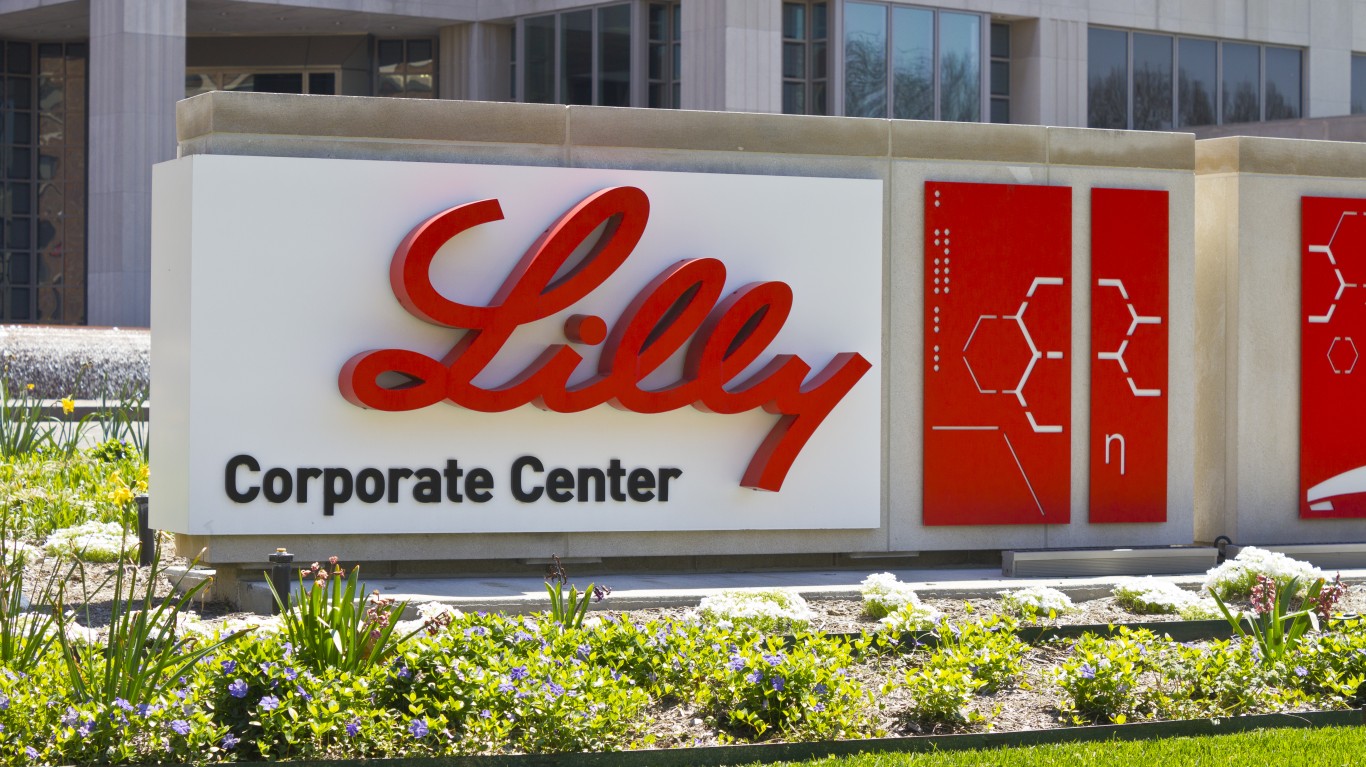
Macro strategist Jordi Visser delivered a striking observation on a recent episode of The Pomp Podcast with Anthony Pompliano. Among the roughly 100 stocks in his thematic portfolio, Eli Lilly is the only healthcare company that made the cut. More surprisingly, he views it as an artificial intelligence investment as much as a pharmaceutical one.
A Growth Rate That Turns Heads
Eli Lilly (NYSE:LLY | LLY Price Prediction) reported Q1 2026 revenue of $19.8 billion, up 55.5% year over year, while non-GAAP EPS came in at $8.55, well ahead of the $6.79 consensus estimate. The company also raised its full-year 2026 outlook to $82 billion to $85 billion in revenue and $35.50 to $37.00 in non-GAAP EPS.
For Visser, the story starts with that revenue growth figure. “I want people to hear that number. 55%. Now these are the types of numbers that you’re talking about with NVIDIA,” he said.
For context, NVIDIA (NASDAQ:NVDA) reported Q1 FY2027 revenue growth of 85.2% year over year and now carries a market capitalization above $5 trillion. Lilly, a company founded in 1876, is approaching the trillion-dollar mark itself. Investors rarely see a company of Lilly’s scale grow at rates normally associated with the most successful AI businesses in the world.

Why Visser Sees Eli Lilly as an AI Company
Lilly’s growth engine remains its blockbuster GLP-1 franchise. Mounjaro generated $8.66 billion in Q1 2026 revenue, up 125% YoY, while Zepbound delivered $4.16 billion, up 80%. Foundayo, the company’s new oral GLP-1, was FDA-approved and can be taken at any time of day without food or water restrictions.
He pointed to a network of AI partnerships that could reshape how Lilly develops medicines. The company has worked with AI drug discovery firm Insilico Medicine, Alphabet-backed Isomorphic Labs, and NVIDIA, which partnered with Lilly to build what the company described as one of the industry’s most powerful AI computing environments for drug discovery.
Pompliano noted that investors have long expected AI to transform biotechnology, but “we haven’t really seen tons of examples yet” beyond isolated cases. Visser’s answer involves drug candidates that “made it to the 20-yard line, but it couldn’t get inside the red zone.” Visser believes Lilly could become one of the first large-scale demonstrations of that shift. Lilly’s four Q1 2026 acquisitions of Orna Therapeutics, Centessa Pharmaceuticals, Kelonia Therapeutics, and Ajax Therapeutics fit into that broader strategy.
Drug discovery could benefit from the Jevons paradox. When AI compresses discovery costs, total demand could expand more than prices fall, growing the market overall. Cheaper AI-discovered therapeutics at scale could produce a larger total opportunity than today’s high-priced boutique drugs.

The Bigger Picture
Visser summarized the opportunity with a broader observation about where healthcare may be headed. “It’s a very, very interesting story that is kind of the, in my opinion, the human software side of what the next decade is going to look like for curing diseases.”
For investors, the practical takeaway is that the next leg of pharma may look more like software development cycles than traditional 10-year drug pipelines. Eli Lilly is up 54% over the past year through May 29, 2026, while NVIDIA has gained 51.73% over the same window. If Lilly’s partnerships with Insilico Medicine, Isomorphic Labs, and NVIDIA begin producing measurable advances in drug development, the comparison Visser is making could become much harder for investors to ignore.
Contact [email protected] for any questions or corrections.
Thomas Richmond is a financial writer and content strategist with 5+ years of experience covering stocks and financial markets. He has published over 500 articles focused on individual stock analysis, helping investors better understand business fundamentals, stock valuations, and long-term opportunities.
Thomas previously served as a Content Lead at TIKR, a stock research platform, where he helped scale the company’s blog to hundreds of articles per month and contributed to a weekly newsletter reaching more than 100,000 investors.
Outside of work, Thomas enjoys weight lifting and soccer.