Good News For SpaceX Investors. Wall Street CIO Says ‘Building Data Centers On Land … Might Be More Complicated Than Doing Them in Space’
Jordi Visser of 22V Research made a striking claim on a recent episode of The Pomp Podcast with Anthony Pompliano: “Building data centers on land might be at this point more complicated than doing them in space.” That line lands…


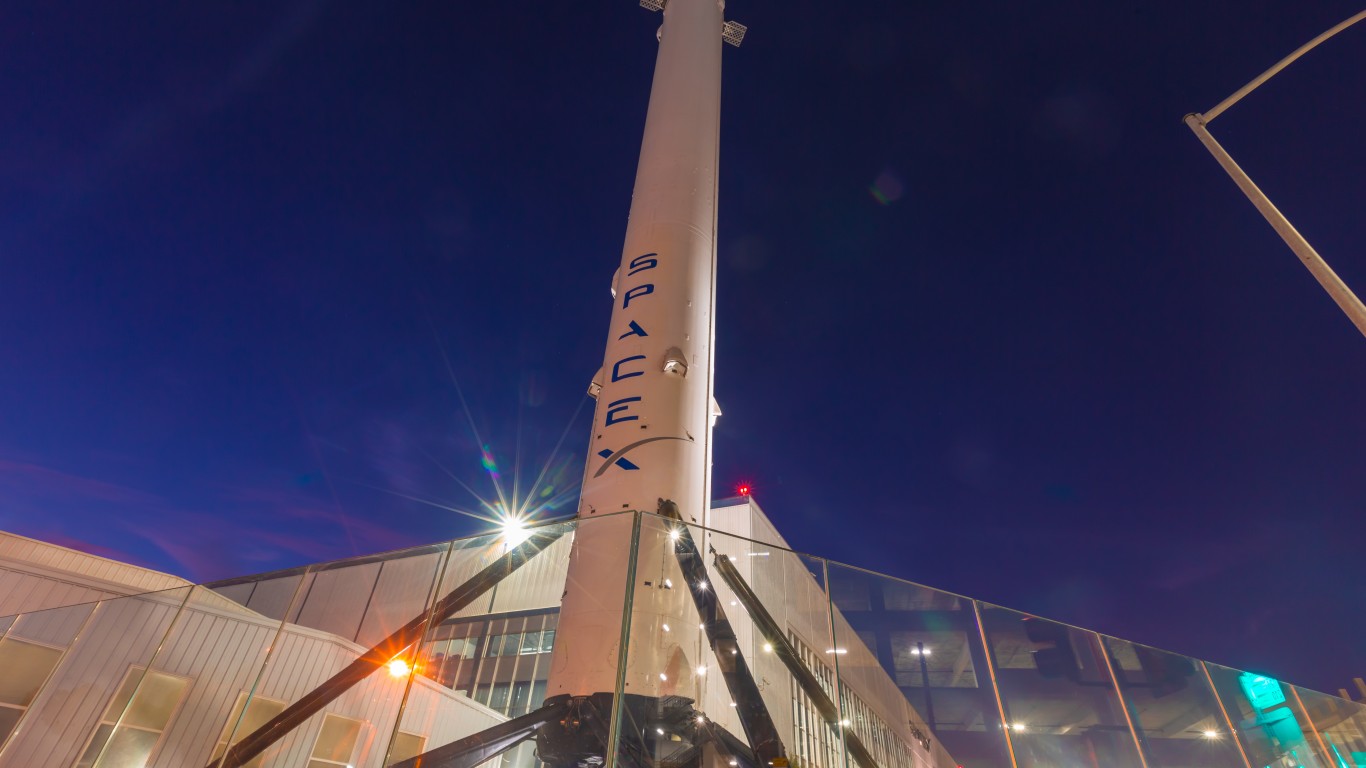
Jordi Visser of 22V Research made a striking claim on a recent episode of The Pomp Podcast with Anthony Pompliano: “Building data centers on land might be at this point more complicated than doing them in space.” That line lands differently when you walk through his math, which reframes SpaceX‘s (Nasdaq: SPCX) orbital data center ambitions as a logical response to terrestrial bottlenecks rather than a moonshot.
For investors in the AI infrastructure trade, the implications run through three publicly traded names with direct exposure: NVIDIA (NASDAQ:NVDA | NVDA Price Prediction), Alphabet (NASDAQ:GOOGL), and Tesla (NASDAQ:TSLA).
The Cost Math Visser Laid Out
Visser’s argument starts with a brutal comparison. A 1 gigawatt terrestrial data center runs about $60 billion, with roughly $35 billion going to chips and about $25 billion to infrastructure. Elon Musk has said he can build a space-station data center for $5 billion, with the same chip costs. Visser’s takeaway: “That’s a dramatic difference, which means the margins on his compute would be up there.”
Power, cooling, and land are the binding constraints on Earth. A single hyperscale facility can consume over a gigawatt of power, equivalent to powering approximately 750,000 homes, and U.S. data center demand is projected to reach between 6.7% and 12% of total annual electricity consumption by 2028. Orbit offers free cooling, uninterrupted solar power, and no zoning fights.
Why NVIDIA Sits at the Center of the Trade
Whether compute lives on Earth or in low Earth orbit, the silicon comes from Jensen Huang. NVIDIA’s Q1 FY2027 results showed Data Center revenue of $75.25 billion, up 92% year over year, with total revenue of $81.61 billion and total supply commitments of $119 billion. Huang framed the moment as “the largest infrastructure expansion in human history.”
Visser noted that xAI has reportedly secured 20% of all Vera Rubin GPU racks from NVIDIA, a staggering concentration that gives Musk’s AI ambitions a privileged supply position. NVIDIA trades at $207.38 with a P/E of 31 and is up 43.54% over the past year.
Google’s Quiet Bet on Orbital Compute
Visser suggested Google’s investment in SpaceX may be partly a bet on locking in rights to future orbital compute capacity. The terrestrial pressure is real: Alphabet guided 2026 CapEx to $175 to $185 billion, with Q1 2026 CapEx of $35.67 billion, up 107.44% year over year. Cloud backlog nearly doubled quarter on quarter to over $460 billion.
Google is also paying $920 million per month to SpaceX. This terrestrial agreement could be just a first between the two companies as Google could lease orbital data centers in the future. Alphabet shares are up 19.4% year to date and 111.75% over the past year.
The Tesla-SpaceX Flywheel
Tesla disclosed in its Q1 2026 report a $2 billion investment in SpaceX equity alongside a joint semiconductor research fab groundbreaking at the Gigafactory Texas campus in partnership with SpaceX. The two companies are operationally entangled. CNBC reported that “both companies already share resources and engineers” with the rationale being “shared challenges related to power and compute constraints.”
Tesla trades at $402.74, down 10.02% year to date but up 2,717.05% over the past decade.
Bulls, Bears, and What Tips the Scale
Spreadsheet skeptics see SpaceX as overvalued: “Every historical norm, every historical trend, every single data point in their spreadsheet is telling them SpaceX is overvalued.” Believers counter with Tesla’s 25,000% return since its IPO, compounding at 40% annually.
Visser argued the bull case hinges on execution velocity: “If he’s sending rocket ships into space and they’re coming back and then going back out in the same day, you’re going to have a valuation change.” He pointed to Musk’s first Colossus data center, built in 122 days when others take years, as evidence that hardware bottlenecks bend differently for this operator.
Watch the cadence of Starship reuse, xAI’s Vera Rubin deployments, and any formalization of a Google-SpaceX orbital compute arrangement. Those are the variables that move the orbital data center thesis from podcast talking point to line item.
Contact [email protected] for any questions or corrections.
I've spent more than 15 years inside enterprise software, working alongside the finance, sales operations, and HR leaders who run the revenue engines at some of the largest tech companies in the country.
My day job is helping enterprise executives make smarter decisions about retention, compensation, and growth. These are the same operational levers that show up in every earnings report investors actually read. That perspective shapes my writing for 24/7 Wall St.
The headline numbers are easy. The interesting stuff is underneath: how companies make money, what executives are worried about, and what any of it means for the person checking their 401(k) on a Sunday afternoon. I write about personal finance and business as someone who has spent her career inside the rooms where these decisions get made.