Bitcoin Is No Longer a Top 10 Global Asset. The Real Story Is What Replaced It
Bitcoin (CRYPTO:BTC) slipping out of the top 10 global assets isn’t a new story — but it keeps returning with new wrinkles that matter for investors. One month it’s firmly seated alongside the world’s largest companies and commodities, the next…

This post may contain links from our sponsors and affiliates, and Flywheel Publishing may receive compensation for actions taken through them.
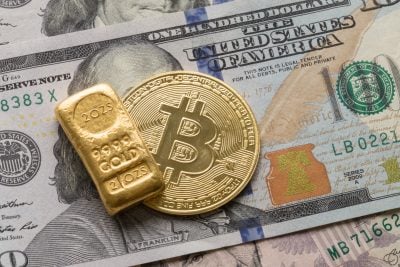
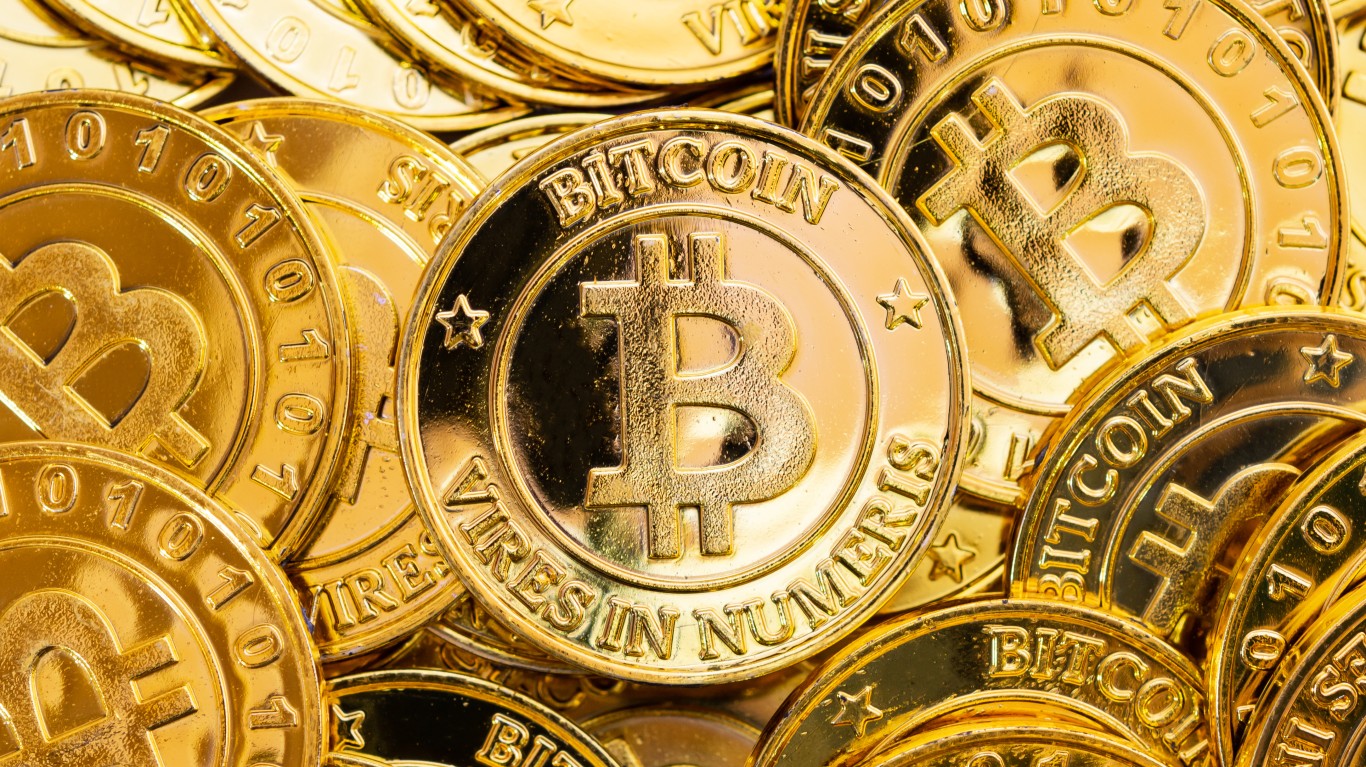
Bitcoin (CRYPTO:BTC) slipping out of the top 10 global assets isn’t a new story — but it keeps returning with new wrinkles that matter for investors. One month it’s firmly seated alongside the world’s largest companies and commodities, the next it’s knocked back down the rankings by a sharp drawdown. That kind of volatility makes it hard to pin down what Bitcoin really represents in today’s capital markets.
Is it still a macro asset competing with gold and tech giants, or has it become something closer to a high-beta financial instrument that periodically earns — and then loses — its place at the table?
The answer depends less on Bitcoin itself and more on what global capital has decided is worth owning instead.
Built on Belief, Undone by Volatility
Bitcoin’s ascent into the upper ranks was powered by three key forces: growing recognition as a digital store of value, expanding real-world utility as a transferable asset, and increasing acceptance from governments and financial institutions. At its height, it even briefly surpassed silver to become the second-most-valuable commodity on Earth, behind only gold.
Yet volatility has always been its Achilles’ heel. Bitcoin’s market cap has swung so dramatically that it has fallen in and out of the top 10 multiple times. The latest exit occurred last week. As of now, Bitcoin’s market capitalization stands at approximately $1.32 trillion, placing it 14th globally as its price hovers near $66,240, down roughly 10% in the past week and 24% year-to-date.
When an asset bounces in and out of elite rankings this frequently, investors stop seeing the movement as headline news. The volatility itself has become the story.
The Real Shift: AI Infrastructure Takes Over
What displaced Bitcoin wasn’t another currency or traditional commodity — it was productive computing power, embodied by AI-related equities. The current landscape shows a clear reordering:
- Gold remains the undisputed leader at roughly $31.11 trillion.
- Nvidia (NASDAQ:NVDA | NVDA Price Prediction) (AI chips) sits in second place globally with a $5.24 trillion market cap.
- Taiwan Semiconductor Manufacturing (NYSE:TSM) ranks ninth at $2.29 trillion.
- Broadcom (NASDAQ:AVGO) (AI networking) has entered the top 10, directly replacing Bitcoin.
Today, roughly 70% of the top 10 global assets by market value are tech-related equities. Nvidia, TSM, and Broadcom now command a larger share of the global capital leaderboard than crypto ever has. This marks a decisive shift: AI is no longer a narrative theme — it is the dominant capital allocation of 2026.
Capital Is Voting for Cash Flows Over Narrative
The deeper change lies in how investors now define “store of value.” Bitcoin’s value rests primarily on scarcity and the promise of future adoption. In contrast, AI infrastructure companies generate substantial cash flow today.
Nvidia’s data center revenue continues to surge as hyperscalers ramp up GPU orders. Broadcom is seeing AI networking chips take an ever-larger share of demand. The results are evident in market behavior: strong inflows into AI semiconductor ETFs, semiconductor revenue growth outpacing the broader tech sector, and expanding capital expenditures from major cloud providers.
Even as Bitcoin retains significant cultural and financial relevance — and a still-impressive $1.32 trillion market cap — capital is increasingly favoring assets that deliver measurable, scalable free cash flow.
The Key Takeaway
Bitcoin slipping out of the top 10 is no longer surprising. The more important signal is what has taken its place. AI infrastructure leaders like Nvidia, Taiwan Semiconductor, and Broadcom have claimed larger positions at the top of the table than Bitcoin ever held.
This reflects where institutional capital is flowing in 2026: toward productive computing power rather than speculative scarcity.
Bitcoin remains a core holding for many digital asset portfolios, but the broader market has spoken. The real story isn’t Bitcoin’s ranking — it’s the rise of the AI economy that has displaced it.
Contact [email protected] for any questions or corrections.
After two decades of patrolling the dark corners of suburbia as a police officer, Rich Duprey hung up his badge and gun to begin writing full time about stocks and investing. For the past 20 years he’s been cruising the markets looking for companies to lock up as long-term holdings in a portfolio while writing extensively on the broad sectors of consumer goods, technology, and industrials. Because his experience isn’t from the typical financial analyst track, Rich is able to break down complex topics into understandable and useful action points for the average investor. His writings have appeared on The Motley Fool, InvestorPlace, Yahoo! Finance, and Money Morning. He has been featured in both U.S. and international publications, including MarketWatch, Financial Times, Forbes, Fast Company, and USA Today.