




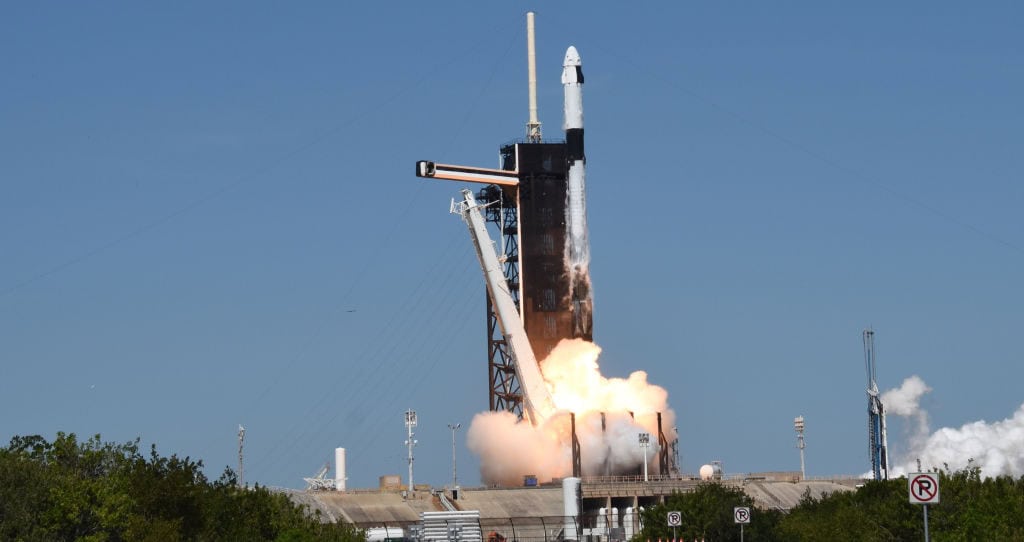
Elon Musk spent the last two years pushing Grok and feuding with OpenAI. The host of The AI Daily Brief argues he has quietly changed jobs. SpaceX is now functioning as a “neo cloud” by providing both Colossus-1 and Colossus-2 data centers to Anthropic’s Claude, which has been “severely compute constrained throughout the year.” The framing matters because it slots Musk into a category public market investors already understand and are paying enormous multiples for. The host says the pivot “makes the SpaceX IPO make so much more sense in context.” It reframes Musk’s competitive posture. He is “focused on a thing that he does better than just about anyone, which is building big ungodly physical infrastructure,” and positions him, in the host’s phrase, as “self-appointed czar of compute.”
What a neo cloud is
The neo cloud business is simple to describe and brutally capital intensive to run. You buy NVIDIA GPUs, pair them with high-bandwidth memory from Micron or SK Hynix, lease or build data centers, and rent the resulting compute to AI labs on multi-year contracts.
CoreWeave (NASDAQ:CRWV) wrote the playbook. In its most recent quarter it posted revenue growth of 111.6% year over year and disclosed a revenue backlog approaching $100 billion, anchored by a multi-year Anthropic deal and a $21 billion Meta commitment. Nebius Group (NASDAQ:NBIS | NBIS Price Prediction) is the other listed pure play, and the market has rewarded it accordingly. SpaceX joining that club gives Anthropic a third major non-hyperscaler landlord.
Why Anthropic needs a third option
Anthropic’s primary backer is Amazon. Amazon (NASDAQ:AMZN) booked a $16.8 billion pre-tax investment gain tied to Anthropic in the first quarter, and AWS revenue grew 28% to $37.59 billion, the fastest growth in 15 quarters. Anthropic has committed to taking up to 5 GW of AWS Trainium capacity. Yet Claude users have been throttled all year. Single-source compute risk is now the binding constraint on a frontier lab’s revenue. Thus, Anthropic is spreading itself across CoreWeave, Google Cloud, and now SpaceX’s data centers. SpaceX’s two Colossus campuses give it scale that small neo clouds cannot match.
The memory trade as the parallel bet
The infrastructure rerating has been most violent in memory. Micron Technology (NASDAQ:MU) is up massively this year. It recently crossed a $1 trillion market cap. UBS has a $1,625 price target, and the stock still trades at ~10x estimated earnings. This is the lowest multiple in the Philadelphia Semiconductor Index. The host cites AI memory stocks “absolutely surging with companies like SK Hynix and Micron becoming trillion-dollar companies” signals that public capital is hungry for picks-and-shovels exposure. NVIDIA sits underneath all of it, with Q1 data center revenue of $75.25 billion, up 92% year over year, and a forward multiple of 26 that now looks restrained next to the neo clouds it supplies.
Meta’s optionality and the orbital wildcard
The most interesting second-order move belongs to Meta. Meta Platforms raised 2026 capex guidance to $125 to $145 billion, and the stock is down year to date as investors question the return. The host notes Meta is now “talking about the possibility that they could also become a cloud business” and potentially “sell back the $130 billion or whatever worth of compute that they’re investing in at a premium,” which “significantly de-risks that big CapEx spend.”
If Zuckerberg’s data centers can be rented at neo-cloud margins, the spending stops looking like a black hole. Moreover, Jeff Bezos is now discussing orbital data centers as inevitable, which only a launch company could plausibly run.
Contact [email protected] for any questions or corrections.












 Top Gaining Stocks
 Top Losing Stocks