Got $3,000? 1 Ultra-Safe Dow Dividend Stock to Buy and Hold Forever
Chevron is a stock worth owning for decades because it generates oceans of cash through every commodity cycle and shares that cash with owners on a schedule you can set your retirement clock to. It is the kind of business…

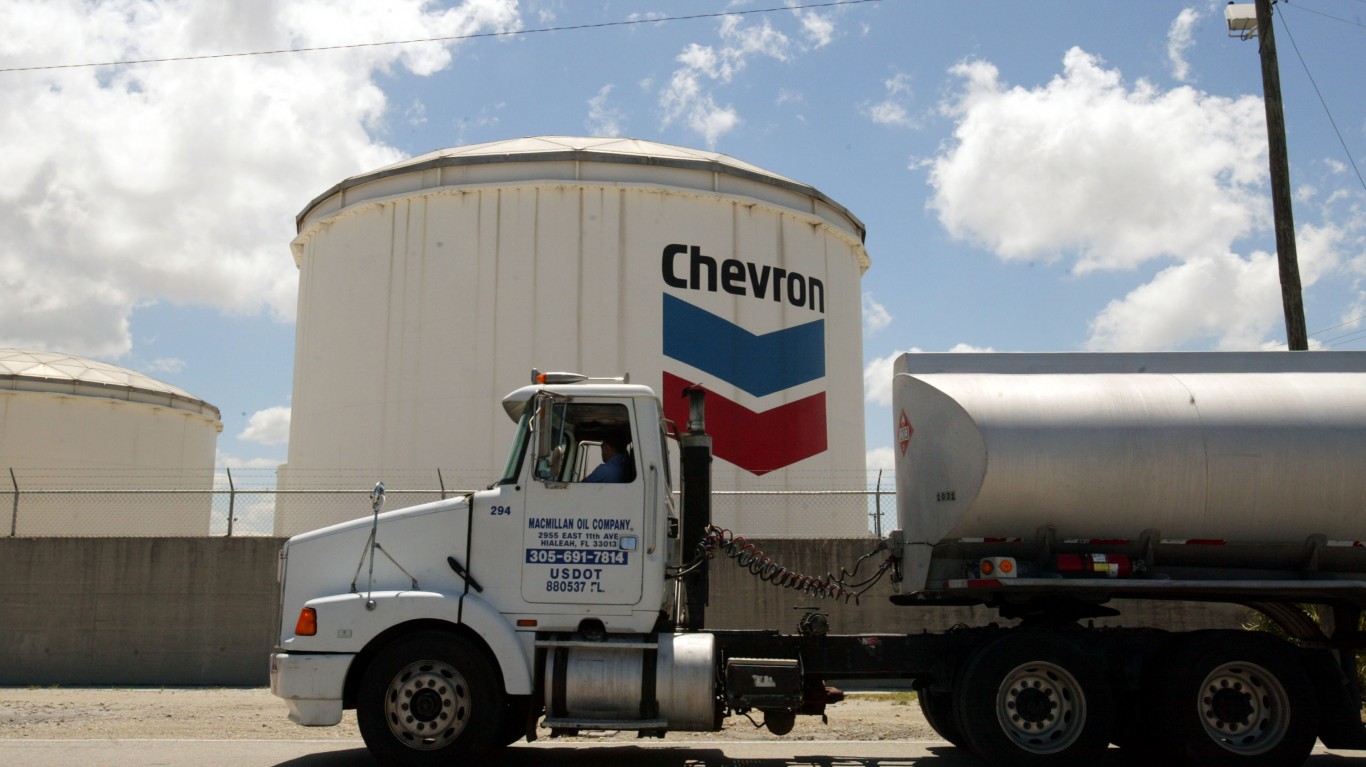
Chevron (NYSE:CVX | CVX Price Prediction) is a stock worth owning for decades because it generates oceans of cash through every commodity cycle and shares that cash with owners on a schedule you can set your retirement clock to.
Chevron is built for long-term ownership. It is the kind of business a 60-something investor can buy, file away, and let work for the next 20 years while the dividend lands in the account every March, June, September, and December. Shares traded near $202 in late August 2026, with a market cap of roughly $399 billion and a forward earnings multiple of about 13x. None of that matters as much as what comes next.
Pillar 1: Durability Built on Scale
Chevron produced a record 3,858 MBOED in Q1 2026, up 15% year over year after closing the Hess deal, with U.S. output above 2 million barrels per day for the third straight quarter and the Permian Basin hitting its 1 million BOE per day target. By Q2 2026, worldwide production had climbed to 4.07 million oil-equivalent barrels per day, a 20% jump from the same period a year earlier, driven by legacy Hess assets and continued growth in the Permian and the Gulf of America. The asset base spans the Permian, the Gulf of America, Guyana’s Stabroek block, Kazakhstan’s TCO, Israel’s Leviathan and Tamar fields, and Australia’s Gorgon LNG. That geographic and operational spread is the moat.
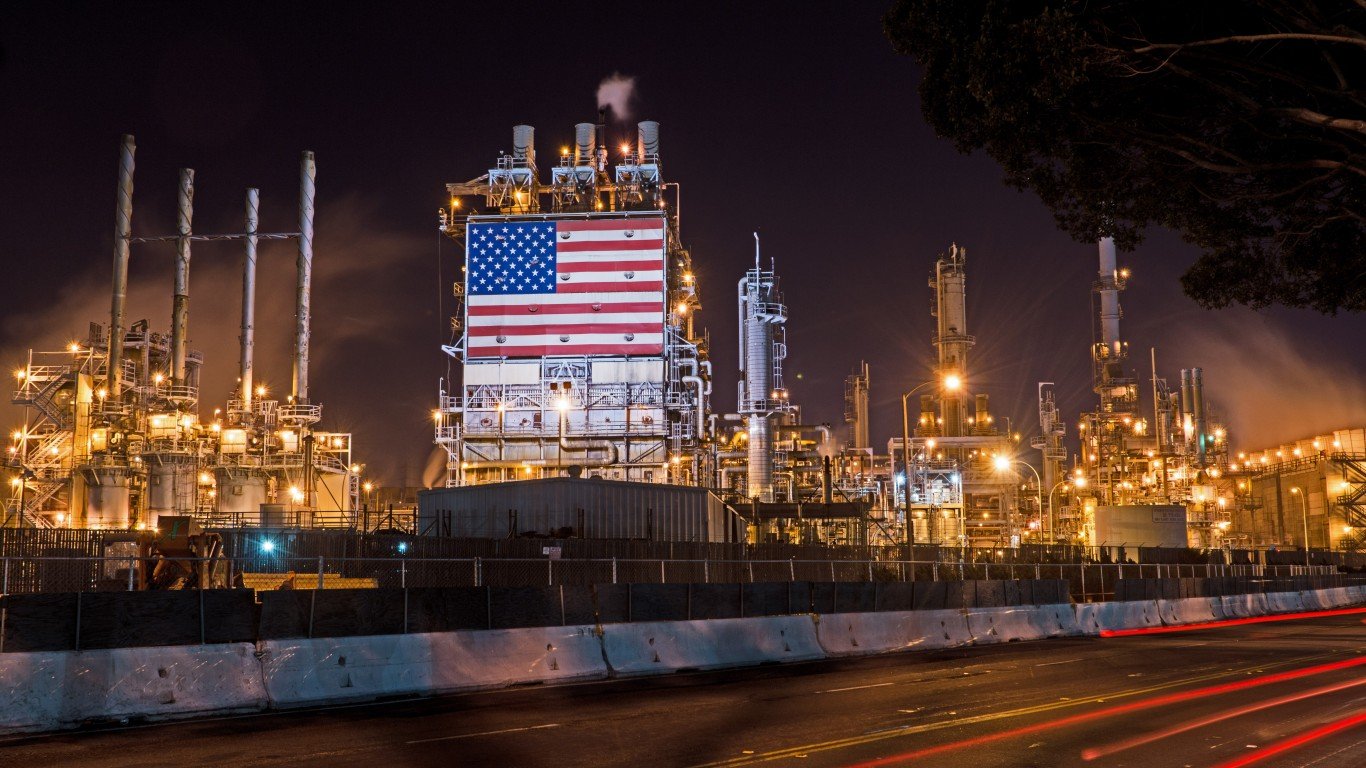
When upstream drilling captures windfall profits during oil spikes, the refineries and chemical plants on the downstream side absorb cheaper feedstock when prices fall, smoothing cash flow across the cycle. Refining margins remained buoyant in Q2 2026, with crude unit utilization at U.S. refineries hitting a record 97%. WTI crude was trading near $85 per barrel in late August 2026, keeping the upstream productive without the operational strain that extreme price spikes bring. Beyond hydrocarbons, Chevron signed a 20-year power purchase agreement with Microsoft to supply 2.67 gigawatts of behind-the-meter power for a West Texas data center, signaling a broadening role in American energy infrastructure.
Pillar 2: Income You Can Plan a Retirement Around
The dividend is the entire reason to own this. Chevron has increased its dividend for 39 consecutive years, a period that includes the Great Recession, stock market crashes, oil price collapses, and a global pandemic. The most recent increase, a 4% bump announced in early 2026, lifted the quarterly check to $1.78 per share. The yield sits near 3.5%, more than double the S&P 500 average. Coverage is comfortable: 2025 operating cash flow of $33.9 billion covered the $12.75 billion dividend payout 2.66 times, with free cash flow covering it 1.30 times. Total capital returned to shareholders in 2025 reached $27.1 billion.
By Q2 2026, Chevron’s financial momentum had only strengthened. The quarter delivered $19.7 billion in operating cash flow and $15.4 billion in adjusted free cash flow, a dramatic improvement from the timing-driven negative free cash flow in Q1. Adjusted earnings came in at $6.06 per share, beating Wall Street’s estimate of $5.11 by a wide margin. The company also reduced total debt by a record $8.4 billion during the quarter, leaving its balance sheet in the strongest shape it has seen in years.
Pillar 3: Cycle Survival, Proven
Look at 2020. Operating cash flow collapsed to $10.6 billion, and Chevron still paid $9.7 billion in dividends. The company has navigated $30 oil in both 2016 and 2020 and kept raising its payout both times. Debt-to-equity sits below 0.25, beta is 0.49, and structural cost reductions have now reached $3 billion in annual run-rate savings since 2024, already hitting the low end of the $3 billion to $4 billion target the company set for the end of 2026. In addition, Chevron achieved $1.5 billion in Hess-related synergies ahead of schedule, exceeding the original integration target by 50%.
Where It Will Underperform
In a sustained sub-$50 oil environment or a sharp acceleration in the energy transition, Chevron will lag growth stocks and pure-play renewables. That does not change the thesis. Low-cost barrels from the Permian and Guyana, the refining hedge that kicks in when crude falls, and a balance sheet built for downturns mean the dividend keeps coming. As CEO Mike Wirth has stated, the priority remains industry-leading free cash flow growth and superior shareholder returns across commodity cycles.
For patient owners, the setup rewards dividend reinvestment and a long time horizon over quarterly trading.
Editor’s note: This article has been updated to reflect Chevron’s Q2 2026 results, including record worldwide production of 4.07 million BOE per day, Q2 adjusted earnings of $6.06 per share, $19.7 billion in operating cash flow, $8.4 billion in debt reduction, and the completion of a 20-year power agreement with Microsoft. Share price, market cap, forward P/E, WTI crude price, cost reduction progress, and beta have all been refreshed to late-August 2026 figures.
Contact [email protected] for any questions or corrections.
Alex Sirois is a financial writer with experience spanning both retail and institutional investing. He has written for InvestorPlace and held roles at BNY Mellon and Bernstein, giving him a perspective that bridges Main Street portfolios and Wall Street analysis.
Alex holds an MBA from George Washington University and has built his career across multiple industries, including e-commerce, education, and translation — a breadth of experience that informs how he breaks down complex financial topics for everyday investors. His writing is conversational, actionable, and grounded in long-term, buy-and-hold investing principles.
At 247 Wall St., Alex focuses on delivering analysis that is both accessible and useful, with a clear emphasis on helping readers make more informed decisions with their money.