Quantum Computing’s $6 Billion ETF Is Up 54% This Year, And It Is Still Earlier Than the AI Trade Was in 2022
Elon Musk’s most fundamental advice to entrepreneurs looking to get investors to launch a new technology was to build a working prototype. Musk succinctly separated theory from tangible reality when he said: “Everything looks great on PowerPoint” as where everyone…

This post may contain links from our sponsors and affiliates, and Flywheel Publishing may receive compensation for actions taken through them.

Elon Musk’s most fundamental advice to entrepreneurs looking to get investors to launch a new technology was to build a working prototype. Musk succinctly separated theory from tangible reality when he said: “Everything looks great on PowerPoint” as where everyone may start, but only those theories that can be shown to actually work as purported, no matter how crudely they may appear, will stand a much better chance of generating investment capital.
Quantum Computing spent nearly two decades on the drawing board and as a theory until the first prototype debuted in 1998 at Oxford University. That set the stage for genuine R&D investment to truly commence.
Fast forward to 2026: Quantum Computing has made great strides and now sits roughly where A.I. was three years ago. The excitement is palpable; even though the bulk of pure-play quantum computing companies are pre-revenue with some still deeply in the red, there are enough major tech companies now involved to make investors willing to roll the dice. The $6 billion AUM Defiance Quantum ETF (NASDAQ: QTUM)’s +54.20% YTD and +98.72% 1-year gain is evidence of this confidence. With A.I. ETFs like iSharesUS Technology ETF (NYSE: IYW) with $25 billion AUM and Fidelity MSCI Information Technology Index ETF (NYSE: FTEC) at $21 billion AUM, can QTUM be far behind?
Defiance Quantum ETF

Sporting a 5-star Morningstar rating, QTUM tracks the The BlueStar® Machine Learning and Quantum Computing Index. This index focuses on companies specifically involved with quantum computing and machine learning. With a 0.4% expense ratio, QTUM maintains appeal to ETF investors, and its portfolio treads the line between:
- Pure-play quantum companies like Righetti, D-Wave and IonQ;
- Tech companies that may either explode with profits or collapse in red ink down the road, like Snowflake CoreWeave, or MongoDB;
- Stalwarts like Micron Technology, Marvell, and Intel, to offer strong growth, stability, and less need for antacids for shareholders.
As the ETF screens for quantum computing or machine learning involvement to qualify for inclusion, the IBMs, Alphabets and Honeywells warrant being in the QTUM portfolio by virtue of their involvement and R&D allocations dedicated to those internal R&D departments. At the time of this writing, QTUM’s details include:
|
Net Assets |
$6.02 billion |
YTD Return |
54.20% |
|
NAV |
$168.19 |
Expense Ratio |
0.40% |
|
52-Wk Range |
$86.01-$170.00 |
1-Year Return |
98.72% |
|
Avg. Daily Volume |
522,547 shares |
3-Year Return |
46.60% |
|
Yield |
0.88% |
5-Year Return |
23.91% |
Quantum Computing In The Near Future
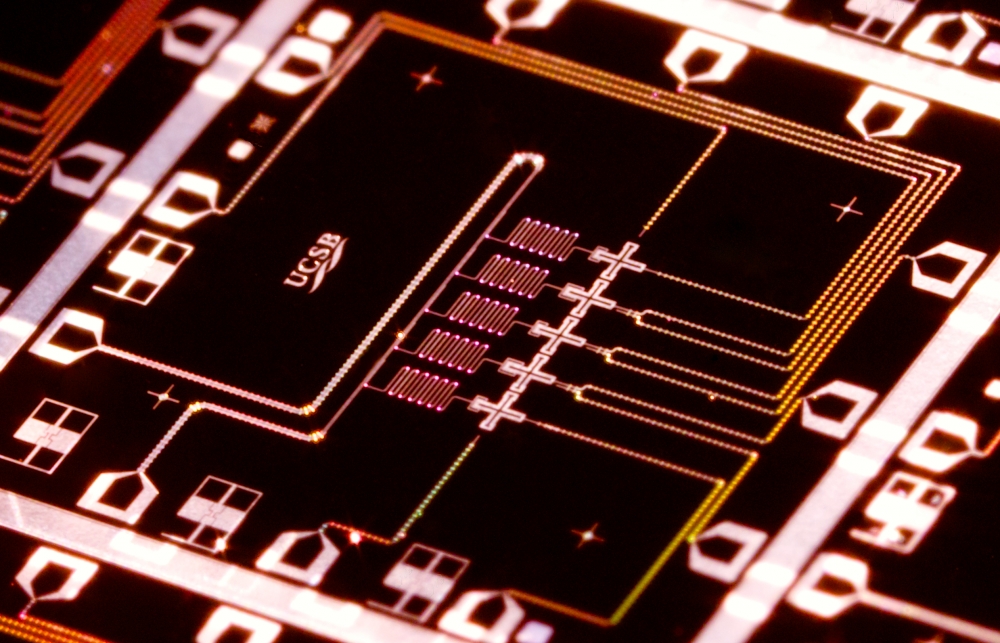
Quantum computing takes computing power and speed to exponentially greater specs due to qbits, which take the classic computing binary code of 0s and 1s to allow them simultaneous existence, instead of a sequential one. Not unlike with A.I., quantum computing’s applications in the fields of engineering, medicine, finance, cybersecurity, and other sectors may well be limitless. New breakthroughs from IBM and Alphabet have played a sizable part in the bullish prospects for quantum computing:
IBM Heron:
IBM’s Heron processor is a 156-qubit chip already being utilized in molecular chemistry and similar fields. Proving Heron’s superior functionality over current supercomputer processing power, IBM intends to expand its use as a cost-effective solution to many complex algorithmic calculation demands. By doing this, IBM plans to use Heron to introduce widespread Quantum Computing to prepare the market for its forthcoming Quantum Starling system, which can operate 100 million gates on 200 logical qubits. They believe Starling will effectively commercialize Quantum Computing for finance, medicine, and other industries that may require such levels of computing power.
Google Willow:
Google Willow is Alphabet’s 105-qubit quantum processor. It wowed the tech community and investors alike by executing a computation in 5 minutes that would take today’s fastest supercomputers 10 septillion years to calculate, using “quantum echoes”. That algorithm also showed advantages in the study of molecular structures not unlike MRI machines.
Google is currently researching and developing Willow applications for medicine, climate modeling, pharmaceuticals, logistics, and other industries.
Investors looking for the “next big thing” may wish to consider a 1-3% portfolio allocation as part of a tech sector diversification. While Quantum Computing shows great promise, the field is still very volatile, with some companies liable to crash and burn just as much as become the next Nvidia. Increasing exposure incrementally as newer breakthroughs are announced is a more prudent strategy to follow.
Contact [email protected] for any questions or corrections.
After 15 years on Wall Street with 7 of them as Director of Corporate and Municipal Bond Trading for a NYSE member firm, I started my own project and corporate finance consultancy. Much of the work involves writing business plans, presentations, white papers and marketing materials for companies seeking budgetary allocations for spinoffs and new initiatives or for raising capital for expansion or startup companies and entrepreneurs. On financial topics, I have been published under my own byline at The Motley Fool, 247wallst.com, DealFlow Events’ Healthcare Services Investment Newsletter and The Microcap Newsletter, among others. Additionally, I have done freelance ghostwriting writing and editing for several financial websites, such as Seeking Alpha and Shmoop Financial. I have also written and been published on a variety of other topics from music, audiophile sound and film to musical instrument history, martial arts, and current events. Publications include Copper Magazine, Fidelity (Germany), Blasting News, Inside Kung-Fu, and other periodicals.