TQQQ Turned $10,000 Into $353,789, but Friday’s 14% Crash Shows Leverage Cuts Both Ways
If you owned ProShares UltraPro QQQ (NASDAQ:TQQQ) into the close on Friday, you watched a position open near $85.22 and finish at $73.05, a 14.28% single-day drawdown that turned a $10,000 position into something like $8,570 before the weekend started.…

This post may contain links from our sponsors and affiliates, and Flywheel Publishing may receive compensation for actions taken through them.

If you owned ProShares UltraPro QQQ (NASDAQ:TQQQ) into the close on Friday, you watched a position open near $85.22 and finish at $73.05, a 14.28% single-day drawdown that turned a $10,000 position into something like $8,570 before the weekend started. The underlying, Invesco QQQ Trust (NASDAQ:QQQ), fell 4.8% on the same session, its worst day since April 2025. The 3x daily leveraged wrapper did exactly what the prospectus says it will do, and that explains most, but not all, of what happened.
The Arithmetic of a 3x Daily Wrapper on a Bad Friday
TQQQ is built to deliver three times the daily return of the Nasdaq-100, before fees, with a 0.82% expense ratio doing its slow work over time. On a session where QQQ closes down roughly 5% from the prior close (the published intraday figure was -4.8% against an open near $740.61), the math on the leveraged sleeve lands in the neighborhood of a 14% to 15% loss. You got the textbook outcome.
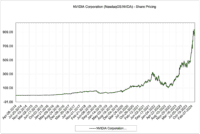
The week-over-week numbers are where this gets uncomfortable for anyone who held through. TQQQ is down 13.61% over the past week against QQQ’s 4.5% weekly decline. The leveraged fund is still up 38.79% year-to-date and 103.9% over the past year, while QQQ sits at 14.77% YTD and 34.35% over twelve months. The compounding cuts both ways. If you held TQQQ from June 2016, a $10,000 stake is roughly $353,789 based on the 3,437.89% ten-year return. That number is real, and so is Friday.
What Actually Did the Work
The selloff was a two-step event, not a single shock. On Wednesday, June 3, Broadcom guided its Q3 AI semiconductor revenue light, and the stock fell 13% to 15% on Thursday. That mattered far beyond Broadcom itself because Broadcom is a 5.57% weight in QQQ and the first material crack in the AI capex story that has carried the index for two years. NVIDIA at 9.74%, Microsoft at 8.63%, and Apple at 7.95% sit at the top of the fund. When the AI capex narrative wobbles, those four names move the index, and a 3x wrapper on that index moves more.
Friday brought the rate kicker. May payrolls printed 172,000 against an 80,000 estimate, against a BLS series that has the labor market sitting at 159,001 thousand total nonfarm jobs in May 2026, the highest on record in this series. A hot jobs print on a Friday morning is how you revive the rate-hike conversation. The 2-year Treasury yield closed the week at 4.05% after touching 4.13% on May 22, the highest level in sixteen months and a 96th percentile reading against the trailing year. The 10-year is at 4.47%, in the 93rd percentile of the last twelve months. Long-duration tech does not like that combination.
The breadth signal is the part most retail traders miss. The Nasdaq-100 closed Friday with 35 advancers against 65 decliners, while the S&P 500 split 257 to 244. The damage was concentrated in the names TQQQ levers into. That is the difference between a broad-market drawdown and a tech-specific repricing, and the leveraged Nasdaq wrapper is the cleanest expression of the second kind. The fact that QQQ’s top three holdings make up about a quarter of the fund is a defining characteristic of the fund, amplifying moves on the way up and the way down.
The Bleed Most Holders Have Not Priced In
TQQQ resets its leverage daily. In a sustained uptrend with low volatility, that daily reset compounds in your favor, which is how a 3x fund delivers a 194.5% five-year return against QQQ’s 110.09% over the same window. In a choppy or downward tape, that same daily reset creates volatility drag. A 5% down day followed by a 5% up day leaves QQQ slightly below where it started. The same sequence in TQQQ, levered 3x each day, leaves you further behind. Friday’s print pulled forward exactly that risk.
The VIX context is the curiosity. The fear gauge sat at 15.40 on June 4, in the lower quartile of the last twelve months, having traded between a 13.47 low in late December and a 31.05 peak in late March. Going into Friday, the market was priced for calm. A leveraged ETF crash on a complacent VIX print is the cleanest possible signal that the move was idiosyncratic to tech and rates, not a broad risk-off panic. Whether the VIX stays in the teens through next week is the first thing worth watching.
What Has to Hold for the Bounce, and What Would Break It
The bull case for TQQQ from here rests on three things that were true a week ago and may still be true. First, AI capex has to keep expanding. Vanguard’s 2026 baseline puts capital expenditure growth at 7.0%, well above the 3.8% pace of 2023 to 2024, and the AI Investor podcast framing from sell-side analysts is that 2026 capex is largely “in the bag” because the tech giants have signaled they will keep growing. Broadcom’s light guide is the first counter-data point in that thesis, not a thesis-killer, but it is the kind of crack that gets re-tested on every print.
Second, the Fed path matters more than the Fed funds rate itself. JP Morgan’s 2026 outlook has the market pricing roughly 80 basis points of cuts through 2026, with the firm guiding to a 10-year range of 4.00% to 4.50%. We are currently at the top end of that band. Goldman Sachs sees two further cuts in 2026 in its base case. One hot payrolls print does not unwind that, but two would. The May CPI release on June 11 is the next real data point, and it is the single most important calendar item for anyone holding TQQQ into next week.
Third, breadth has to stop deteriorating. The cited monthly breadth read of only 25% of S&P 500 names outperforming in May, down from 59% in January, is the kind of leadership narrowing that historically precedes either a reset or a final melt-up. The leveraged Nasdaq wrapper does not care which one happens, but the holder does. A narrow rally that keeps narrowing is exactly the regime where TQQQ has its best up-days and its worst down-days, often in the same week.
What to Watch Next Week, and the Honest Read
The May CPI print on June 11 is the headline event. A soft number reanchors the rate-cut narrative, takes the 2-year back below 4%, and probably retraces a fair chunk of Friday’s TQQQ damage. A hot number, particularly on core services, sends the 2-year above the May high and forces the rate-hike conversation from a fringe view into a base case. The second item is hyperscaler capex commentary in the next round of conference appearances. If Microsoft, Meta, Alphabet, and Amazon hold their AI capex guides, Broadcom looks like a single-name issue. If any one of them blinks, the AI capex pause becomes the story.
The honest read on TQQQ at $73.05 is that you are holding a leveraged bet on a thesis (AI capex keeps growing, the Fed cuts at least once or twice in 2026, breadth does not collapse) at the precise moment all three legs are getting tested in the same week. The five-year, ten-year, and YTD returns are real, and so is the fact that none of them tell you anything about what happens between now and the June 11 CPI release. The fund did its job on Friday. Whether the underlying conditions hold is the question, and the answer arrives in pieces over the next four trading days.
Contact [email protected] for any questions or corrections.
I am a long time investor and student of business, and believe finding good companies that can become great investments is the best game on earth. After 20 years of writing and researching the public markets it is clear that individuals have never had more tools and information to take control of their financial lives. From ETFs and $0 commissions to cryptos and prediction markets there has never been a greater democratization of access to investing.
I write to help people understand the investments available to them so they can make the best choice for their portfolio, whether they're starting out or looking for income in retirement.