Tesla Is Worth More Than The Next 10 Car Companies Combined
Tesla (NASDAQ: TSLA | TSLA Price Prediction) is not worth more than all the world’s car companies combined, although this is often raised in a “fake news” sort of way. A more accurate way to make the calculation is to…

Tesla (NASDAQ: TSLA | TSLA Price Prediction) is not worth more than all the world’s car companies combined, although this is often raised in a “fake news” sort of way. A more accurate way to make the calculation is to note that the figure is close to 10x, or maybe slightly more, in aggregate. The numbers are still staggering.
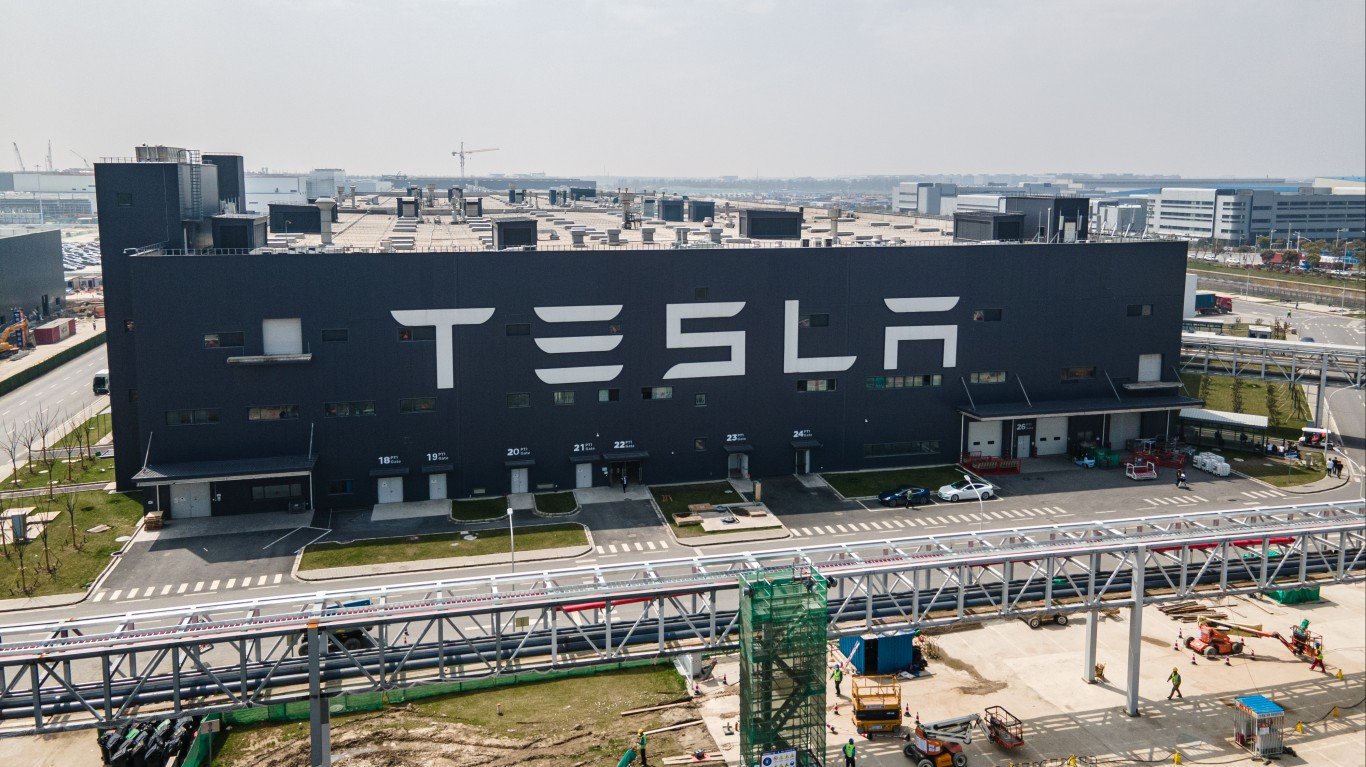
Tesla’s market cap is just shy of $1.5 trillion. That makes it the 9th most valuable company in the world. Among car companies alone, it is followed by Toyota (NYSE: TM) at $230 billion, BYD at $120 billion, and Hyundai at $100 billion. GM (NYSE: GM) and Ford (NYSE: F) are not even close to these levels. The fortunes of the two US companies have improved, but the market still views them as grim.
The comparison is not useful given the current businesses of these other automakers. Those with values just below Tesla’s are gas-powered energy giants. The exception is BYD, the world’s largest EV company. BYD’s relatively modest market cap may be due to its not having fully entered the two largest car markets outside China. These are the US and EU, where trade barriers have shut it out. The EU has become a more promising area of success as tariffs in some member states are falling.
Tesla’s auto sales figures are mediocre. Tesla sold 358,023 EVs worldwide in the first quarter of 2026, up 6.3% from the same period in 2025. It was, however, Tesla’s second-worst sales quarter since 2022. Ford sold 457,315 vehicles during the same period.
Tesla’s market cap is based on three factors, none of which may occur. The first is that EVs still have a very bright future, and they will eventually begin to replace gas-powered cars at a rapid pace. The problem with this theory is that EV sales have slowed in much of the world, hybrids have become more attractive, and Tesla wmay not continue to capture a large share of the EV market. Chinese EV companies may prevent that. Another challenge is that not all large gas-powered car companies have completely exited the business.
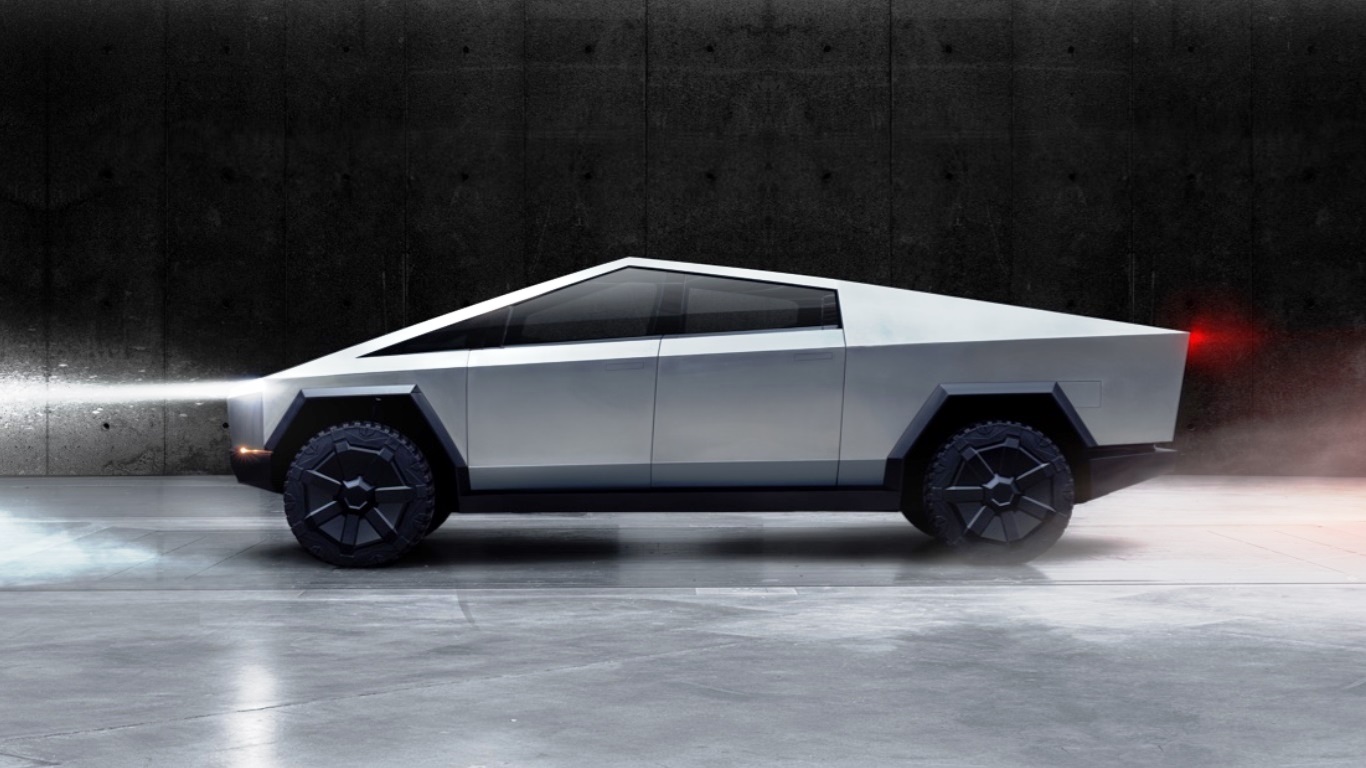
Second, Tesla’s self-driving car business had to produce a home run in sales. The Robotaxi may help achieve that. However, there is stiff competition from other companies, including Google’s Waymo, and selling driverless cars may never become mainstream in terms of demand, as local cities and states (in the US) need to approve their operations one by one.
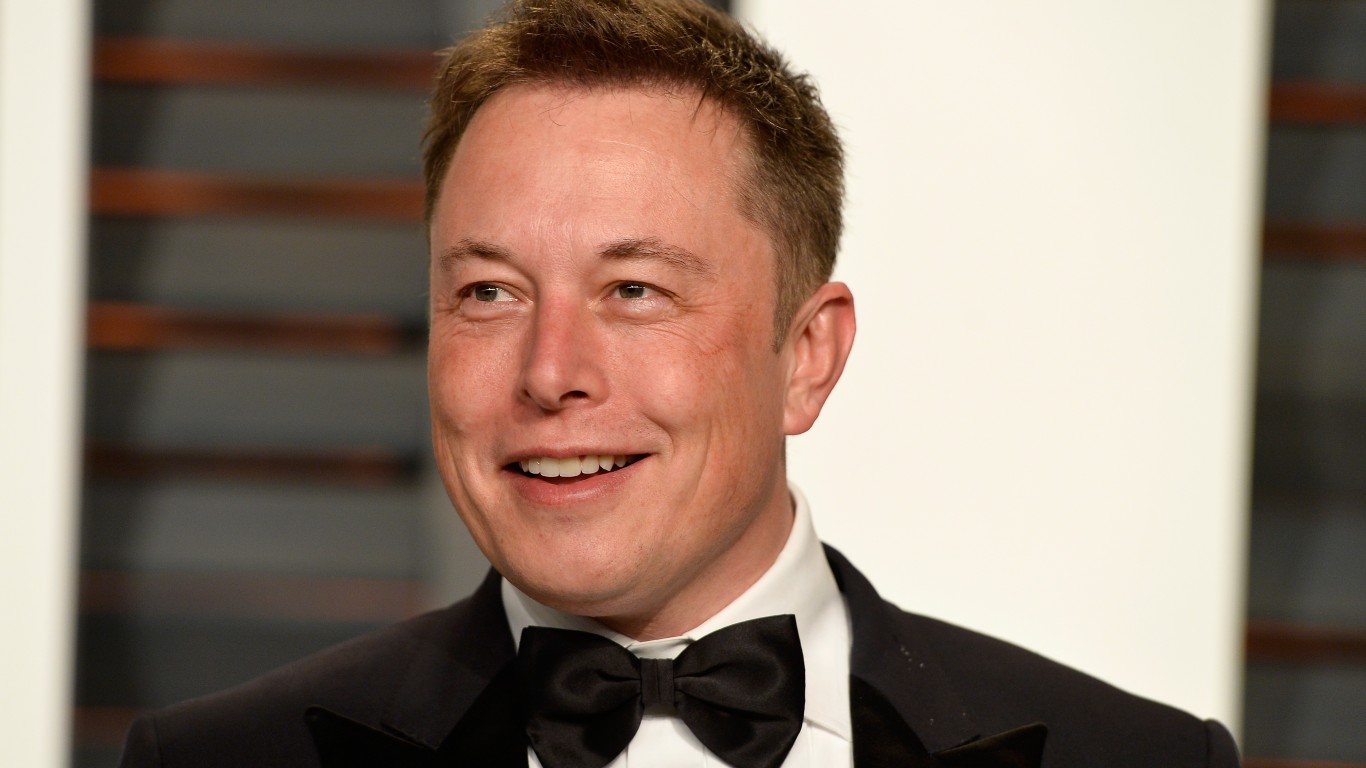
Finally, Elon Musk has sold investors on the idea that everyone in the world will eventually have a humanoid robot. A large number of these will be Tesla’s Optimus. Tesla’s path to success is high adoption and very little competition.
For now, investors think that Tesla’s future does not have much to do with EVs. For the time being, based on the evidence, that is not true. And the jury will be out for years in terms of Tesla’s other businesses.
Contact [email protected] for any questions or corrections.
Douglas A. McIntyre is the co-founder, chief executive officer and editor in chief of 24/7 Wall St. and 24/7 Tempo. He has held these jobs since 2006.
McIntyre has written thousands of articles for 24/7 Wall St. He is an expert on corporate finance, the automotive industry, media companies and international finance. He has edited articles on national demographics, sports, personal income and travel.
His work has been quoted or mentioned in The New York Times, The Wall Street Journal, Los Angeles Times, The Washington Post, NBC News, Time, The New Yorker, HuffPost USA Today, Business Insider, Yahoo, AOL, MarketWatch, The Atlantic, Bloomberg, New York Post, Chicago Tribune, Forbes, The Guardian and many other major publications. McIntyre has been a guest on CNBC, the BBC and television and radio stations across the country.
A magna cum laude graduate of Harvard College, McIntyre also was president of The Harvard Advocate. Founded in 1866, the Advocate is the oldest college publication in the United States.
TheStreet.com, Comps.com and Edgar Online are some of the public companies for which McIntyre served on the board of directors. He was a Vicinity Corporation board member when the company was sold to Microsoft in 2002. He served on the audit committees of some of these companies.
McIntyre has been the CEO of FutureSource, a provider of trading terminals and news to commodities and futures traders. He was president of Switchboard, the online phone directory company. He served as chairman and CEO of On2 Technologies, the video compression company that provided video compression software for Adobe’s Flash. Google bought On2 in 2009.