SpaceX Raises Record $75 Billion in Historic IPO, Reaches $1.8 Trillion Valuation
SpaceX just rewrote the IPO record book. The company sold more than 555 million shares at $135 each, raising $75 billion and landing a valuation of nearly $1.8 trillion. According to CNBC’s Melissa Lee, that places SpaceX as the seventh…

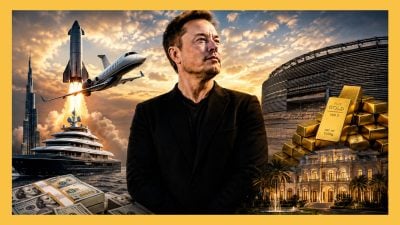
SpaceX just rewrote the IPO record book. The company sold more than 555 million shares at $135 each, raising $75 billion and landing a valuation of nearly $1.8 trillion. According to CNBC’s Melissa Lee, that places SpaceX as the seventh most valuable U.S. company, ahead of Tesla (NASDAQ:TSLA | TSLA Price Prediction), and pushes Elon Musk to the edge of a personal milestone no one has reached.
As Lee reported on the network this morning, “Musk is right on the cusp of becoming the world’s first trillionaire. And that will depend on where SpaceX and Tesla shares settle when the market closes today.”
The IPO That Overshadowed Every Other Listing
Demand for the offering was extraordinary. CNBC reported the book was about five times oversubscribed, with institutional whales leading the chase. BlackRock alone sought at least $5 billion worth of shares, according to the segment.
That crowding squeezed retail. Individual investors were slated to receive a share allocation in the low-20% range, below the roughly 30% allocation SpaceX had originally targeted. According to Yahoo Finance, the stock trades at $152.66 at 12:36 PM ET on June 12, well above the $135 price where the stock started the day trading.
For perspective on scale, SpaceX’s $75 billion haul exceeds the combined $36 billion raised by 71 other IPOs so far in 2026. One CNBC host noted that “If we get another mega IPO this year like OpenAI or Anthropic, the total would likely skyrocket again.”
How SpaceX Stacks Up Against America’s Largest Companies
SpaceX’s $1.8 trillion debut valuation now clears Tesla, which carries a $1.49 trillion market cap. Tesla shares were down 11.24% year-to-date through June 11, complicating the math on whether Musk becomes a trillionaire today.

Tesla’s reported Q1 ties to SpaceX are also material to investors weighing the read-across. The automaker disclosed a $2 billion equity investment in SpaceX and a semiconductor fab partnership at Gigafactory Texas, giving TSLA holders a small but direct slice of the upside from the IPO.
Microsoft (NASDAQ:MSFT) sits at a $2.84 trillion market cap with an AI business at a $37 billion annualized run rate, while Alphabet (NASDAQ:GOOGL) carries a $4.44 trillion market cap and a trailing P/E around 28. SpaceX is debuting at a richer multiple than either, with much of the premium tied to Starlink’s growth curve.
The Business Powering SpaceX’s $1.8 Trillion Valuation
SpaceX’s S-1 frames Starlink as the long-term margin engine. Connectivity revenue reached $7.6 billion in 2024, up 96.4% year over year, with income from operations of $2.0 billion. Consumer subscriber growth ran 96.5%, partly offset by an 8.1% decline in ARPU tied to international expansion.
That growth rides on a launch cost advantage rivals have not matched. Partial reusability has cut the cost per ton to orbit by roughly 85% versus the historical $18,500 per kilogram baseline, and Falcon 9 conducted 165 launches in 2025, more than half of global orbital activity. SpaceX has also invested over $15 billion in Starship, the lever for the next cost reset.
3 Things Investors Should Watch Next
Investors will have their eyes on three key topics. First, how SpaceX trades on Friday and next week. IPOs with books that are multiple times oversubscribed often see a strong initial pop, but early profit-taking from allocated investors can create volatility.
Second, investors will likely keep an eye on Tesla to see whether Elon Musk becomes the world’s first trillionaire. Tesla remains a major part of Musk’s net worth and reported Q1 FY2026 revenue of $22.39 billion and EPS of $0.41.
Finally, it will be interesting to watch the broader IPO market. SpaceX’s blockbuster debut could encourage other high-profile private companies, including OpenAI and Anthropic, to pursue public listings. If they do, 2026 could go down as one of the biggest years for venture-backed IPOs in market history.
Contact [email protected] for any questions or corrections.
Thomas Richmond is a financial writer and content strategist with 5+ years of experience covering stocks and financial markets. He has published over 500 articles focused on individual stock analysis, helping investors better understand business fundamentals, stock valuations, and long-term opportunities.
Thomas previously served as a Content Lead at TIKR, a stock research platform, where he helped scale the company’s blog to hundreds of articles per month and contributed to a weekly newsletter reaching more than 100,000 investors.
Outside of work, Thomas enjoys weight lifting and soccer.