SpaceX’s IPO Frenzy Just Spawned a New Risk That Could Cost Investors a Fortune
The stock market has spent years waiting for this moment. SpaceX (NASDAQ:SPCX) will begin trading this morning in what is the largest IPO in history. The IPO set a record, raising $75 billion at a valuation of approximately $1.77 trillion.…

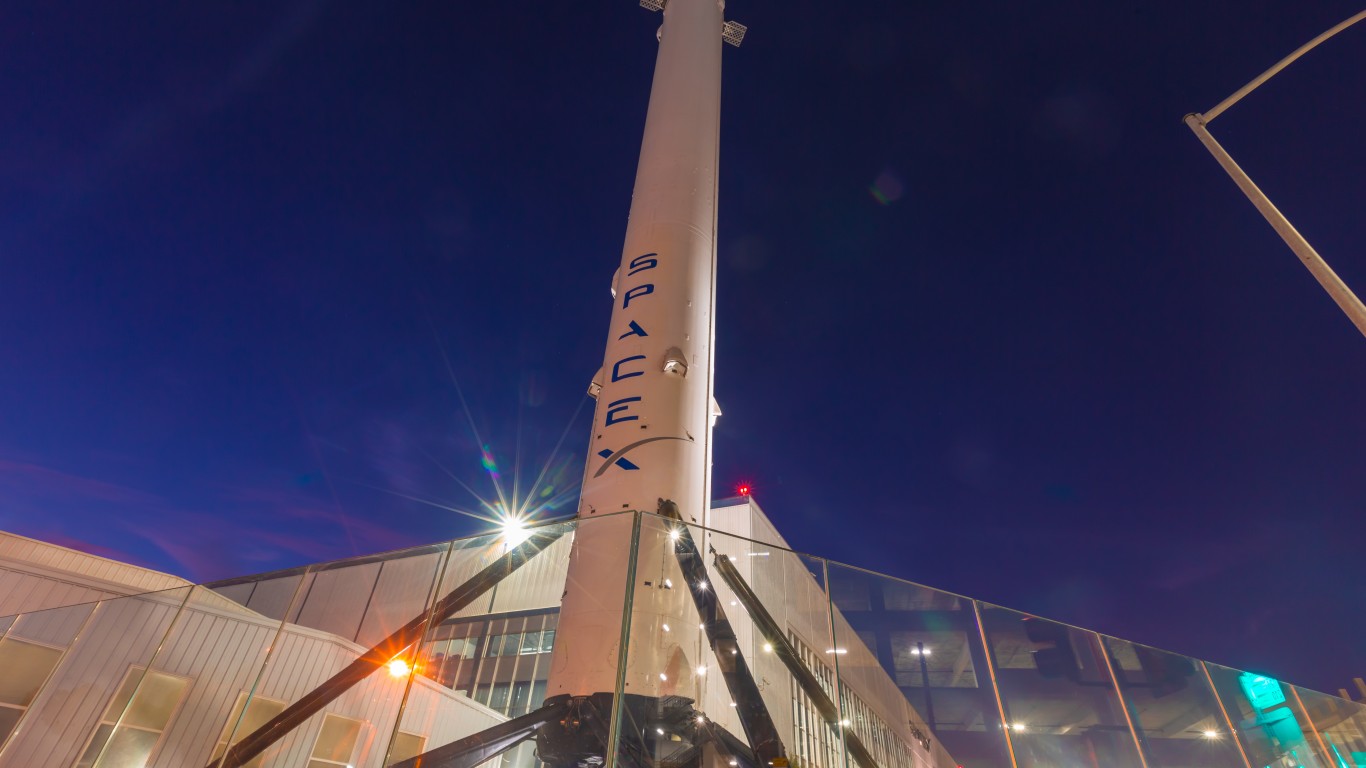
The stock market has spent years waiting for this moment. SpaceX (NASDAQ:SPCX) will begin trading this morning in what is the largest IPO in history. The IPO set a record, raising $75 billion at a valuation of approximately $1.77 trillion. Investor demand has been building for months as retail investors and institutions alike seek exposure to a company operating at the center of commercial space launches, satellite communications, defense technology, and future space exploration.
The excitement is understandable. Demand for the offering has reportedly exceeded expectations, and if trading opens strongly, the IPO could surpass even the lofty forecasts surrounding the debut.
Yet amid all the enthusiasm, a new risk has emerged. It isn’t the SpaceX stock itself. It’s the growing number of leveraged ETFs launching alongside it.
The Rise of the 2X SpaceX ETF
One of the most talked-about launches today is the ProShares Ultra SpaceX ETF (NYSEMKT: SPCF), a fund designed to deliver twice the daily return of SpaceX stock.
What that means is, if SpaceX rises 5% in a single trading session, SPCF aims to gain roughly 10%. If SpaceX falls 5%, SPCF is designed to lose approximately 10%. According to the fund’s prospectus, “The Fund does not seek to achieve two times (2x) the daily performance of SPCX for any period other than a day.” (emphasis added)
That warning matters.
Many investors assume a 2X ETF will generate twice the long-term return of the underlying stock. That is not how these products work. Instead, they reset daily and seek to capture daily price movements.
To achieve that objective, SPCF may not even hold significant amounts of SpaceX stock. The prospectus notes it can use derivatives, swap agreements, futures contracts, and money market instruments to generate its targeted returns.
The same filing warns that “it should lose approximately two times as much as SPCX when SPCX falls on a given day.”
Leveraged ETFs Are Becoming a Trading Frenzy
The timing is no coincidence. According to Goldman Sachs Global FICC & Equities, trading activity in leveraged and inverse ETFs has exploded over the past year.
| Leveraged ETF Market Activity | Recent Data |
| Daily notional trading volume | $90 billion |
| Growth over last 12 months | More than 3X |
| Percentage of total leveraged ETF assets traded in one day | ~50% |
Goldman Sachs reported that $90 billion in leveraged and inverse ETF volume traded on Tuesday alone, the highest level on record.
Perhaps even more remarkable, the Direxion Daily Semiconductor Bear 3X ETF (NYSEARCA:SOXS) — a 3X leveraged inverse semiconductor ETF — traded more than 1.3 billion shares in a single session. That ranks as the third-largest one-day volume ever recorded by a U.S.-listed ETF over the last two decades. Only the 2X leveraged Nasdaq-100-focused ProShares Ultra QQQ 2x Shares (NYSEARCA:QLD) and the 2X leveraged ProShares Ultra S&P500 2x Shares (NYSEARCA:SSO) posted larger single-session volumes, both during the 2008 financial crisis.
Those numbers suggest many participants are using these funds for short-term speculation rather than long-term investing.
Why Long-Term Investors Should Stay Away
SPCF is not alone. Themes ETFs is launching the Leverage Shares 2X Long SpaceX Daily ETF (CBOE:SPCH) and the Leverage Shares 2X Short SpaceX Daily ETF (CBOE:SSPC).
Its announcement includes an even more direct warning: “For periods longer than a single day, the Funds will lose money if SPCX has flat performance, and it is possible that the Funds will lose money even if SPCX performance rises or falls over a period longer than a single day.”
Surprisingly, that means investors can lose money even when their general prediction about SpaceX is correct.
This occurs because daily compounding creates performance drift over time. Volatility becomes the enemy. The more a stock swings, the harder it becomes for leveraged ETFs to match investor expectations over weeks or months.
Granted, professional traders may use these products for short-term strategies lasting hours or days. That is precisely what they were designed for. For most investors, however, leveraged ETFs resemble casino chips more than investment vehicles.
Key Takeaway
In short, investors interested in SpaceX should stick with SpaceX, or buy an index fund for indirect exposure to the stock.
The IPO itself already carries the risks associated with every mega-cap debut. History shows many high-profile IPOs struggle after the initial excitement fades, often spending years below their opening prices before fundamentals catch up with expectations. Adding 2X leverage on top of those risks only magnifies the potential downside.
Regardless of how SpaceX performs today, tomorrow, or next month, leveraged ETFs such as SPCF, SPCH, and SSPC are built for traders managing positions over a single day — not investors building wealth over years.
Ultimately, smart investors should focus on owning great businesses. Borrowed leverage and daily-reset ETFs may create excitement, but excitement and successful investing are rarely the same thing.
Contact [email protected] for any questions or corrections.
After two decades of patrolling the dark corners of suburbia as a police officer, Rich Duprey hung up his badge and gun to begin writing full time about stocks and investing. For the past 20 years, he’s been cruising the markets looking for companies to lock up as long-term holdings in a portfolio while writing extensively on the broad sectors of consumer goods, technology, and industrials. Because his experience isn’t from the typical financial analyst track, Rich is able to break down complex topics into understandable and useful action points for the average investor. His writings have appeared on The Motley Fool, InvestorPlace, Yahoo! Finance, Money Morning, and, of course, 24/7 Wall St. He has been featured in both U.S. and international publications, including MarketWatch, Financial Times, Forbes, Fast Company, and USA Today.