Musk’s SpaceX $1 Trillion Revenue Goal

Photo of Douglas A. McIntyre
By Douglas A. McIntyre Published

Quick Read

  • Musk targets $1 trillion in revenue for SPCX by 2031, but Goldman Sachs and Morgan Stanley forecast just $470 billion and $330 billion by 2030.

  • Starlink drives 61% of SpaceX revenue, but hitting $1 trillion would require rocket launches to grow 100x from just 165 per year.

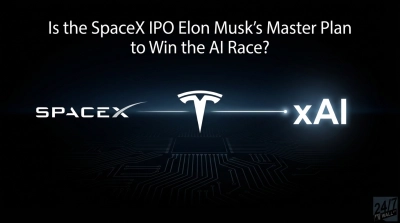
  • xAI faces fierce competition from OpenAI, Anthropic, and Google, making it unlikely to become a major revenue driver for SpaceX.

  • It sounds nuts, but SoFi1 is giving new Active Invest users up to $3,000 in stock for a limited time, and all it takes is a $50 deposit to get started.2 See for yourself (Sponsor)

This post may contain links from our sponsors and affiliates, and Flywheel Publishing may receive compensation for actions taken through them.
Musk’s SpaceX $1 Trillion Revenue Goal

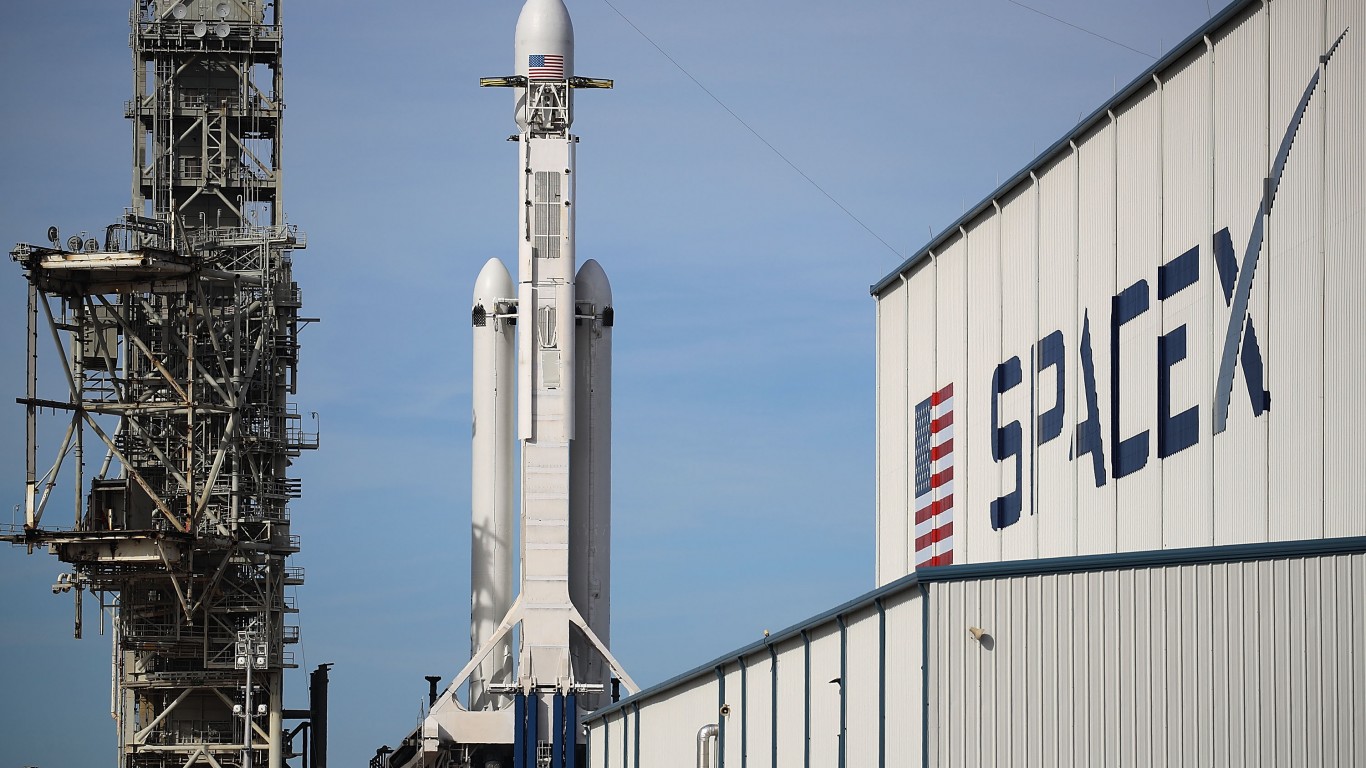
© 2022 NASA / Getty Images News via Getty Images

Elon Musk thinks SpaceX (NASDAQ: SPCX | SPCX Price Prediction) will have $1 trillion in revenue in 2031. Its revenue last year was just shy of $19 billion. According to CNBC, Goldman Sachs forecasts $470 in 2030. Morgan Stanley’s forecast is $330 billion. In other words, Musk has an immensely large target based on mainstream expectations. What is not clear is how he gets there.

Let’s look at how this $1 trillion forecast would work. Last year, Starlink had revenue of just over $11.4 billion, or 61% of SpaceX’s total. Space rockets had revenue of $4.1 billion. xAI’s revenue was $3.2 billion.

Set aside profits, because Musk’s $1 trillion target was not based on profitability.

(America’s company last year, based on revenue, was Amazon at $716 billion. It grew at a 12% year-over-year rate. But, Amazon is 18 times the size of SpaceX based on revenue.)

Starlink has fewer than 10,000 satellites in orbit. Several forecasts put that number at 40,000, but it is not entirely certain as to when. Based on current SpaceX revenue, could that number reach $700 billion? If the number of satellites rises 4x, that doesn’t seem likely.

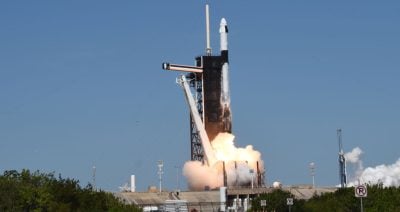
SpaceX rocket launches were 165 last year. Can this division’s revenue rise 100X? That would be earth-shattering.

xAI is the weakest of the SpaceX divisions. It also has the most competition among SpaceX’s businesses, which is led by OpenAI, Anthropic, Google, and at least a dozen other companies in the race to grow and become profitable. Infrastructure costs for data centers will rise into the hundreds of billions, if not trillions, of dollars a year. SpaceX is not highly profitable today, and most of those profits come from Starlink. xAI’s market share makes it unlikely it will become a major presence in the AI sector.

Can SpaceX’s revenue reach $1 trillion in five years? It is hard to see how.

Contact [email protected] for any questions or corrections.

Photo of Douglas A. McIntyre
About the Author Douglas A. McIntyre →

Douglas A. McIntyre is the co-founder, chief executive officer and editor in chief of 24/7 Wall St. and 24/7 Tempo. He has held these jobs since 2006.

McIntyre has written thousands of articles for 24/7 Wall St. He is an expert on corporate finance, the automotive industry, media companies and international finance. He has edited articles on national demographics, sports, personal income and travel.

His work has been quoted or mentioned in The New York Times, The Wall Street Journal, Los Angeles Times, The Washington Post, NBC News, Time, The New Yorker, HuffPost USA Today, Business Insider, Yahoo, AOL, MarketWatch, The Atlantic, Bloomberg, New York Post, Chicago Tribune, Forbes, The Guardian and many other major publications. McIntyre has been a guest on CNBC, the BBC and television and radio stations across the country.

A magna cum laude graduate of Harvard College, McIntyre also was president of The Harvard Advocate. Founded in 1866, the Advocate is the oldest college publication in the United States.

TheStreet.com, Comps.com and Edgar Online are some of the public companies for which McIntyre served on the board of directors. He was a Vicinity Corporation board member when the company was sold to Microsoft in 2002. He served on the audit committees of some of these companies.

McIntyre has been the CEO of FutureSource, a provider of trading terminals and news to commodities and futures traders. He was president of Switchboard, the online phone directory company. He served as chairman and CEO of On2 Technologies, the video compression company that provided video compression software for Adobe’s Flash. Google bought On2 in 2009.

Continue Reading

Top Gaining Stocks

WDAY Vol: 16,323,850
GDDY Vol: 3,030,517
CSGP Vol: 7,967,696
TTD Vol: 34,667,603
WDC Vol: 8,699,102

Top Losing Stocks

TPR Vol: 8,534,041
CTRA Vol: 73,319,495
CSCO Vol: 61,560,420
GLW Vol: 8,579,035
MPWR Vol: 506,489