Trump Denies a $300 Billion Iran Fund. The Gulf Has Already Pledged Billions
President Trump says the deal he just struck with Iran contains no $300 billion fund to rebuild it. His own vice president, and a growing trail of reporting, suggest otherwise. The disagreement sits at the center of the framework agreement…

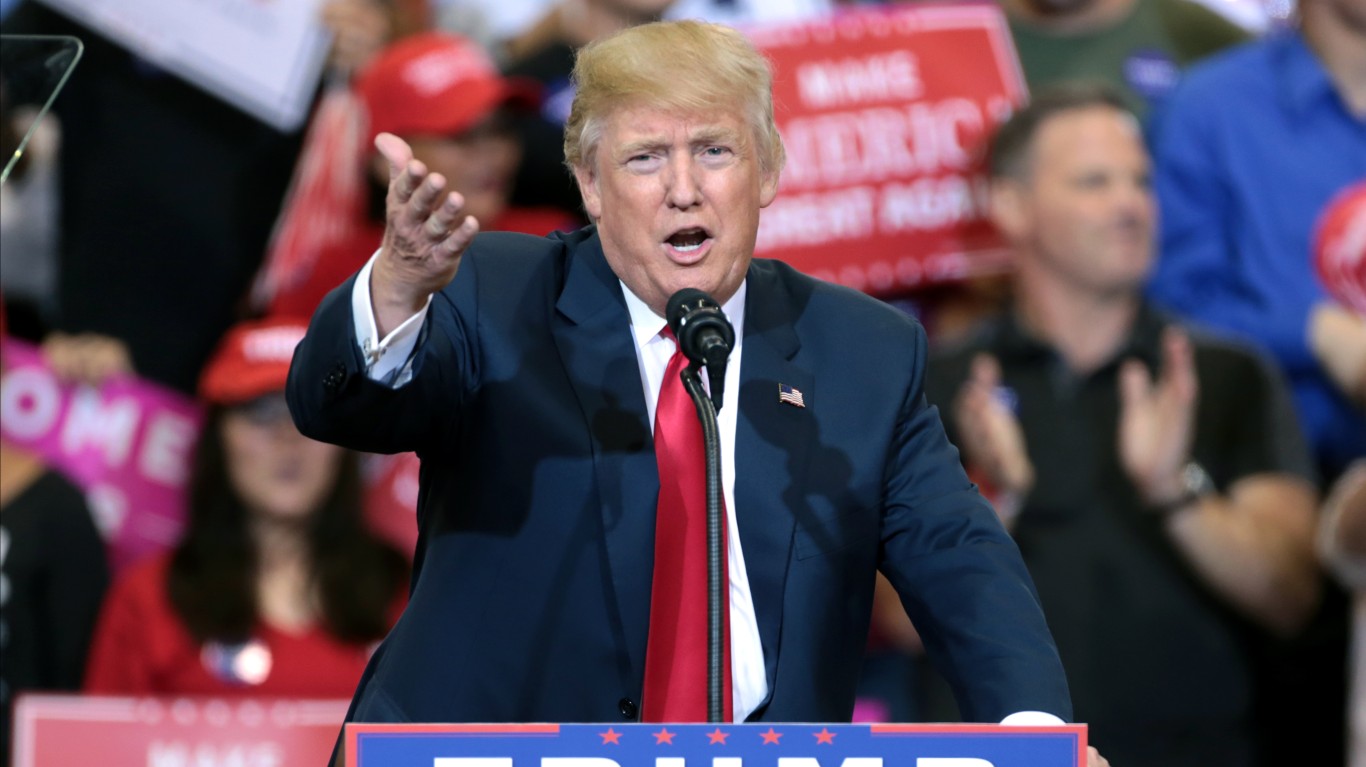
President Trump says the deal he just struck with Iran contains no $300 billion fund to rebuild it. His own vice president, and a growing trail of reporting, suggest otherwise.
The disagreement sits at the center of the framework agreement the United States and Iran reached on June 14 to end a war that began February 28, when American and Israeli forces struck Iran. The deal reopens the Strait of Hormuz, the narrow waterway that carries much of the world’s oil, lifts a US naval blockade, and is set to be signed Friday. Tucked inside it, according to multiple news organizations, is a plan to channel hundreds of billions of dollars into rebuilding the country the United States spent months bombing.
Two stories from one White House
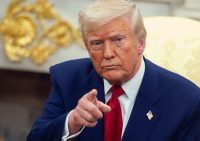
Trump has been emphatic that the fund is not part of what he agreed to. In social media posts, he dismissed reports of American money flowing to Iran as “Fake News,” and his stated position is that the memorandum contains no such fund.
His vice president, JD Vance, has told a different story. In a television interview the White House itself pointed reporters toward, Vance said Iran could gain access to a $300 billion reconstruction fund backed by Gulf states, provided it meets the deal’s terms. His one firm caveat was that not a dollar of it would come from American taxpayers.
The gap is narrower than it first looks. Both men agree that no American taxpayer money is involved. Where they part is whether the fund belongs to this deal at all, and here the leaked text complicates the president’s denial. A published version of the agreement reportedly commits the United States and its regional partners to ensure funding of at least $300 billion, with the mechanism to be set within 60 days. Trump says the fund is not in the agreement. The reported text, and his own vice president, say otherwise.
Where the money would come from
The structure of the fund helps explain how both positions can stand at once. According to Reuters, which cited a single source with direct knowledge of the deal, it is a private investment vehicle, not a government reconstruction or reparations program, and would contain no government money or grants.
The financing would instead come from companies based in the Gulf Arab states, the United States, Asia, South America, and Africa. Much of it is reportedly backed by Gulf states, though they are not the only source. Reuters reported that more than half of the $300 billion has already been pledged. That figure rests on one anonymous source and has not been confirmed by either government.
The money would not arrive as a single check. Contributors would supply loans, credit lines, or direct financing for specific sites damaged in the war, from refineries and airports to Iran’s large Mobarakeh steel complex. The investments would span energy, transport, manufacturing, and logistics. The vehicle would reportedly be named the Reconstruction and Development Fund.
From a $400 billion demand to a conditional fund
The fund is also less than Iran first asked for. Tehran originally sought $400 billion from the United States as compensation for war damage, according to Reuters. Washington refused, and the investment fund emerged as the alternative.
It comes with conditions. The fund would not be created or begin operating until a final peace deal is signed, and the current agreement only opens a 60-day window to negotiate that deal and map out projects. It is also separate from two other money questions in the talks: the lifting of US sanctions and the release of Iranian assets frozen abroad.
A very different picture in Gaza
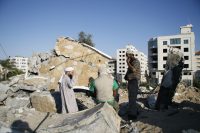
The pace of the Iranian commitments stands in sharp contrast to another rebuilding effort in the same region. Gaza’s reconstruction has barely started. By one assessment this spring, just 0.5% of the rubble had been cleared, and most of the money pledged by donor governments to a World Bank fund had never actually been transferred.
Reporting in early June found that the Iran war had pulled attention away from the Gaza effort, which Trump chairs through a body called the Board of Peace. The two funds are not formally linked, and money flowing toward one is not money taken from the other. But the gap is striking. A former adversary’s rebuild is filling up while a stalled one waits.
A fund that does not yet exist
For all the figures, the most important fact may be that the fund is still hypothetical. Nothing has been built, nothing has been transferred, and everything depends on a final agreement that remains far from settled. The terms are contested, the 60-day clock is short, and the war’s hardest questions were deferred rather than resolved.
What is clear is that the money is lining up faster than Washington can agree on whether it is part of the deal at all. If the deal holds, the countries that spent the spring under Iranian fire will help pay to rebuild the country that fired on them. If it collapses, the fund vanishes with it.
Contact [email protected] for any questions or corrections.
Don Lair writes about options income, dividend strategy, and the kind of boring-but-durable investing that actually funds retirement. He's the founder of FITools.com, an independent contributor to 24/7 Wall St., and a former writer for The Motley Fool.