Gaza Has Cleared Just 0.5% of Its Rubble as Investors Race to Fund Iran’s Rebuild
Two corners of the Middle East lie in ruins after a war. In one, the money to rebuild was promised by governments and has barely moved. In the other, it is being put up by private investors and is reportedly…

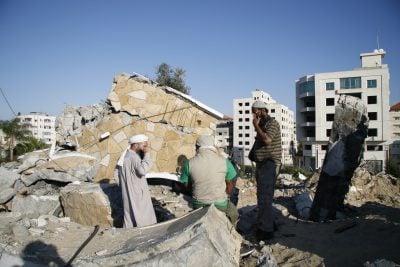
Two corners of the Middle East lie in ruins after a war. In one, the money to rebuild was promised by governments and has barely moved. In the other, it is being put up by private investors and is reportedly already more than half committed. The difference between them is not the scale of the destruction. It is who is paying, and what they expect to get back.
Gaza’s money was promised. It hasn’t arrived.
When Gaza’s reconstruction board was launched, donor countries pledged roughly $17 billion to rebuild the territory, including $10 billion promised by the United States. The need dwarfs that figure. The United Nations and the World Bank estimate the territory will require around $70 billion.
But pledges are not payments. Months after Gaza’s reconstruction board launched its official, World Bank-administered fund, donors had reportedly put almost nothing into it, according to the Financial Times. Some contributions have instead moved through a separate private account. Reuters has reported that the board was forced to press member countries to turn their promises into actual cash.
The result is visible on the ground. According to a spring assessment by the advocacy group J Street, just 0.5% of the rubble had been cleared. No major reconstruction contracts have been awarded, the Financial Times reported, because the board overseeing the work, which President Trump chairs, has not begun operating inside Gaza.
Much of the delay is built into the terms. By the same assessment, a large share of the promised money is tied to Hamas disarming and to further Israeli withdrawal, neither of which has happened. So the money sits, waiting on politics.
Iran’s money is chasing a return.
The contrast with Iran is sharp. As part of the framework deal to end its war with the United States, a $300 billion fund to rebuild the country is taking shape, and Reuters reports that more than half of it has already been committed.
The reason is structural. This is not aid. According to Reuters, the fund is a private investment vehicle with no government money in it, built for companies eager to put capital into a country that has been closed to most foreign investment for four decades. Vice President JD Vance has described it as backed by Gulf states and available to Iran if it meets the deal’s terms.
In other words, the people lining up to fund Iran’s rebuild expect to be paid back, with returns, from energy, transport, manufacturing, and logistics projects. That expectation is the reason the money is moving.
The difference is who pays, and why
The two efforts are not connected. No dollar pledged to Iran was taken from Gaza, and the funds answer to entirely different sponsors. But placed side by side, they reveal something about how reconstruction money behaves.
Charity is slow and conditional. Donor governments give out of obligation, attach strings, and often stall, as the nearly empty Gaza fund shows. Investment is fast and self-interested. When there is a return to be earned, capital commits quickly, as the Iran fund suggests.
Even the Iran story has its skeptics. Qatar’s foreign ministry has denied contributing to the fund and declined to discuss the $300 billion figure, a reminder that the commitments are reported rather than confirmed.
Both are still promises
Neither rebuild is a sure thing yet. Iran’s fund does not exist and will not be created until a final peace deal is signed, with only a 60-day window to reach one. Gaza’s money stays frozen until political conditions that have held for months finally shift. And nearly every figure on the Iran side traces to anonymous sources, with neither government confirming the numbers.
What the comparison makes clear is the order of priorities. The money to rebuild a former enemy came together in a matter of weeks because someone expects to profit from it. The money to rebuild Gaza was promised long ago and is still waiting, because no one does. In this part of the world, reconstruction money is following the return, not the rubble.
Contact [email protected] for any questions or corrections.
Don Lair writes about options income, dividend strategy, and the kind of boring-but-durable investing that actually funds retirement. He's the founder of FITools.com, an independent contributor to 24/7 Wall St., and a former writer for The Motley Fool.