Both Berkshire Hathaway and David Tepper Silently Dumped the Same Healthcare Giant in the Same Quarter
Warren Buffett's Berkshire Hathaway (NYSE:BRK.B) fully exited its UnitedHealth Group (NYSE:UNH) position in Q1 2026 under new CEO Greg Abel, ending a roughly 45% gain on about 5 million shares accumulated near the stock's 15-year low. David Tepper's Appaloosa Management…


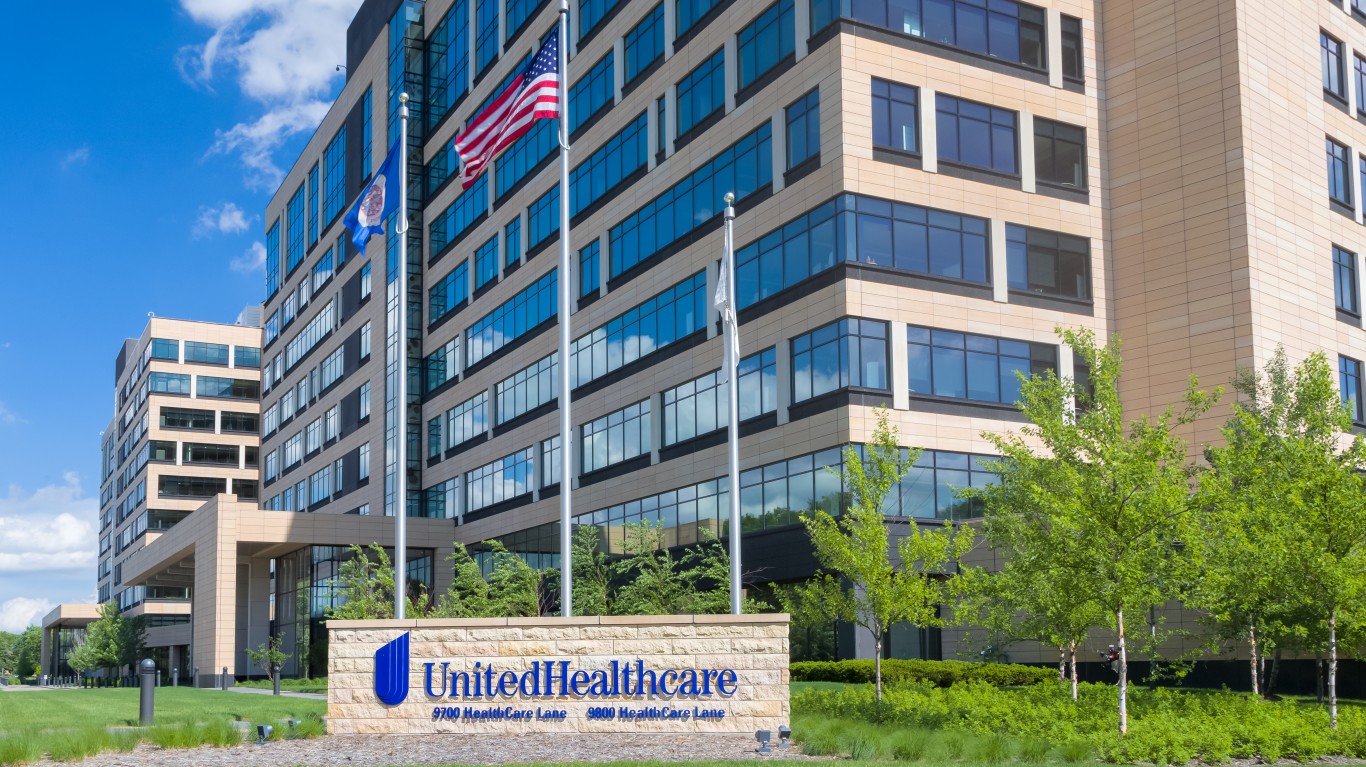
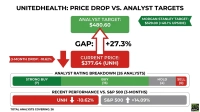
Warren Buffett’s Berkshire Hathaway (NYSE:BRK.B) fully exited its UnitedHealth Group (NYSE:UNH | UNH Price Prediction) position in Q1 2026, and David Tepper’s Appaloosa Management meaningfully reduced its UNH stake in the same quarter. Chase Coleman also sold UnitedHealth shares in Q1. Meanwhile, the sell-side stayed broadly bullish, with a consensus Buy rating and price targets from major houses clustered in the $430 to $492 range heading into Q2 earnings.
Two of the most scrutinized capital allocators in the business walked out the same door in the same quarter. That is worth thinking about.
What Berkshire and Tepper walked away from
UNH is not a broken business. Q1 2026 produced adjusted EPS of $7.23 against a $6.61 consensus, revenue of $111.7 billion, and a medical care ratio that improved 90 basis points to 83.9%. Management raised full-year adjusted EPS guidance to greater than $18.25. The stock was up roughly 32% year to date as of mid-July 2026, trading near a 52-week high above $420.
The path to get there involved deliberate shrinkage. UnitedHealthcare lost 965,000 Medicare Advantage members in Q1 2026 alone, and the 2026 plan calls for a 2.3 to 2.8 million membership contraction from exits of unprofitable contracts. Margin recovery driven by shedding members is real. It is also structurally different from margin recovery driven by pricing power, and that distinction matters for how durable the improvement proves to be.
The Berkshire exit deserves a closer read. Greg Abel, who took over from Buffett as chief executive at the start of 2026 (with Buffett remaining chairman), oversaw this and a broader portfolio repositioning that included exiting 16 positions in Q1 alone: among them Visa, Mastercard, and Amazon. Berkshire had first disclosed the UNH position in August 2025, after accumulating roughly 5 million shares at around $271 each, near a 15-year low for the stock. By Q1 2026, UNH had rebounded roughly 45%, and the entire stake was gone. That sequence describes a profitable contrarian trade executed quickly, not a long-term conviction thesis, and the context matters for drawing conclusions from the exit.
The thesis behind the exits
Three forward-looking pressures appear to be weighing on the trade. First, preliminary 2027 Medicare Advantage rate announcements came in below expectations, the same catalyst SGA Global Growth Fund cited on June 17, 2026 when it sold its entire UNH stake. Second, a federal OIG report on June 12, 2026 documented post-hospital care denial rates of 51 to 80% at UnitedHealth’s Medicare Advantage plans, well above peers. Fairview Health Services said the same week it will stop accepting UnitedHealthcare Medicare Advantage in 2027, affecting more than 11,000 patients.
Third, Optum Health’s profitability was rebuilding slower than the Street modeled. Q1 2026 Optum operating earnings of $3.3 billion still trailed the prior-year $3.89 billion, even after Q3 2025’s collapse to $255 million from $2.2 billion. At the time of writing, the forward P/E sat around 22x, an elevated multiple against quarterly earnings growth of less than 1% and revenue growth of 2%.
What this signals for a retirement portfolio
Institutional exits do not automatically equal a verdict. Berkshire trimmed UNH for reasons tied to portfolio rotation under new leadership, not necessarily any view on the company’s fundamental prospects. Analysts at Morningstar attributed the exit primarily to personnel shifts within Berkshire rather than a conclusion on UnitedHealth’s outlook. Tepper rotates aggressively and frequently. Both have been wrong on individual names. UNH’s dividend yield of roughly 2.2%, paid quarterly at $2.32 per share, still makes it a defensive income holding by construction.
The picture shifted materially when UnitedHealth reported Q2 2026 results on July 16. Adjusted EPS came in at $6.38, well ahead of the $4.90 consensus, on revenue of $112.0 billion. More importantly, management raised full-year 2026 adjusted guidance to $19.50 to $20.00 per share, up from the prior outlook of greater than $18.25. Optum generated Q2 operating earnings of $4.0 billion, a significant step up from Q1’s $3.3 billion and representing 160 basis points of margin expansion year over year. The Q2 beat addressed one of the three pressures cited above: Optum’s recovery is moving faster than critics feared.
The remaining risks have not vanished. The 52-week low of $228.48 reflects how quickly the medical care ratio can become the dominant variable in the stock. If 2027 Medicare Advantage rates land where preliminary signals hint, and if denial-rate scrutiny leads to either forced approvals or additional network attrition, both outcomes feed directly back into the MCR. The bull case requires a 2027 rate environment that several sophisticated holders apparently did not want to underwrite heading into Q1. Whether the stronger Q2 and raised guidance resolve that concern is the central question for the rest of 2026.
Editor’s note: This article has been updated to reflect Berkshire Hathaway’s Q1 2026 13F filing details, including the approximately 5 million shares accumulated at roughly $271 and the role of CEO Greg Abel in the portfolio rotation; UnitedHealth’s Q2 2026 results reported July 16 (adjusted EPS of $6.38, revenue of $112.0 billion, and full-year adjusted guidance raised to $19.50 to $20.00 per share); updated Optum operating earnings of $4.0 billion in Q2; the current dividend yield of approximately 2.2% at $2.32 per quarter; and revised analyst price target ranges reflecting upgrades from KeyBanc, Wells Fargo, RBC, and Piper Sandler into the $463 to $485 range.
Contact [email protected] for any questions or corrections.
Omor Ibne Ehsan is a writer at 24/7 Wall St. He is a self-taught investor with a focus on growth, cyclical, and dividend equities that have strong fundamentals, value, and long-term potential. He also has an interest in high-risk, high-reward investments such as penny stocks.