Warren Buffett’s Berkshire Big Shakeup Continues: UnitedHealth Stake Completely Sold
For years, investors treated Warren Buffett’s Berkshire Hathaway (NYSE:BRK-A | BRK-A Price Prediction)(NYSE:BRK-B) as the market’s ultimate “follow-the-smart-money” signal. If Buffett bought, retail investors paid attention. If he sold, Wall Street usually started asking uncomfortable questions. Now Berkshire Hathaway has…

This post may contain links from our sponsors and affiliates, and Flywheel Publishing may receive compensation for actions taken through them.
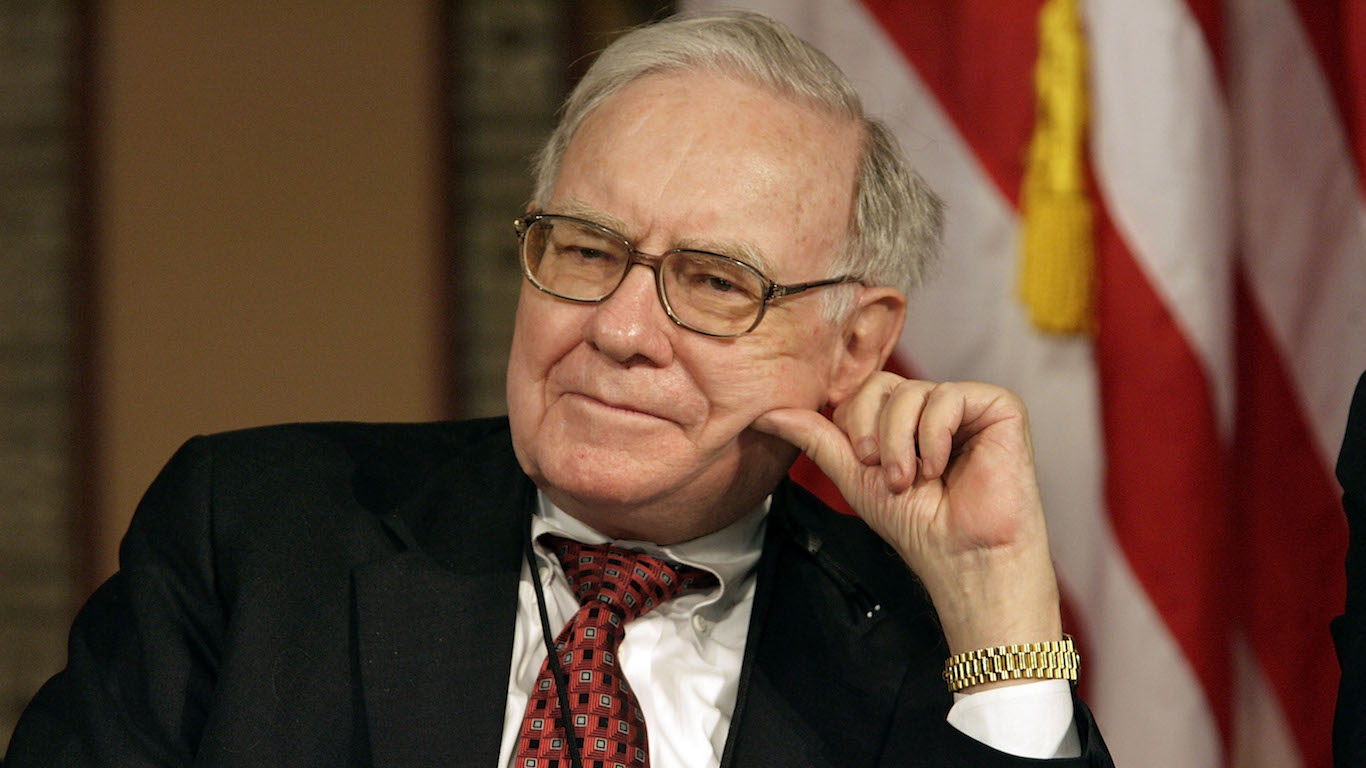
For years, investors treated Warren Buffett’s Berkshire Hathaway (NYSE:BRK-A | BRK-A Price Prediction)(NYSE:BRK-B) as the market’s ultimate “follow-the-smart-money” signal. If Buffett bought, retail investors paid attention. If he sold, Wall Street usually started asking uncomfortable questions.
Now Berkshire Hathaway has given investors another one to chew on. According to Berkshire’s latest SEC 13F filing, the conglomerate completely exited its stake in UnitedHealth Group (NYSE:UNH). That ends one of the shortest — and most profitable — healthcare bets Berkshire has made in years.
The timing matters. Berkshire first revealed the position in August 2025 after UnitedHealth’s stock had collapsed more than 50% in just a few months. Since then, the shares have rebounded from $271 to nearly $394 as of last Friday — a 45% rise in roughly nine months.
So the big question for investors is simple: Did Berkshire just lock in a fast profit, or is new CEO Greg Abel signaling that tougher days still lie ahead for UnitedHealth?
Berkshire Was Greedy When Others Were Fearful
UnitedHealth’s collapse in 2025 was one of the sharpest declines for a Dow Jones Industrial Average component.
The troubles began after the December 2024 assassination of CEO Brian Thompson. The company then endured a cascade of operational and regulatory setbacks that kept hitting the stock, including:
- A rare first-quarter earnings miss tied to elevated medical costs
- The abrupt resignation of CEO Andrew Witty
- A Justice Dept. criminal probe into alleged Medicare fraud
That’s a brutal combination for any insurer, and investors fled.
Between April and August, UnitedHealth shares lost more than half their value and touched a 15-year low. Yet Berkshire Hathaway stepped in during the second quarter of 2025 and accumulated roughly 5 million shares valued at around $1.6 billion.
Surprisingly, the market response after Berkshire disclosed the position was immediate. Investors viewed the move as a Buffett-style contrarian bet — buying a dominant business while fear was peaking. And the numbers backed that view up.
Even after its troubles, UnitedHealth remained the largest health insurer in America with more than $400 billion in annual revenue. Its Optum healthcare services business continued generating strong cash flow while rivals struggled with similar medical-cost pressures.
Here’s what the valuation looked like around Berkshire’s entry point:
| Company | Forward P/E (Aug. 2025) | Approx. Dividend Yield |
| UnitedHealth | 16.6 | 3.13% |
| Elevance Health (NYSE:ELV) | 9.9 | 2.26% |
| Cigna (NYSE:CI) | 9.8 | 2.00% |
| Humana (NYSE:HUM) | 16.5 | 1.26% |
Source: YCharts.com.
That says UnitedHealth was still a strong business trading at recession-level valuations despite remaining profitable.
Greg Abel Is Already Putting His Stamp on Berkshire
The UnitedHealth sale also tells investors something else: Greg Abel is not simply preserving Berkshire in amber.
Buffett stepped away from Berkshire’s day-to-day operations at the end of 2025, handing leadership to Abel. While Abel pledged to follow Buffett’s investment philosophy, he has already made several notable portfolio moves.
Just weeks into the role, Berkshire fully exited Kraft Heinz (NYSE:KHC). It also sharply reduced its position in Bank of America (NYSE:BAC) after having already trimmed the stake in prior quarters.
Now UnitedHealth and Amazon have joined the list. Berkshire has reduced its Amazon (NASDAQ:AMZN) position by 77% in the fourth quarter. Notably, both Amazon and UnitedHealth were widely believed to be investments tied to Berkshire investing lieutenant Todd Combs rather than Buffett personally. That distinction matters.
Abel may be reshaping Berkshire around businesses he views as more resilient during a downturn. Healthcare insurers face rising scrutiny from regulators, elevated medical utilization, and political pressure over Medicare Advantage practices. Meanwhile, Amazon continues trading at premium valuations tied heavily to AI and cloud growth expectations.
In other words, Abel may simply be reducing exposure to businesses where the downside risks have expanded faster than the upside potential.
Granted, Berkshire’s UnitedHealth exit does not automatically mean the stock is doomed. Berkshire has sold winning investments before that continued climbing.
Should Investors Follow Berkshire and Sell UnitedHealth?
UnitedHealth is no longer the bargain Berkshire likely bought in mid-2025. At nearly $394 per share, the stock has recovered much of its lost ground. Yet the company still faces unresolved issues.
The DOJ investigation has not disappeared. Medical-cost inflation remains elevated across the insurance industry. And management turnover created fresh uncertainty at precisely the wrong time.
That said, UnitedHealth still generates enormous cash flow and remains deeply embedded in the U.S. healthcare system. According to the company’s earnings releases, it produced more than $23 billion in operating cash flow over the last 12 months. The stock also still trades below its historical valuation averages.
Key Takeaway
In short, Berkshire’s sale looks less like a panic move and more like disciplined portfolio management after a fast rebound.
Long-term investors probably should not treat this as an automatic sell signal. But sharp investors also should not ignore what Abel may be telegraphing — namely that UnitedHealth’s easy recovery money has likely already been made.
Regardless of how you look at it, Berkshire pulled off a textbook contrarian trade: buying when fear crushed the stock and exiting after a 45% rebound in less than a year. That’s hard to argue with.
Contact [email protected] for any questions or corrections.
After two decades of patrolling the dark corners of suburbia as a police officer, Rich Duprey hung up his badge and gun to begin writing full time about stocks and investing. For the past 20 years, he’s been cruising the markets looking for companies to lock up as long-term holdings in a portfolio while writing extensively on the broad sectors of consumer goods, technology, and industrials. Because his experience isn’t from the typical financial analyst track, Rich is able to break down complex topics into understandable and useful action points for the average investor. His writings have appeared on The Motley Fool, InvestorPlace, Yahoo! Finance, Money Morning, and, of course, 24/7 Wall St. He has been featured in both U.S. and international publications, including MarketWatch, Financial Times, Forbes, Fast Company, and USA Today.