1 Transformative Catalyst Makes Hormel’s High Yield an Incredibly Reliable Anchor for Retirees
Hormel Foods has been in a slow-motion bear hug. The stock sits 22.8% below its 52-week high, and the trailing GAAP payout ratio looks ugly after a $234 million non-cash impairment and a $61 million whole-bird turkey divestiture loss. But…

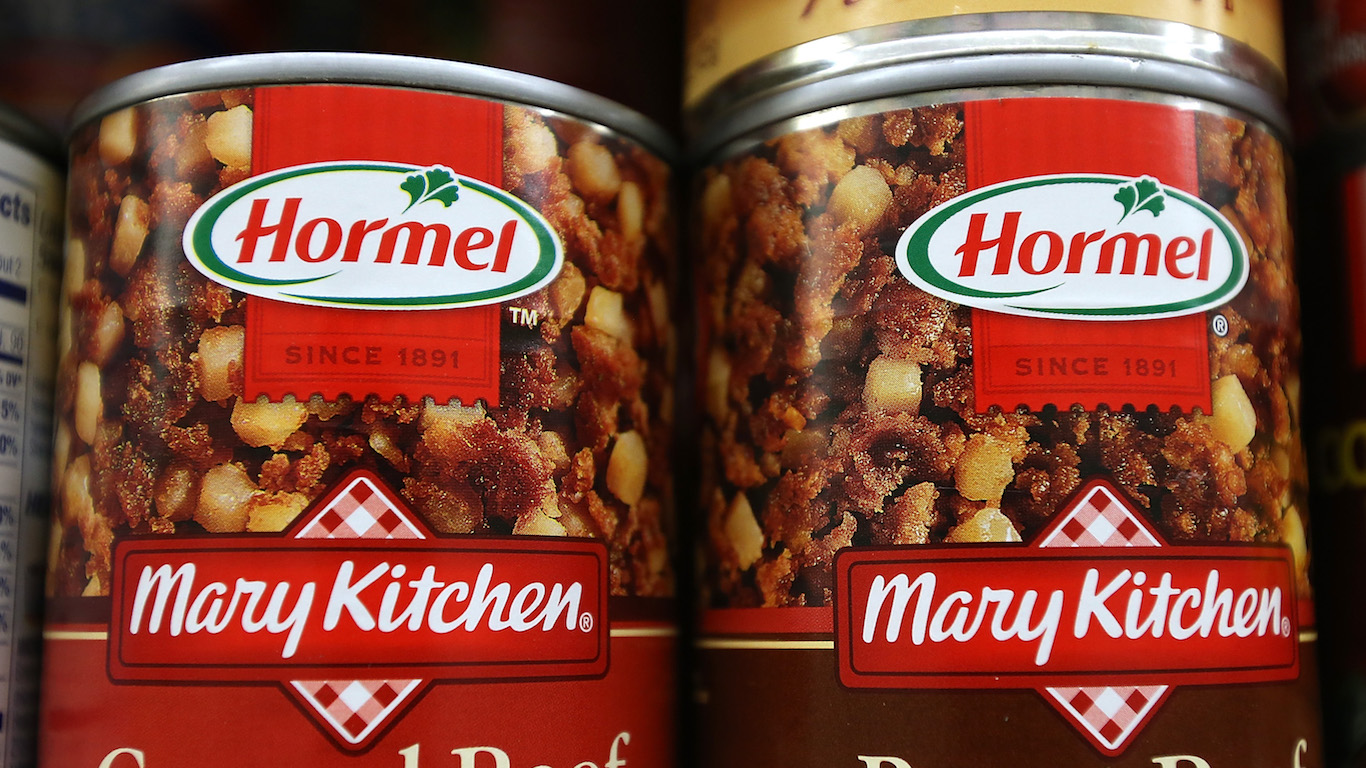
Hormel Foods has been in a slow-motion bear hug. The stock sits 22.8% below its 52-week high, and the trailing GAAP payout ratio looks ugly after a $234 million non-cash impairment and a $61 million whole-bird turkey divestiture loss. But underneath the noise, the cash engine at Hormel Foods (NYSE:HRL | HRL Price Prediction) is still humming, and this Dividend King‘s payout looks safer than the headlines suggest.
Dividend Snapshot
| Metric | Value |
|---|---|
| Annual Dividend | $1.17 per share |
| Dividend Yield | 4.79% |
| Consecutive Years of Increases | 60 years |
| Most Recent Increase | 1% (December 2025) |
| Dividend King Status | Yes |
The GAAP Optics Look Worse Than the Cash Reality
| Metric | Value | Assessment |
|---|---|---|
| GAAP EPS Payout (FY25) | 132.4% | Distorted by impairments |
| Adjusted EPS Payout (FY25) | ~81% ($1.16/$1.43) | Elevated |
| FCF Payout (FY25) | 118.5% | Cyclical trough |
| 5-Yr Avg FCF Payout | 77.7% | Healthy norm |
FY25 dividends of $633.2 million outran free cash flow of $534.3 million, a $98.8 million shortfall. That’s the panic. But Q1 FY26 operating cash flow jumped to $349.2 million and Q2 surged 217% to $178.9 million. The trough is behind them.
A Fortress Balance Sheet With Room to Spare
| Metric | Value |
|---|---|
| Cash on Hand (Q2 FY26) | $826.75 million |
| Total Liabilities | $5.477 billion |
| Shareholders Equity | $7.916 billion |
| EBITDA (TTM) | $1.251 billion |
| Beta | 0.343 |
Equity meaningfully exceeds total liabilities, and the cash pile grew 23.45% year over year. This balance sheet has the cushion to sustain the dividend through a cyclical trough.
60 Years of Increases and Counting
| Year | Annual Dividend |
|---|---|
| 2026 | $1.17 |
| 2025 | $1.16 |
| 2024 | $1.13 |
| 2023 | $1.10 |
| 2022 | $1.04 |
No cuts across the 27-year dataset, including 2008 and 2020. Recent growth has slowed to a token 1%, which tells me management is preserving the streak while it rebuilds margins.
Management Calls Out the “Legacy”
CEO Jeff Ettinger said on the Q4 FY25 call: “Demonstrating our long-standing commitment to shareholder returns, we recently announced a 1% increase in our quarterly dividend… This marks an impressive milestone, 60 years of uninterrupted dividend increases at Hormel Foods, a legacy we’re extremely proud of.” On Q2 FY26, he added that results gave them “even greater confidence in our ability to deliver our full-year outlook.” Five directors, including Chairman William Newlands, bought stock at $22.65 on March 31, 2026. Insiders are voting with their wallets.
Verdict: Safe, With an Asterisk
Dividend Safety Rating: Safe. The adjusted EPS payout near 81% is tight, but FY26 guidance of $1.43 to $1.51 in adjusted EPS pulls forward coverage back toward historical norms, and food spending has been remarkably stable at 7.1% to 7.4% of total PCE through 2026. The bull case strengthens if the Transform and Modernize initiative continues to lift margins (Q2 adjusted operating margin already expanded to 9.9% from 9.1%). The risk case builds if commodity inflation reignites and Retail segment growth stays flat. For retirees, a 4.79% yield from a 60-year Dividend King is a reliable anchor.
Contact [email protected] for any questions or corrections.
Alex Sirois is a financial writer with experience spanning both retail and institutional investing. He has written for InvestorPlace and held roles at BNY Mellon and Bernstein, giving him a perspective that bridges Main Street portfolios and Wall Street analysis.
Alex holds an MBA from George Washington University and has built his career across multiple industries, including e-commerce, education, and translation — a breadth of experience that informs how he breaks down complex financial topics for everyday investors. His writing is conversational, actionable, and grounded in long-term, buy-and-hold investing principles.
At 247 Wall St., Alex focuses on delivering analysis that is both accessible and useful, with a clear emphasis on helping readers make more informed decisions with their money.