Stanley Druckenmiller Backs These 3 AI Infrastructure Stocks: Should You Follow?
Billionaire investor Stanley Druckenmiller has filed positions in three AI infrastructure semiconductor stocks, but the real question is whether the valuations still make sense after one of them surged over 600% in a single year.


Stanley Druckenmiller’s Duquesne Family Office disclosed positions in three AI-infrastructure semiconductor names, Broadcom (NASDAQ: AVGO | AVGO Price Prediction), Micron Technology (NASDAQ: MU), and Seagate Technology (NASDAQ: STX) in its 13F for the quarter ended March 31, 2026, filed May 15, 2026. Per the disclosure, Broadcom is the largest position of the three, Seagate is next, and Micron is the smallest. These are sized as thematic exposure rather than core, high-conviction positions.
The unifying thesis is straightforward: every layer of the AI build-out, custom silicon, memory, and high-capacity storage, has been compounding revenue and margins faster than the broader tech tape.
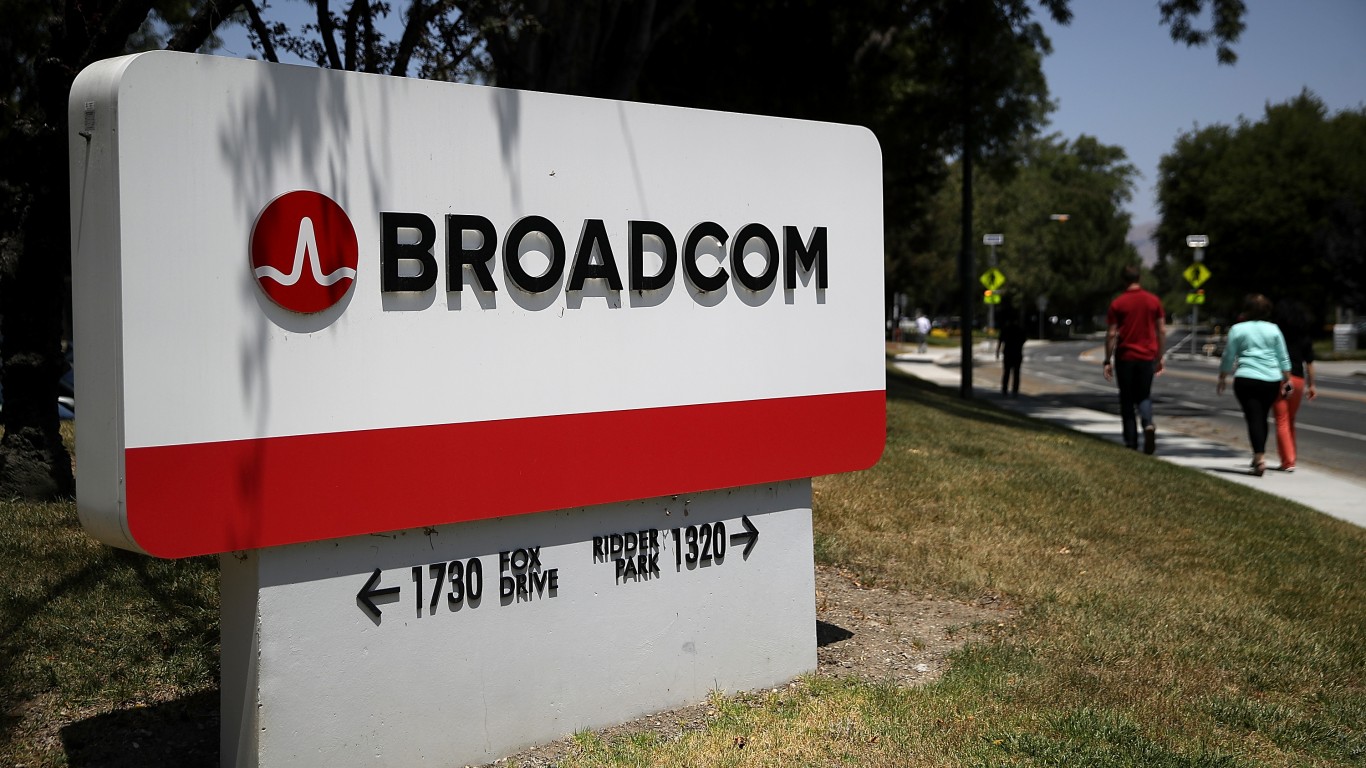
Broadcom: The Custom-Silicon Flywheel
Broadcom posted Q2 FY2026 revenue of $22.19 billion, up 47.9% year over year, with AI semiconductor revenue of $10.80 billion, up 143%. CEO Hock Tan guided “semiconductor revenue from AI to grow over 200 percent year-over-year to $16.0 billion” in Q3.

Shares closed most recently at $380.15, against a Wall Street consensus target of $523.84. The bull case is based on hyperscaler ASIC wins plus the VMware annuity. For the bear case, a forward P/E of 36x already prices in the 200% AI growth figure, and the stock is down 8.2% over the past month.


Seagate: AI Storage With a Margin Story
Seagate’s Q3 FY2026 revenue rose 44.1% to $3.11 billion, with non-GAAP EPS of $4.10 and gross margin expanding to 47.0% from 36.2%. CEO Dave Mosley framed it as “a new era of structural growth as AI applications amplify data creation,” with HAMR-based Mozaic drives now qualified at some of the world’s largest cloud customers.

The bull case here hinges on build-to-order visibility through mid-2026 and a nine-quarter margin streak. On the other hand, shares are up 277.1% year to date to $1,038.59, trading above the analyst target of $898.09, with a forward P/E of 44x.


Micron: The Data Point That Splits the Room
Micron’s Q2 FY2026 revenue jumped 196.3% to $23.86 billion, with non-GAAP EPS of $12.20 and GAAP gross margin of 74.4%. Management guided Q3 revenue to $33.50 billion at roughly 81% gross margin and raised the dividend 30%.

The valuation debate is sharp here: shares closed at $1,051.77 after a 13.2% single-day decline, while the consensus target of $945.60 implies modest downside, though analyst ratings skew heavily positive. The forward P/E of 11 is the cheapest of the three, but memory remains cyclical.


The Verdict
For a retirement-focused investor, the takeaway is that Druckenmiller’s filing validates the AI-infrastructure thesis at the thematic level, while entry price remains a separate question. Broadcom looks like the most defensible secular compounder, given the software annuity behind the silicon. Seagate offers the cleanest margin story but the thinnest valuation cushion after a 690% one-year run. Micron’s earnings power is enormous, yet the gap between fundamentals and analyst targets warrants patience.
Following smart money on the thesis is reasonable; entry price still requires its own discipline. Sizing these as thematic exposure, as Duquesne did, is the more faithful replication of the trade.
Contact [email protected] for any questions or corrections.
Trey has been an editor and author at 24/7 Wall St. for more than a decade, where he has published thousands of articles analyzing corporate earnings, dividend stocks, short interest, insider buying, private equity, and market trends. His comprehensive coverage spans the full spectrum of financial markets, from blue-chip stalwarts to emerging growth companies.
Beyond 24/7 Wall St., Trey has created and edited financial content for Benzinga and AOL's BloggingStocks, contributing additional hundreds of articles to the investment community.
Trey's editorial expertise extends across multiple publishing environments. He served as production editor at Dearborn Financial Publishing and development editor at Kaplan, where he helped shape financial education materials. Earlier in his career, he worked as a writer-producer at SVE. His freelance editing portfolio includes work for prestigious clients such as Sage Publications, Rand McNally, the Institute for Supply Management, the American Library Association, Eggplant Literary Productions, and Spiegel.
Outside of financial journalism, Trey writes fiction and has been an active member of the writing community for years, moderating workshop sessions at regional conventions.