Why I Can’t Stop Buying This 136-Year-Old Dividend King
I keep buying Coca-Cola while half of Wall Street treats every consumer staple like it has a fuse on it. The June panic over a softening jobs report, decelerating GDP growth, and credit card delinquencies spiking as U.S. consumer debt…

I keep buying Coca-Cola while half of Wall Street treats every consumer staple like it has a fuse on it. The June panic over a softening jobs report, decelerating GDP growth, and credit card delinquencies spiking as U.S. consumer debt levels hit a generational breaking point has pushed momentum traders out of anything that touches a shopper’s wallet. I am running the other direction, adding to Coca-Cola (NYSE:KO | KO Price Prediction) on every soft afternoon.
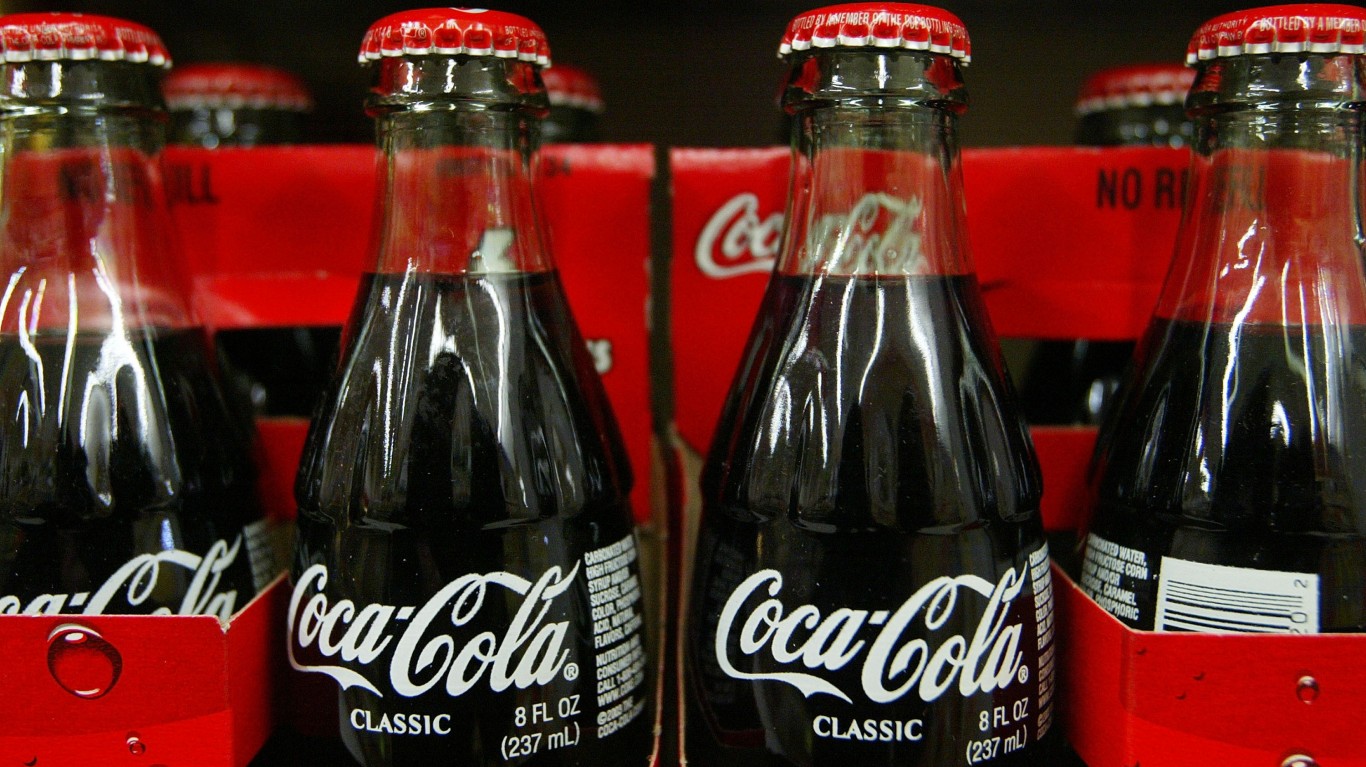
The core reason is simple. A bottle of Coke is the cheapest small luxury most households still afford when budgets tighten. That is the reality showing up in the numbers.
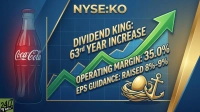
Start with the most recent quarter. Q1 2026 revenue came in at $12.47 billion against a $12.23 billion estimate, up 12.07% year over year. EPS of $0.86 beat the $0.8123 consensus by 5.87%, the fourth straight quarter of EPS beats. Organic revenue grew 10%. Operating margin expanded to 35.0% from 32.9%. Coca-Cola Zero Sugar volume rose 13% across every geographic segment. Global unit case volume rose 3%, led by China, the United States, and India. New CEO Henrique Braun framed it plainly: “We’ve had a strong start to the year. Our performance this quarter reflects our unwavering focus on staying close to the consumer, executing locally and managing complexity.”
Now compare that to the macro picture. Real GDP growth has decelerated to 1.6% in Q1 2026 from 4.4% in Q3 2025. Consumer goods spending collapsed to 0.4% from 6.9% in late 2024. Yet food nondurables spending sat at $1,562.8 billion in April 2026, modestly higher than a year earlier. Beverage demand stays inelastic when auto and apparel demand cracks. Coke pushed price/mix up 2 points in Q1 even with weak shoppers. That is pricing power doing its job.
The second reason is the dividend itself. KO paid $8.8 billion in dividends in 2025, the 63rd consecutive annual increase. The quarterly payout has marched from $0.485 in 2024 to $0.51 in 2025 to $0.53 in 2026, an annualized rate of $2.12 per share. Management guided 2026 free cash flow to roughly $12.2 billion, with $5.2 billion still authorized for repurchases and $477 million already bought back in Q1. That is a self-funding capital return machine.
The third reason is balance sheet quality. Cash and equivalents reached $10.57 billion in Q1, up 25.63% year over year. Total liabilities fell 7.41%. Operating cash flow grew 138.85%. Free cash flow grew 131.85%. Shareholder equity expanded 28.36%. A company built like this avoids forced choices during a slowdown.
Now the real risk. Asia Pacific comparable currency neutral operating income fell 17% on higher input costs and unfavorable mix. The pending sale of Coca-Cola Beverages Africa still needs regulatory approval, the IRS tax litigation is unresolved, and acquisitions and divestitures carry a roughly 4% revenue headwind for the year. If U.S. consumer debt cracks worse than expected and shoppers trade down from even a $2 bottle, volume could soften. I weigh that against a 35.0% operating margin, four straight EPS beats, and management raising full-year comparable EPS growth guidance to 8% to 9% versus $3.00 in 2025.
That is why the buy button keeps working. A 136-year-old company with 63 years of dividend hikes, raised guidance, expanding margins, and growing free cash flow is exactly what I want owning me through a slow GDP year.
Contact [email protected] for any questions or corrections.
Alex Sirois is a financial writer with experience spanning both retail and institutional investing. He has written for InvestorPlace and held roles at BNY Mellon and Bernstein, giving him a perspective that bridges Main Street portfolios and Wall Street analysis.
Alex holds an MBA from George Washington University and has built his career across multiple industries, including e-commerce, education, and translation — a breadth of experience that informs how he breaks down complex financial topics for everyday investors. His writing is conversational, actionable, and grounded in long-term, buy-and-hold investing principles.
At 247 Wall St., Alex focuses on delivering analysis that is both accessible and useful, with a clear emphasis on helping readers make more informed decisions with their money.