1 Industrial Pioneer With a Plain-As-Day Moat to Buy and Never Sell
Linde (NASDAQ:LIN | LIN Price Prediction) is structured for multi-decade ownership, because the world’s largest industrial gas supplier sits inside the production lines of healthcare facilities, manufacturing plants, semiconductor foundries, and chemical refineries under contracts a customer cannot realistically walk…

This post may contain links from our sponsors and affiliates, and Flywheel Publishing may receive compensation for actions taken through them.
Linde (NASDAQ:LIN | LIN Price Prediction) is structured for multi-decade ownership, because the world’s largest industrial gas supplier sits inside the production lines of healthcare facilities, manufacturing plants, semiconductor foundries, and chemical refineries under contracts a customer cannot realistically walk away from. For a retirement-focused investor who is done chasing trends, the profile fits a long-duration, low-maintenance allocation.
Pillar One: A Moat Made of Pipelines and Paperwork
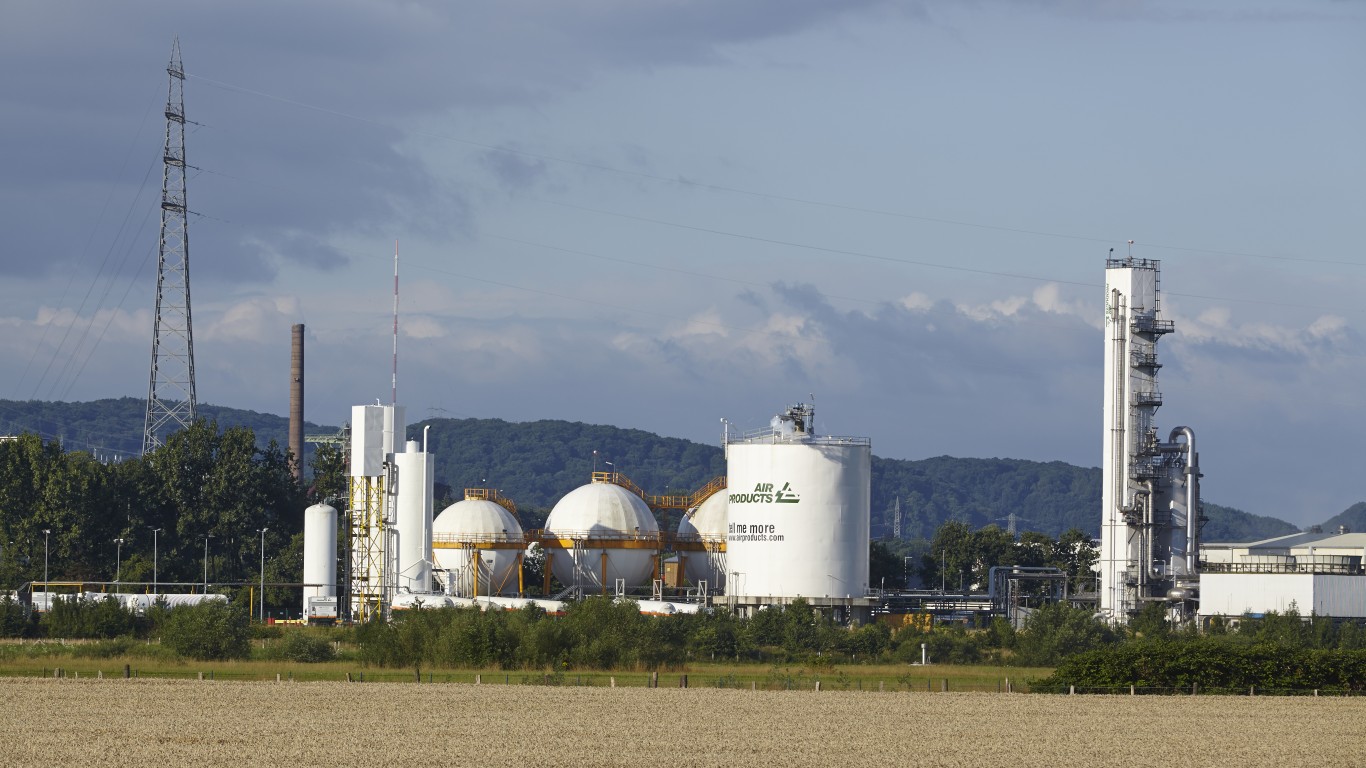
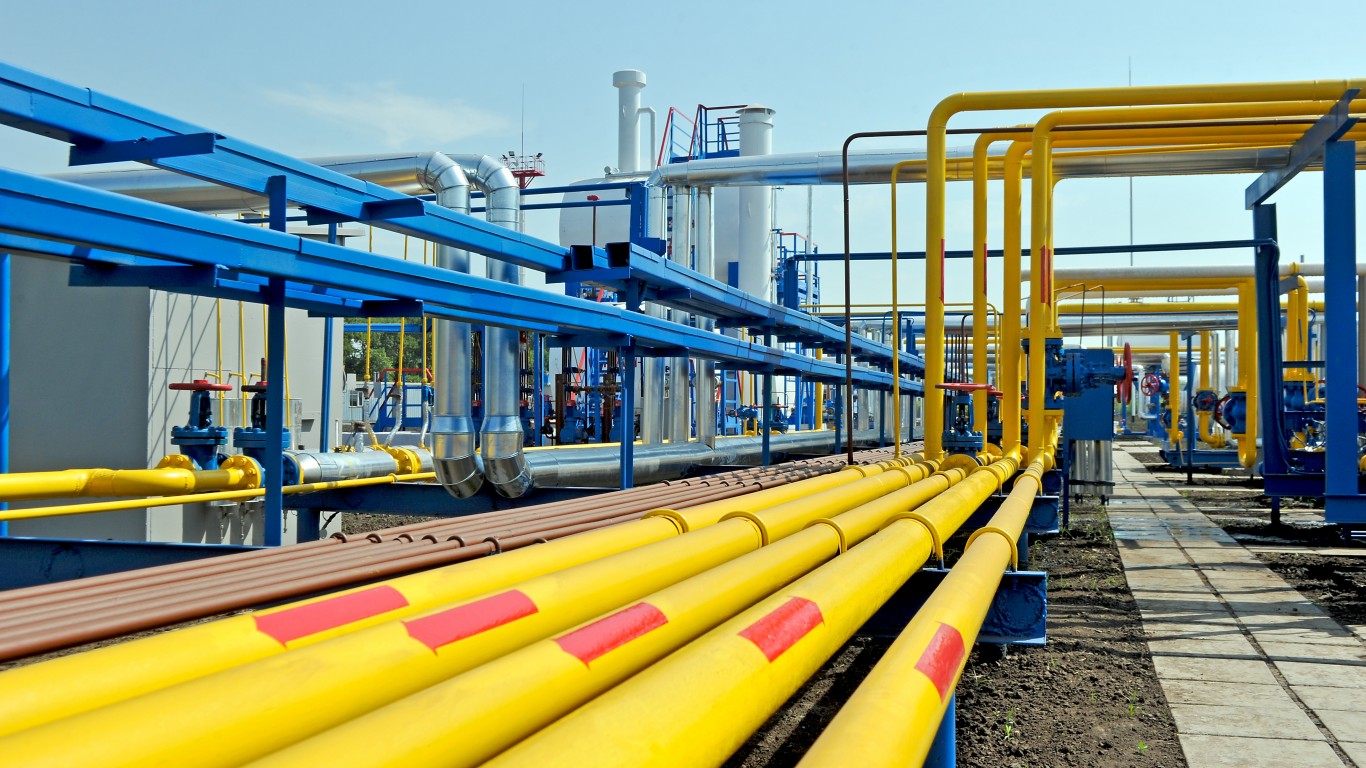
Linde’s durability is structural. The company often constructs its gas production plants directly adjacent to, or pipelined into, its customers’ facilities under highly stable, multi-decade, take-or-pay contracts, which makes switching suppliers a non-starter for any plant manager who values continuity of production. That model produced a $7.1 billion sale-of-gas backlog at the end of Q1 2026, with CFO Matthew White noting Linde has “robust, well-tested contract language over decades” and that “economic conditions are not a force majeure.” The result is industry-leading economics: adjusted operating margin of 30.0% in Q1 2026 and a 23.8% return on capital. End markets are not going away either, with manufacturing alone representing 9.4% of U.S. GDP and healthcare growing at a steady 1.5 to 1.8% per quarter.
Pillar Two: A Dividend That Just Keeps Climbing
Linde has delivered 33 consecutive years of dividend growth with an average growth rate of 13%, and the quarterly payout has risen every year from $0.825 in 2018 to $1.60 in 2026. The current yield of 1.18% is modest in isolation, but the compounding effect of a rising payout backed by $10.4 billion in FY2025 operating cash flow is what matters over a 20-year hold. Management returned $7.4 billion to shareholders through dividends and buybacks in FY2025 and another $1.545 billion in Q1 2026 alone. Capital allocation, as Investor Relations head Juan Pelaez put it, is “a hallmark at Linde plc and is something that differentiates us from others.”
Pillar Three: Built to Survive Every Cycle
The Q1 2026 quarter was delivered against what CEO Sanjiv Lamba called “increasingly challenging global conditions,” and Linde still produced 10% EPS growth and adjusted EPS of $4.33, marking eight consecutive quarters of beating consensus. The beta of 0.732 tells the story: this is a low-volatility cash machine that grows EPS through recessions, supply shocks, and stagnant industrial cycles alike. FY2026 guidance calls for adjusted EPS of $17.60 to $17.90, a 7 to 9% increase that explicitly assumes no economic improvement at the midpoint.
The One Scenario Where Linde Lags
In a roaring, risk-on rally led by high-beta technology and speculative names, a defensive industrial like Linde will trail the index, sometimes by a wide margin. That is the price of admission. The long-hold thesis rests on compounding a 30% operating margin business across decades, long after the speculative names of 2026 have been forgotten. A retirement investor’s priority is owning a business that will still be paying a larger dividend in 2046.
For investors building a retirement portfolio, Linde is a name worth researching, reinvesting dividends from, and holding without daily monitoring.
Contact [email protected] for any questions or corrections.
Alex Sirois is a financial writer with experience spanning both retail and institutional investing. He has written for InvestorPlace and held roles at BNY Mellon and Bernstein, giving him a perspective that bridges Main Street portfolios and Wall Street analysis.
Alex holds an MBA from George Washington University and has built his career across multiple industries, including e-commerce, education, and translation — a breadth of experience that informs how he breaks down complex financial topics for everyday investors. His writing is conversational, actionable, and grounded in long-term, buy-and-hold investing principles.
At 247 Wall St., Alex focuses on delivering analysis that is both accessible and useful, with a clear emphasis on helping readers make more informed decisions with their money.