Job Openings Rise Again. Is AI Creating Jobs, Not Destroying Them?
For the past two years, artificial intelligence has dominated discussions about the future of work. The prevailing narrative has been straightforward: AI will automate tasks, eliminate jobs, and eventually push unemployment higher. Yet the latest labor market data tells a…

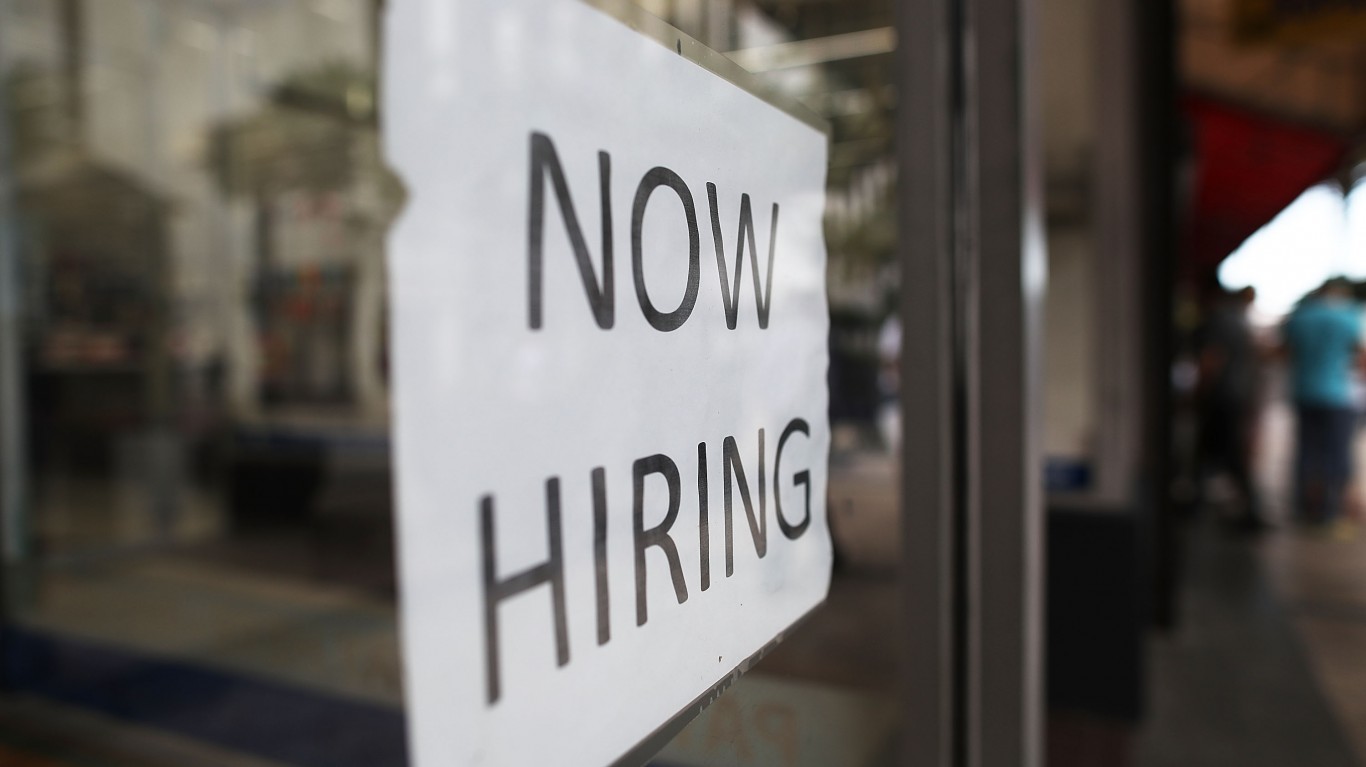
For the past two years, artificial intelligence has dominated discussions about the future of work. The prevailing narrative has been straightforward: AI will automate tasks, eliminate jobs, and eventually push unemployment higher. Yet the latest labor market data tells a more complicated story.
While hiring has slowed from the post-pandemic boom, employers continue searching for workers despite elevated interest rates and growing adoption of AI. But that doesn’t mean AI is creating jobs. Instead, it suggests the technology’s impact on employment is far more nuanced than the headlines often imply — and that matters for investors trying to gauge where the economy and interest rates are headed next.
The Labor Market Remains Tighter Than Expected
According to the Bureau of Labor Statistics’ Job Openings and Labor Turnover Survey (JOLTS), U.S. job openings rose by 9,000 in May to 7.594 million, the highest level since May 2024. On its face, that’s hardly an eye-popping increase.
The bigger story is what came before it. April job openings were revised to 7.585 million, representing a 698,000 monthly increase, the largest jump since September 2022.
Private-sector demand also remained healthy. Private job openings edged up 2,000 to 6.8 million, the highest reading since March 2024, after April’s 635,000 increase. The ratio of job openings to unemployed workers also climbed to 1.0, the highest since January 2025. There are now 287,000 more job openings than unemployed workers, suggesting labor demand continues to outpace labor supply.
But let’s not confuse a tight labor market with proof that AI is generating a hiring boom.
AI Isn’t Necessarily Creating Jobs
Granted, it’s tempting to argue that if AI were truly destroying employment, job openings wouldn’t be sitting near a one-year high. But the JOLTS report doesn’t support such a sweeping conclusion.
For starters, JOLTS is one of the Bureau of Labor Statistics’ most volatile data series. Monthly estimates are frequently revised — as April’s report demonstrated — making it dangerous to draw long-term conclusions from one month’s data.
The report also doesn’t identify which industries are responsible for the increase. That’s an important limitation. Recent Bureau of Labor Statistics employment reports suggest wholesale trade has been one of the stronger hiring categories, while technology hiring has remained much more uneven.
There are other reasons for caution. Seasonal and event-driven hiring — including staffing tied to major sporting events such as this summer’s FIFA World Cup — could temporarily boost vacancies without signaling lasting labor demand.
Finally, even if AI investment is creating new positions, it doesn’t necessarily help workers displaced by automation. Many AI-related roles require specialized technical skills, while workers losing routine jobs may not have the training employers need. A skills mismatch can leave millions of openings unfilled even as parts of the workforce struggle to find employment.
In other words, today’s labor market may reflect changing demand for workers more than expanding demand.
Why the Fed Is Paying Closer Attention
For investors, the more important takeaway isn’t whether AI is creating jobs. It’s that the labor market continues to show resilience.
Federal Reserve officials have repeatedly said a tight labor market can keep wage growth elevated and slow progress toward their 2% inflation target. A job market with more openings than unemployed workers doesn’t strengthen the case for imminent interest-rate cuts.
That said, policymakers won’t rely on JOLTS alone. They’ll also watch monthly payrolls, unemployment, wage growth, inflation, and labor force participation before deciding whether the economy is cooling enough to justify easing monetary policy.
Still, the latest report nudges the evidence in one direction. A labor market that remains this tight gives the Fed little urgency to cut rates.
Key Takeaway
In short, the latest JOLTS report doesn’t prove AI is creating jobs, but it also doesn’t support the narrative that AI is rapidly eliminating them.
The headline gain of 9,000 job openings in May was modest, yet it followed April’s 698,000 surge and left total vacancies at their highest level in a year. At the same time, there are still more job openings than unemployed workers, underscoring that labor demand remains healthy.
For investors, the more actionable conclusion is that a resilient labor market reduces the pressure on the Federal Reserve to cut interest rates anytime soon. Regardless of whether AI ultimately creates or replaces more jobs, today’s data suggests the economy hasn’t weakened enough to force the Fed’s hand — a development that could keep higher borrowing costs in place for longer.
Contact [email protected] for any questions or corrections.
After two decades of patrolling the dark corners of suburbia as a police officer, Rich Duprey hung up his badge and gun to begin writing full time about stocks and investing. For the past 20 years, he’s been cruising the markets looking for companies to lock up as long-term holdings in a portfolio while writing extensively on the broad sectors of consumer goods, technology, and industrials. Because his experience isn’t from the typical financial analyst track, Rich is able to break down complex topics into understandable and useful action points for the average investor. His writings have appeared on The Motley Fool, InvestorPlace, Yahoo! Finance, Money Morning, and, of course, 24/7 Wall St. He has been featured in both U.S. and international publications, including MarketWatch, Financial Times, Forbes, Fast Company, and USA Today.