What Makes Fabrinet a Key Player in the AI Optical Supply Chain
Fabrinet builds the optical hardware powering AI's infrastructure boom without owning a single design, and that distinction has quietly turned a contract manufacturer in Thailand into one of the most critical bottlenecks in the entire supply chain.

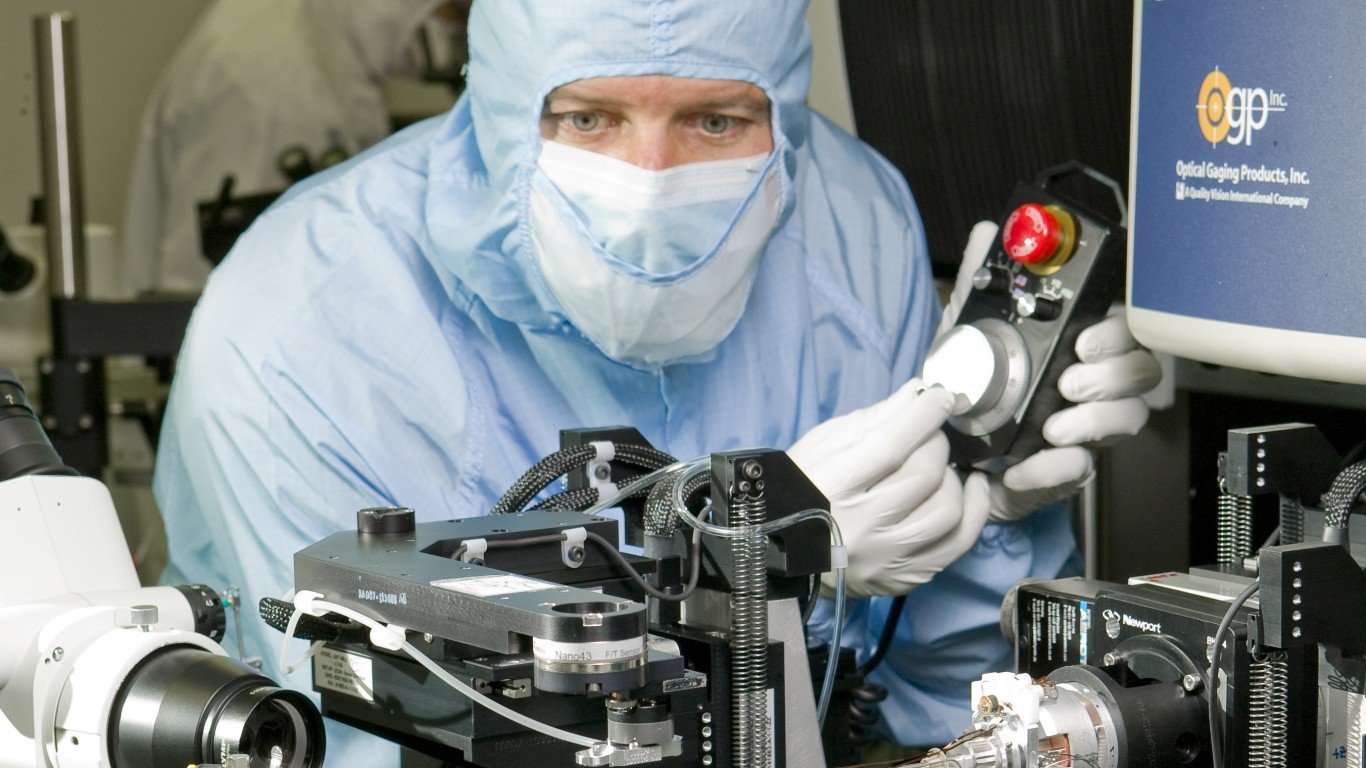
Fabrinet (NYSE:FN | FN Price Prediction) occupies a peculiar seat in the AI infrastructure trade: it builds the transceivers, lasers, and silicon photonics engines pouring into hyperscale data centers, even though the designs originate elsewhere. That contract manufacturing role, centered on precision optical packaging, has turned Fabrinet into a chokepoint of the AI optical supply chain.
Why the AI Optical Trade Runs Through Chonburi
CEO Seamus Grady framed the transition plainly on the Q3 FY2026 call: "We have evolved our business from being a niche optical component supplier several years ago into a diversified, strategic ecosystem partner for the leading OEMs for both optical components and systems across AI-driven growth in both datacom and telecom."
The numbers back the pitch. Q3 FY2026 revenue hit $1.214 billion, up 39.29% year over year, with non-GAAP EPS of $3.72 topping the $3.5626 consensus. It was the fourth consecutive quarter of beating consensus EPS. Data center interconnect revenue alone came in at $197 million, up 90% year over year.
Grady added that datacom would have set a record "by a wide margin" if not for laser, memory, and ASIC shortages. Supply constraints, in other words, are the ceiling.
The Capacity Bet
Fabrinet is spending to widen that chokepoint. CapEx more than doubled to $63.76 million, pushing free cash flow to negative $10.8 million. Building 10 in Chonburi, Thailand, a 2 million square foot facility, will add roughly $3.0 billion in revenue capacity. Grady noted that "about six months’ worth of operating profit would pay for the entire 2 million square feet of manufacturing space." Balance sheet risk is minimal, with debt-to-equity of 0.005 and $946 million in cash.
Peer Context: Coherent and MKS Instruments
Coherent (NYSE:COHR) is Fabrinet’s most direct counterpart in the transceiver ecosystem, though it designs its own photonics. Coherent’s Q3 FY2026 revenue rose 20.5% to $1.805 billion, with the Datacenter & Communications segment at $1.362 billion, or 75% of total revenue. MKS Instruments (NASDAQ:MKSI), which sells materials and process equipment further upstream, grew Q1 FY2026 revenue 15.2%. Fabrinet is outpacing both on the top line.
FN is up 9.74% year to date to $499.61, well behind COHR’s 80.61% gain and MKSI’s 129.16%. FN has fallen 28.74% in the past month alone, taking the forward P/E to 13 against an analyst target of $749.11.
What to Watch
Q4 FY2026 guidance calls for revenue of $1.25 billion to $1.29 billion and EPS of $3.72 to $3.87. Two 800G datacom transceiver programs are shipping directly to a hyperscale customer with initial ramps in Q4. The position remains active. With shares dislocated from fundamentals, the next earnings print will test whether the AI optical supply chain thesis still commands a premium.
Contact [email protected] for any questions or corrections.
Austin Smith is a financial publisher with over two decades of experience as an investor, analyst, and advisor. He covers stocks, ETFs, Artificial intelligence and personal finance for 24/7 Wall St. Previously, he spent over a decade at The Motley Fool as a senior editor for Fool.com, portfolio advisor for Millionacres, and launched The Ascent to help reader take control of their personal finances.
His work has been featured on Fool.com, NPR, CNBC, USA Today, Yahoo Finance, MSN, AOL, Marketwatch, and many other publications. He is as an advisor to private companies, and co-hosts The AI Investor Podcast with Eric Bleeker.
When not looking for investment opportunities, he can be found skiing, running, or playing soccer with his children. Learn more about Austin's investment approach here.