What It Takes to Retire in America’s Cheapest Beach Town on Social Security Alone
The Mississippi Gulf Coast beats every Florida retirement fantasy on price, taxes, and housing costs, but one line item on the budget quietly kills most plans before the second decade even begins.

This post may contain links from our sponsors and affiliates, and Flywheel Publishing may receive compensation for actions taken through them.

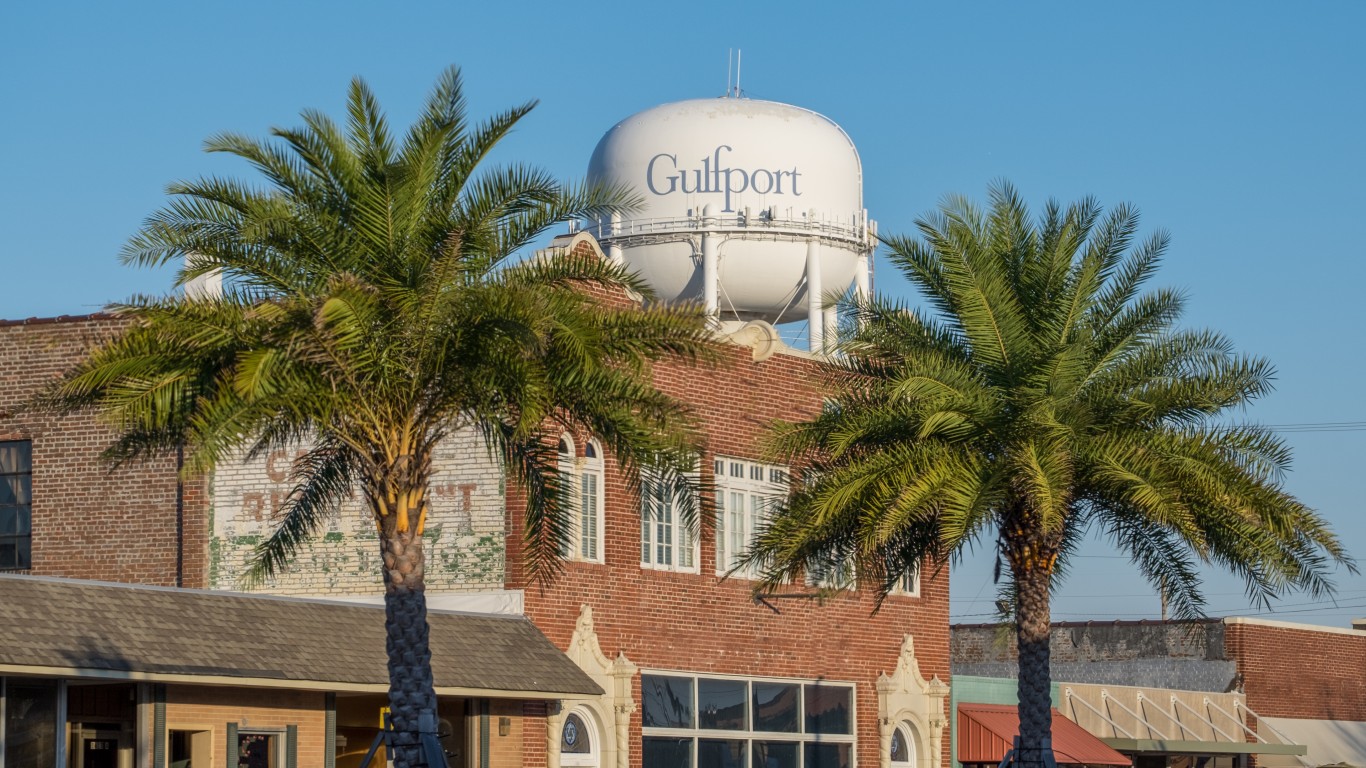
Every few months, a listicle promises that some sleepy stretch of American coastline will let you retire on Social Security alone. Readers over 55 keep clicking, and for good reason. If the math worked, the answer to a hundred retirement problems would be a U-Haul and a zip code. The cheapest beach town the U.S. has to offer sits somewhere on the Mississippi Gulf Coast. Gulfport, Bay St. Louis, and Pass Christian all qualify. The living is cheap, the water is warm, and the numbers are close enough to work. What most articles skip is the single line item that decides whether the plan survives its first decade.
Why the Mississippi Gulf Coast Wins on Price
Mississippi carries a regional price parity of 86.953, the lowest of any coastal state and second-lowest in the country behind Arkansas at 86.937. Florida sits at 103.414, and South Carolina at 93.749. That gap is not marginal. On a fixed Social Security income, roughly 15 cents on every national dollar stays in your pocket in Gulfport that would leave it in Charleston.
Mississippi does not tax Social Security, pension income, or IRA withdrawals. The state’s flat income tax rate dropped to 4.0% in 2026, continuing a multi-year phase-down under the Build Up Mississippi Act, and the state ranks 27th on the 2025 State Tax Competitiveness Index, better than every high-cost coastal alternative. Property taxes on a modest bungalow a mile inland from the beach run under a thousand dollars a year in most of Harrison and Hancock counties. A two-bedroom cottage in Gulfport trades in the low $200,000s, well below the national Case-Shiller reading of 335.1 in May 2026, which sits at the 90th percentile historically.
The Working Budget for a Single Retiree
Assume a paid-off cottage, a used car, Medicare at 65, and a lifestyle that treats the beach as free entertainment. A realistic annual budget breaks down as follows:
- Property tax and HOA: $1,200
- Homeowners with wind and flood coverage: $6,500
- Utilities (heavy summer AC load): $3,000
- Groceries on the USDA Low-Cost plan for one: $4,800
- Medicare Part B, Part D, and Medigap: $3,600
- Out-of-pocket medical and dental: $1,500
- Car, gas, insurance, and replacement reserve: $3,600
- Home maintenance reserve on a coastal structure: $2,500
- Phone, internet, streaming: $1,200
- Personal, gifts, discretionary, small travel: $2,600
That totals roughly $30,500 a year, or about $2,540 a month. The average retired worker Social Security benefit reached $2,086 a month as of July 2026, according to the SSA Monthly Statistical Snapshot. Covering the full budget on Social Security alone requires a benefit close to $2,540, which means either a full-retirement-age claim built on a lifetime average wage near the taxable maximum, or a claim delayed to 70. Claiming at 62 does not clear the bar. The 2027 COLA is now tracking at 3.5% to 3.6%, according to AARP and the Senior Citizens League as of September 2026, which would be the largest annual adjustment in three years. That helps at the margin, but only when the starting benefit is already in the right range.
The Line Item That Breaks the Plan
Wind and flood insurance is why so many Gulf Coast retirement plans fail quietly and on schedule. A homeowners policy in Harrison County without wind coverage is cheap. Add the wind endorsement through the Mississippi Windstorm Underwriting Association, then layer an NFIP flood policy on top, and the annual stack routinely runs $5,000 to $8,000 on a $220,000 cottage. That single cost is the difference between a budget that works and one that doesn’t. Insurance on coastal Mississippi has outpaced headline CPI in every year since Katrina, and Social Security COLA is pegged to CPI-W, which does not track coastal insurance at all. Every year that gap widens, the budget tightens a little more.
The workaround most locals use is straightforward: buy a mile or two inland, above the wind pool boundary, in Saucier, Lyman, or north Long Beach. Same climate, same seafood, no windstorm surcharge, and flood zone X instead of AE. That one decision cuts the insurance line by more than half and gives the scenario a fighting chance across a thirty-year retirement.
What It Actually Takes
Retiring in America’s cheapest beach town on Social Security alone requires a monthly benefit near $2,540, a fully paid-off home priced under $230,000, and a location just inland from the wind pool. That means a lifetime earnings record strong enough to produce a full-retirement-age benefit in the top quartile, or enough patience to delay the claim to 70. The withdrawal rate conversation does not apply here because there is no portfolio, which is precisely why every other variable has to be right. National consumer sentiment sat at 49.5 in June 2026, the second-lowest reading in data stretching back to the 1970s, which tells you most households are not positioned to make this scenario work. The retirees who do make it work got the housing and insurance decision right a full decade before they moved. Get that piece right, and the Gulf Coast delivers on its promise. Get it wrong, and no beach view outlasts the premium notice.
Editor’s note: The average Social Security retirement benefit figure was updated to $2,086 per month (July 2026 SSA data), and the 2027 COLA projection was revised to 3.5% to 3.6% based on the most recent estimates from AARP and the Senior Citizens League as of September 2026, up from the earlier 3.1% figure in the original article. Context on Mississippi’s 2026 income tax rate reduction was also added.
Contact [email protected] for any questions or corrections.
I am a long time investor and student of business, and believe finding good companies that can become great investments is the best game on earth. After 20 years of writing and researching the public markets it is clear that individuals have never had more tools and information to take control of their financial lives. From ETFs and $0 commissions to cryptos and prediction markets there has never been a greater democratization of access to investing.
I write to help people understand the investments available to them so they can make the best choice for their portfolio, whether they're starting out or looking for income in retirement.