Trump Banned the Hottest AI Company for 3 Weeks. It May Have Handed Them a ‘Trillion-Dollar’ Marketing Gift
For three weeks in June 2026, the most-talked-about AI company in the world went dark. Then it came back, and a panel of tech veterans started arguing about whether the Trump administration had accidentally handed Anthropic the most valuable brand…

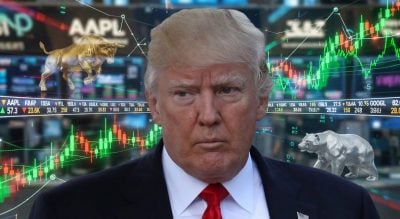
For three weeks in June 2026, the most-talked-about AI company in the world went dark. Then it came back, and a panel of tech veterans started arguing about whether the Trump administration had accidentally handed Anthropic the most valuable brand asset in artificial intelligence. That argument, aired on a recent This Week in Tech episode, is worth taking seriously, because the answer shapes how you think about every eventual AI IPO on the horizon.
What the ban actually did
The setup, briefly. On June 9, 2026, the Trump administration barred non-US citizens from using Anthropic’s Mythos and Fable models, which forced the company to shut down globally rather than try to police citizenship at the API layer. Restrictions were lifted June 30. OpenAI’s GPT-5.6 got paused in the same sweep and, as of the panel taping, has not been unpaused.
Leo Laporte framed the whole thing as a political shock, an executive-branch intervention of a type that used to hit defense contractors and now hits chatbots. Alex Stamos, the security analyst, called it “an own goal for the United States,” arguing the practical effect was to shove developers and enterprises toward Chinese models during the blackout. Europe, meanwhile, was reportedly alarmed at a specific asymmetry. Adversaries who already had Mythos access could keep probing US systems while Americans themselves were locked out of the tool.
That is the “disaster” reading. Then Jason Heiner picked up the microphone.
The trillion-dollar brand argument
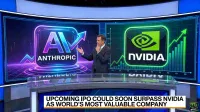
Heiner’s take was the contrarian one, and it is the one investors should stress-test. “The Trump ban was absolutely, it was very good for them,” he said, arguing the shutdown accidentally delivered something the AI safety community has been begging for since 2023, a real pause on a powerful frontier model. More importantly, it cemented Anthropic in the public mind as “the safe AI brand,” a positioning he suggested “could be worth a trillion dollars.”
Consider the demand side. 61% of Americans hold a negative opinion of AI, which means the addressable market for a model that markets itself as the cautious one is enormous and largely untapped. Enterprises buying AI at scale, especially in regulated industries, prioritize the vendor least likely to embarrass them in front of a regulator over the one with the most raw capability. Being the company the White House was willing to switch off is, perversely, an endorsement of that positioning.
You can already see the commercial machinery humming. Microsoft (NASDAQ:MSFT | MSFT Price Prediction) made Anthropic’s Claude models generally available in its Foundry on July 5, 2026, running on Azure infrastructure powered by NVIDIA (NASDAQ:NVDA)’s GB300 Blackwell Ultra GPUs, a partnership Insider Monkey described as a step from AI experimentation to production deployment. The distribution keeps expanding while the safety halo hardens.
What this means for investors watching AI IPOs
The frustrating part. Anthropic and OpenAI are privately held, so there is no ticker to click. You cannot buy the trade Heiner is describing. You can only prepare for the moment either company files an S-1, which brings us to the weirder wrinkle in this whole story.
OpenAI researchers reportedly proposed allocating shares to the US government upon going public, and the Financial Times reported the idea could extend to other US AI firms. Laporte’s concern was blunter, worrying policy may hinge on “who’s going to pay the president.” Whether that is fair or not, government equity in a frontier AI lab is a governance structure with no clean precedent, and it makes valuing an eventual IPO genuinely difficult. You are underwriting a company whose largest downside risk (getting switched off) and largest upside catalyst (regulatory moat) are the same phone call.
For now, the tradeable expressions are the picks-and-shovels names, the Nvidias and hyperscalers ferrying Claude to customers. The Anthropic trade itself remains locked behind a private-market door, with a brand that just got a very expensive advertising campaign paid for, in a manner of speaking, by the federal government.
Contact [email protected] for any questions or corrections.
Omor Ibne Ehsan is a writer at 24/7 Wall St. He is a self-taught investor with a focus on growth, cyclical, and dividend equities that have strong fundamentals, value, and long-term potential. He also has an interest in high-risk, high-reward investments such as penny stocks.