




John Coogan spent Wednesday’s TBPN segment arguing that the largest AI hardware IPO no US retail investor can buy yet might also be the cheapest name in the entire complex. SK Hynix, the South Korean memory giant, is preparing what could be a $28 billion NASDAQ listing, potentially ranking among the largest ever New York debuts by an Asian company. The stock is already public in Seoul, where shares have run up more than 750% over the past year.
US investors get a read-through only through the ecosystem, and the anchor there is NVIDIA (NASDAQ:NVDA | NVDA Price Prediction), whose Blackwell and Rubin roadmaps depend on the exact high-bandwidth memory stacks SK Hynix ships in volume.
The $28 Billion IPO and the Eye-Popping Numbers
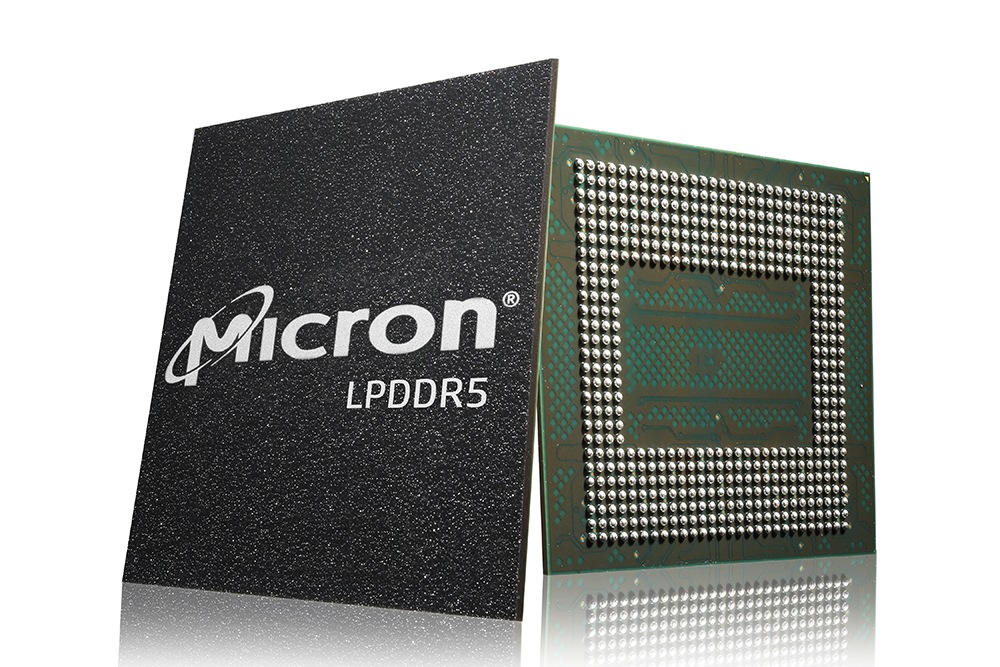
Coogan walked through the financials on air. “2025 revenue grew 47% to $63 billion. Profit more than doubled, $28 billion in profit. Q1 revenue tripled year over year.” Seoul market cap sits around $1.1 trillion, which puts SK Hynix in roughly the same weight class as Micron Technology (NASDAQ:MU) at $1.11 trillion, and materially smaller than NVIDIA’s $5.09 trillion.
The book has notable anchors. Leopold Aschenbrenner’s Situational Awareness fund, alongside Baillie Gifford, could take up to $7 billion in the deal. When a fund built on a single AI-scaling thesis writes a nine-figure ticket to a memory manufacturer, the signal is that the buyer thinks HBM demand is not going to normalize along the old textbook curve.
Why the Stock Trades at Just 7x Forward Earnings
Memory is scar-tissue territory. Every cycle over the past two decades has ended the same way, with a supply glut and a 60% compression in gross margin. Investors are “pattern matching to previous cycles, not thinking about this as a different technology cycle.”
The comp math is what makes it interesting. Micron trades at a forward P/E of 6 after posting $41.46 billion in revenue and 84.6% GAAP gross margin in fiscal Q3 2026, per its quarterly press release. NVIDIA trades at a forward P/E of 22. SK Hynix’s rumored 7x sits closer to Micron than to NVIDIA, which suggests the market still refuses to underwrite memory earnings beyond the next 18 months.
Micron shares have run 696% over the past year, and even after that move the multiple has compressed rather than expanded, because earnings have grown faster than price. If SK Hynix’s Q1 tripling is directionally correct, the same phenomenon is playing out one country over.
The Cyclical Versus New Cycle Debate and the NVIDIA Link
SK Hynix is the leading HBM supplier to NVIDIA, and NVIDIA’s Q1 FY27 data center revenue of $75.25 billion, up 92% year over year, is the cleanest available demand signal. Jensen Huang described “the buildout of AI factories” as the largest infrastructure expansion in human history, and the constrained input in that buildout is high-bandwidth memory attached to GPUs.
Micron is echoing the same message. CEO Sanjay Mehrotra called memory “a strategic asset” for AI customers and pointed to multi-year Strategic Customer Agreements designed to smooth the historical whipsaw. Micron is now shipping HBM4 in volume to a lead accelerator customer, with HBM4E targeted for calendar 2027. For readers wondering where the next AI winner sits in the stack, our Next NVIDIA Playbook report tracks how the semiconductor food chain is repricing in response to exactly this shift.
Retail is already sniffing it. The top-voted Reddit thread of the week argued: “This isn’t a memory cycle anymore, and SK Hynix hitting US markets is the next leg”. The counterweight is Michael Burry’s freshly disclosed short on a semiconductor ETF, built on the view that “the current artificial intelligence infrastructure spending boom is unsustainable.”
If HBM4 pricing holds through 2027 and SK Hynix comes public near 7x, the multiple compresses further as earnings grow, and it starts to look like the AI trade’s biggest arbitrage. If the cycle turns before the lockups do, the 7x will look like a warning in hindsight. Watch NVIDIA’s next data center earnings report and Micron’s Q4 guide of $50 billion in revenue. Those two numbers price the SK Hynix book.
Contact [email protected] for any questions or corrections.









 Top Gaining Stocks
 Top Losing Stocks