Nvidia and SK hynix to Partner as Jensen Huang Warns Memory Shortage Could ‘Last for Years’
The AI infrastructure buildout is still running faster than the physical chips required to support it. Across hyperscalers, chip designers, and memory manufacturers, capital spending is surging, yet supply chains remain pinned by one stubborn constraint: high-bandwidth memory. Demand tied…

This post may contain links from our sponsors and affiliates, and Flywheel Publishing may receive compensation for actions taken through them.
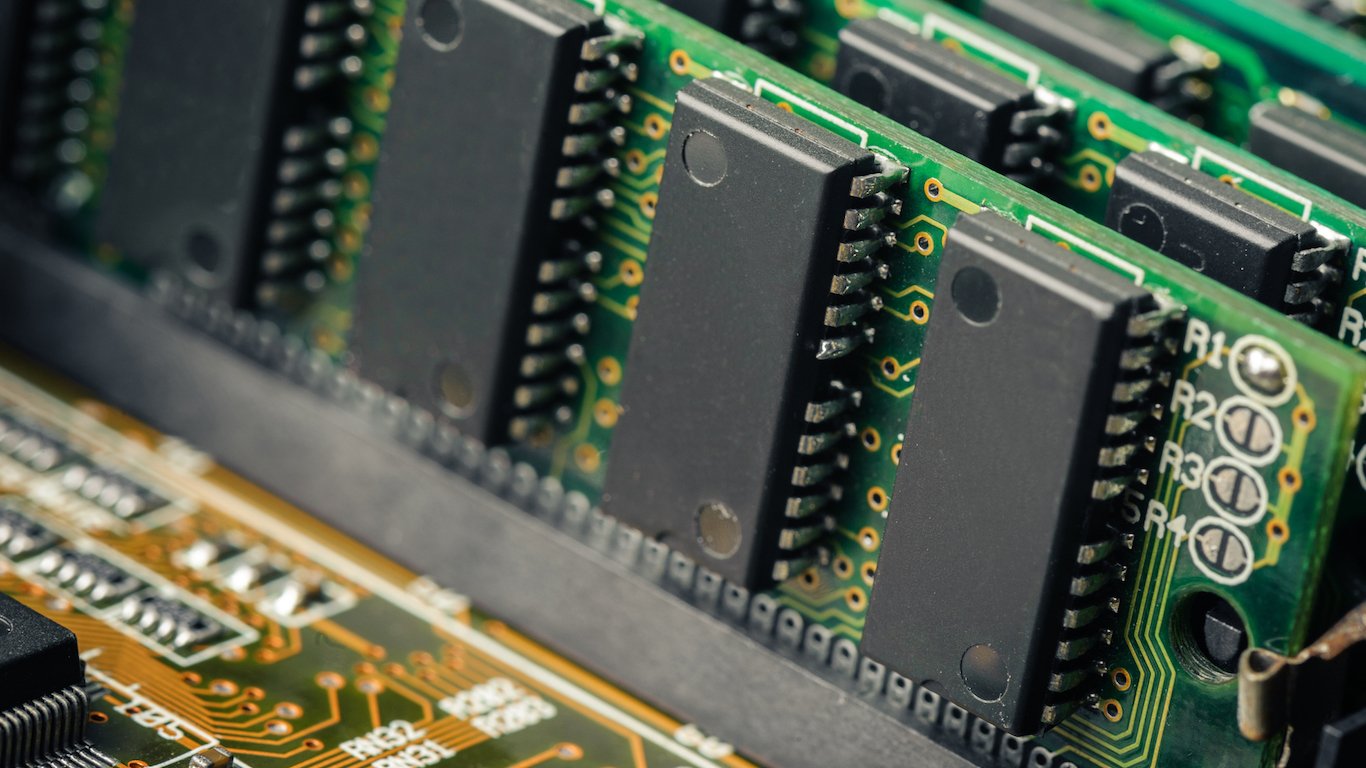
The AI infrastructure buildout is still running faster than the physical chips required to support it. Across hyperscalers, chip designers, and memory manufacturers, capital spending is surging, yet supply chains remain pinned by one stubborn constraint: high-bandwidth memory.
Demand tied to training and inference workloads continues to rise in waves, not increments, and each wave is larger than the last. That imbalance is forcing the semiconductor industry into long-duration planning cycles rather than typical boom-bust inventory corrections.
Against that backdrop, the deepening relationship between Nvidia (NASDAQ:NVDA | NVDA Price Prediction) and SK hynix is starting to look less like supplier coordination and more like industrial alignment around a single bottleneck.
A Very Serious Supply Chain Problem
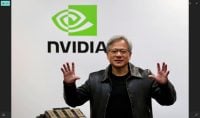
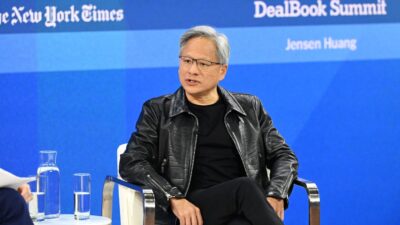
Jensen Huang’s recent Seoul stop had the tone of informal networking, but the stakes were anything but casual. The Nvidia CEO met SK hynix leadership over “chimaek” — fried chicken and beer — at Kkanbu Chicken, a setting that has become almost symbolic of high-level Korean tech diplomacy.
According to CNBC, Huang said the global memory shortage “is going to persist for several years.” That phrasing matters. It shifts the narrative from cyclical tightness to structural constraint. He also teased a possible announcement tomorrow, which was quickly interpreted as a formal expansion of Nvidia’s cooperation with SK hynix.
What a Multi-Year Memory Alliance Actually Means
What might a “cooperation plan” between the two tech leaders mean, particularly for cash flows, supply chains, and margins? Here are some possible scenarios.
Nvidia and SK hynix already sit at the center of the AI memory ecosystem. SK hynix is the leading supplier of HBM3E and HBM4 used in Nvidia’s Blackwell accelerators and next-generation platforms such as Vera Rubin. A recent UPI report estimated SK hynix could provide roughly 50% to 70% of Nvidia’s HBM4 requirements.
That level of concentration is unusual in semiconductors. It reflects not just vendor preference, but the reality that only a handful of suppliers can manufacture HBM at leading-edge performance and yield.
What an expanded agreement likely includes:
- Multi-year volume commitments, locking in HBM supply through at least several GPU generations
- Accelerated HBM4 and HBM4E production ramps, compressing the time between design and mass delivery
- Yield and process optimization partnerships, reducing scrap rates in one of the most complex memory stacks in the industry
- Pricing frameworks tied to capacity expansion, giving SK hynix predictable revenue while stabilizing Nvidia’s cost structure
In short, this is about turning scarcity into scheduling discipline.
AI Factories, Capacity Expansion, and Locked-In Demand
Beyond procurement, the partnership is evolving into industrial co-design. Nvidia’s prior collaboration with SK Group already introduced the idea of “AI factories” in Korea — facilities that combine manufacturing, simulation, and AI optimization in a continuous loop.
SK hynix has separately outlined plans to roughly double memory capacity over a five-year horizon. The challenge is that demand is expanding on a shorter cycle than capacity can physically respond to.
That creates pressure for deeper integration across:
- AI data centers optimized jointly for GPU + memory architecture
- Custom memory configurations for AI workloads, including SOCAMM variants
- Use of Nvidia Omniverse for semiconductor plant simulation and efficiency gains
- Cross-platform expansion into robotics, AI PCs, and edge systems through Nvidia’s broader ecosystem
Surprisingly, the partnership is no longer just about chips — it is about synchronizing entire production systems.
Why Huang’s Timing Matters Now
Huang’s warning that shortages could last “several years” is not an abstract macro view. It is a procurement signal. It tells investors that Nvidia is planning multiple product cycles under constrained memory supply conditions.
That makes SK hynix less of a supplier of choice and more of a strategic dependency anchor. The timing of a high-profile meeting with SK Group Chairman Chey Tae-won reinforces that this is about long-term capacity allocation, not short-term negotiation leverage.
Key Takeaway
Granted, this is not a merger, nor a dramatic restructuring of the semiconductor landscape. But it does formalize something the market has already been pricing in: AI demand is now constrained by memory availability, not just compute.
For investors, the implication is straightforward. Nvidia is securing multi-year supply visibility at the exact moment AI demand is compounding, while SK hynix is effectively locking in structural demand growth for the duration of the AI cycle.
In short, this isn’t a cycle trade anymore. It’s a capacity race — and both companies are building the rails while the train is already moving.
Contact [email protected] for any questions or corrections.
After two decades of patrolling the dark corners of suburbia as a police officer, Rich Duprey hung up his badge and gun to begin writing full time about stocks and investing. For the past 20 years, he’s been cruising the markets looking for companies to lock up as long-term holdings in a portfolio while writing extensively on the broad sectors of consumer goods, technology, and industrials. Because his experience isn’t from the typical financial analyst track, Rich is able to break down complex topics into understandable and useful action points for the average investor. His writings have appeared on The Motley Fool, InvestorPlace, Yahoo! Finance, Money Morning, and, of course, 24/7 Wall St. He has been featured in both U.S. and international publications, including MarketWatch, Financial Times, Forbes, Fast Company, and USA Today.