The S&P 500 Isn’t What You Think It Is Anymore: Here’s the Uncomfortable Truth
The S&P 500 has long been synonymous with broad diversification, but the math behind today's index tells a very different story about where your money actually ends up.

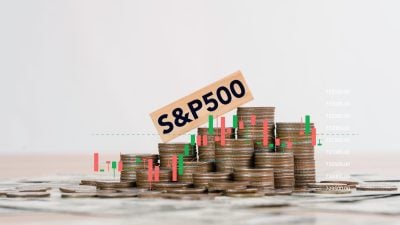
For decades, the S&P 500 has been the gold standard for diversified investing. Buying an index fund like SPDR S&P 500 ETF Trust (NYSEARCA:SPY) meant owning hundreds of America’s largest businesses across every major sector of the economy. That promise has not disappeared, but it has changed in ways most investors have not fully reckoned with.
Market gains have become increasingly dependent on just a handful of technology giants, leaving investors with far less diversification than the “500” in the index name suggests. The numbers show that today’s S&P 500 looks less like a broad-market portfolio and more like a concentrated bet on a small group of companies that have come to dominate Wall Street.
The Biggest Companies Keep Getting Bigger
According to J.P. Morgan Asset Management, the 10 largest companies in the S&P 500 account for about 40.8% of the index’s total market capitalization, a level that stood well above the tech-bubble peak and barely budged during the market pullback earlier this year. State Street SPDR holdings data as of July 2, 2026 put the top 10 at approximately 36%, reflecting some pullback from peak levels, but still historically extreme. By either measure, this is no temporary spike: the figure has held above 35% for well over a year.
Over the past decade, the top 10 companies have more than doubled their share of the index. Meanwhile, the smallest 250 companies in the S&P 500 have seen their combined weighting shrink to roughly 7%, the lowest level since at least 2014. Put another way, the market value of the largest 10 companies is now more than six times greater than that of the index’s smallest 250 members combined.
That concentration explains why a single disappointing earnings report from one or two mega-cap stocks can ripple through the entire market, even when hundreds of other companies are performing well. It also explains a striking new wrinkle in the 2026 earnings picture: just three AI hyperscalers (Alphabet, Amazon, and Meta) account for roughly 70% of the increase in S&P 500 earnings growth expectations for the full calendar year, piling earnings concentration on top of market-cap concentration.
Narrow Leadership Changes the Risk Profile
This does not automatically mean investors should expect an imminent bear market. History shows that concentrated leadership can persist much longer than many expect, especially when the companies at the top continue producing strong earnings and cash flow. The more important issue is resilience.
During the dot-com era, the market’s largest stocks peaked at roughly 27% of the S&P 500, with companies like Cisco (NASDAQ:CSCO | CSCO Price Prediction) trading at roughly 130 times forward earnings. That comparison gained an eerie footnote in December 2025, when Cisco’s stock finally reclaimed its dot-com peak price after a 25-year journey. Today, the top 10 account for roughly 37% to 41% of the index (depending on the date and source), but they also generate about 34% of the S&P 500’s total profits, giving their market leadership a considerably stronger fundamental foundation than existed in 2000. Goldman Sachs Research projects that AI-infrastructure beneficiaries alone will account for roughly half of all S&P 500 earnings growth in 2026, which helps explain why the mega-cap premium has persisted.
Even so, a market led by so few companies has less room for error. If those mega-cap leaders disappoint, there are fewer stocks with enough size to cushion the blow. That is why investors should pay as much attention to market breadth as they do to the index itself. An S&P 500 fund may still own 500 companies, but with roughly 40% of its value concentrated in just 10 names, its fortunes increasingly rise and fall with a remarkably small group of businesses.
Signs of Broadening
One development worth watching in 2026 is an early rotation away from mega-cap dominance. The Russell 2000 returned about 21% year-to-date through early July 2026, outpacing the S&P 500’s roughly 10% gain over the same stretch. The equal-weight S&P 500 has also held up better than its cap-weighted counterpart during periods of mega-cap underperformance. Whether this broadening accelerates or stalls depends heavily on whether the AI-driven earnings boom continues delivering for the largest names.
Key Takeaway
The S&P 500 still ranks among the most accessible and cost-effective long-term investment vehicles available, but it no longer provides the level of diversification many investors assume. The top 10 companies now control somewhere between 37% and 41% of the index by market cap while generating about 34% of its profits. That earnings backing separates today’s concentration from the purely valuation-driven excess of the dot-com bubble, but it does not eliminate the risk that a narrow group of stocks will determine the fate of a portfolio that nominally spans 500 companies.
Investors who want to restore genuine breadth to their equity exposure have a straightforward option. The Invesco S&P 500 Equal Weight ETF (NYSEARCA:RSP) assigns every S&P 500 constituent an identical portfolio slice, so no single company or sector can crowd out the rest. RSP does lag when a narrow group of mega-cap growth stocks powers the market, as it did during stretches of 2023 and 2024, but it outperformed the cap-weighted index in early 2026 precisely because its more balanced spread is less sensitive to swings in a handful of names.
Editor’s note: This article was updated to reflect current concentration data from J.P. Morgan Asset Management (40.8% as of May 2026) and State Street SPDR holdings (approximately 36% as of July 2, 2026), replacing the earlier 43% figure; the top 10 earnings share was revised upward to 34% based on Apollo Global data; and new context was added on Cisco’s December 2025 stock-price recovery, the earnings-growth concentration among three AI hyperscalers in 2026, and the Russell 2000’s early-2026 outperformance as a sign of tentative market broadening.
Contact [email protected] for any questions or corrections.
After two decades of patrolling the dark corners of suburbia as a police officer, Rich Duprey hung up his badge and gun to begin writing full time about stocks and investing. For the past 20 years, he’s been cruising the markets looking for companies to lock up as long-term holdings in a portfolio while writing extensively on the broad sectors of consumer goods, technology, and industrials. Because his experience isn’t from the typical financial analyst track, Rich is able to break down complex topics into understandable and useful action points for the average investor. His writings have appeared on The Motley Fool, InvestorPlace, Yahoo! Finance, Money Morning, and, of course, 24/7 Wall St. He has been featured in both U.S. and international publications, including MarketWatch, Financial Times, Forbes, Fast Company, and USA Today.