Goldman Sachs’ Insane SpaceX AI Forecast Has One Clear Winner: Micron Technology
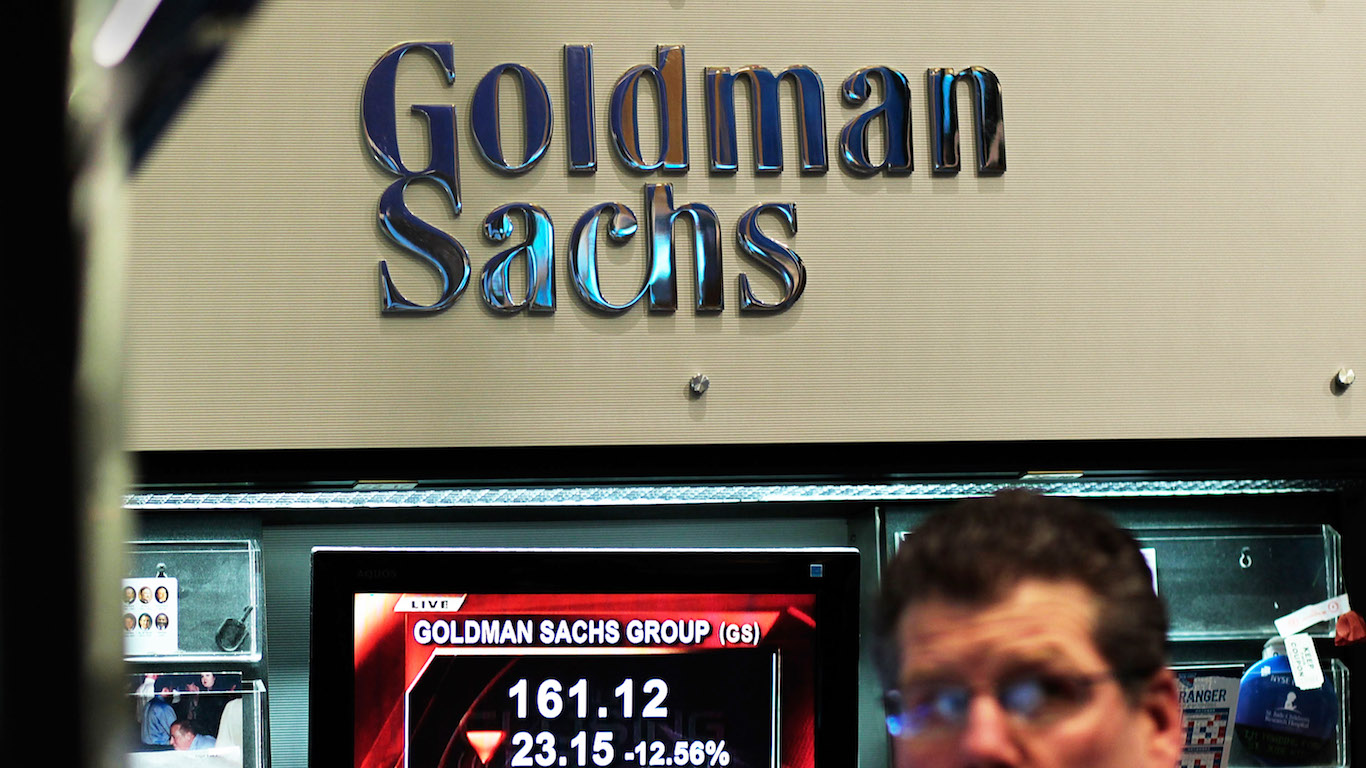
Goldman Sachs just released a SpaceX forecast so staggering it borders on science fiction, and buried inside its assumptions is a quiet argument for one semiconductor company that keeps the entire AI industry running.


Artificial intelligence has already stretched the semiconductor supply chain to its limits. High-bandwidth memory (HBM), advanced packaging, and leading-edge chip manufacturing remain bottlenecks even after chipmakers spent hundreds of billions of dollars expanding capacity.
Yet one recent forecast from Goldman Sachs suggests today’s AI infrastructure race may look modest compared to what’s being discussed for the next decade. Investors should treat the projection with caution, but it also highlights why companies supplying AI memory, particularly Micron Technology (NASDAQ:MU | MU Price Prediction), could enjoy demand that extends well beyond today’s data center boom.
Goldman Sachs’ SpaceX Forecast Is Almost Hard to Believe
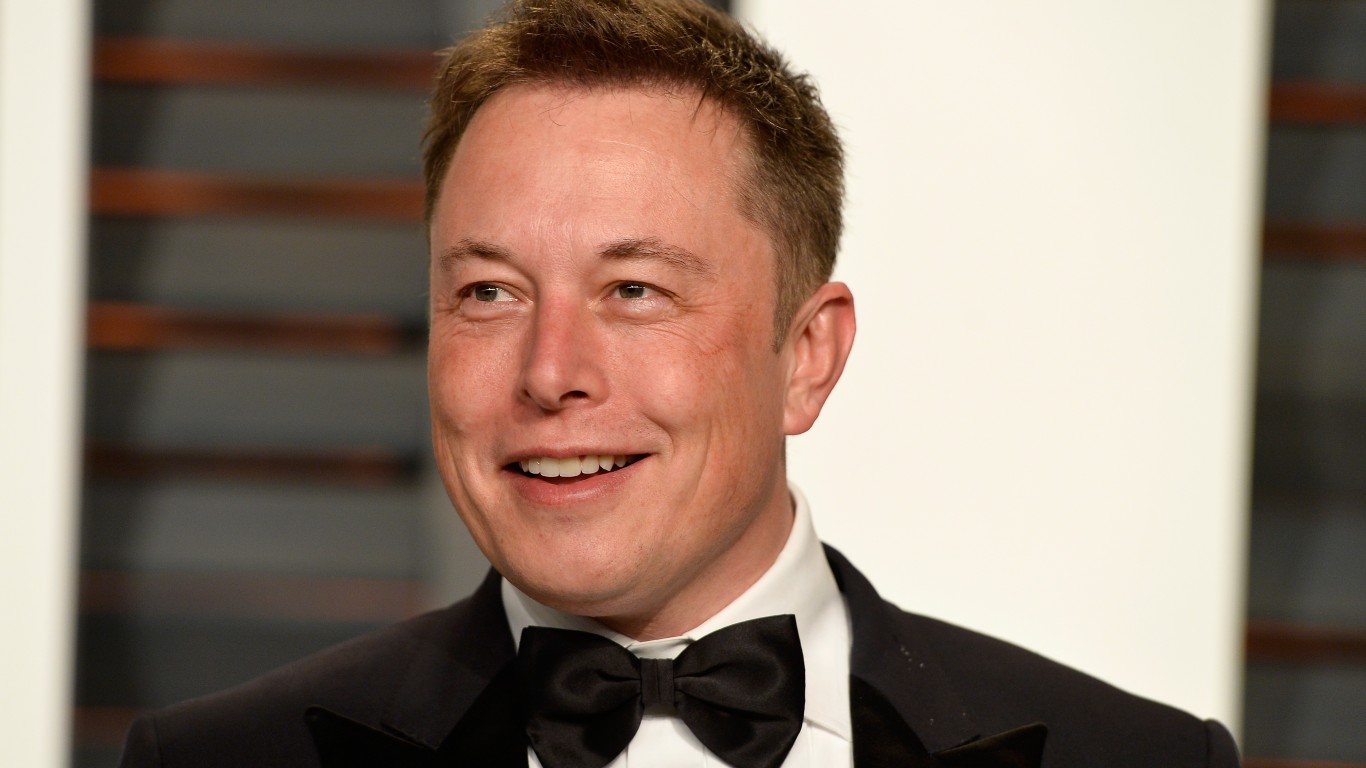
Goldman Sachs recently published a research note outlining a long-term vision for SpaceX’s Starship program that includes 5,288 dedicated AI missions by 2031. These would most likely target Elon Musk’s space-based data centers, as well as Starlink and SpaceX’s new AI satellites. According to the report, each Starship launch could carry 30 to 50 AI satellites, with every satellite housing roughly one GB300-equivalent AI rack.
To put that into perspective, Nvidia‘s (NASDAQ:NVDA) latest Blackwell architecture — and its successor Vera Rubin — is expected to rely on eight HBM stacks per accelerator. A single AI rack contains many accelerators, meaning every launch could require thousands of HBM stacks before accounting for conventional DRAM and flash storage needed throughout the system.
Some analysts extrapolating Goldman Sachs’ assumptions estimate those launches could eventually translate into millions of Nvidia accelerators in orbit. Others have pushed the math even further, suggesting the cumulative installed base could exceed 200 million accelerators by 2031 if every projected mission ultimately flies.
Whether those figures prove accurate is almost beside the point. Even a fraction of that demand would require memory production on a scale the industry has never attempted.
Why Memory Could Become The Biggest Bottleneck
The AI discussion often centers on Nvidia GPUs. Ironically, those accelerators cannot function without enormous amounts of HBM.
Micron, along with SK hynix and Samsung, is one of only three companies capable of manufacturing leading-edge HBM at scale. Micron has already revealed long-term HBM supply agreements extending well into future production cycles, reflecting how constrained supply remains.
Here’s what Goldman Sachs’ scenario implies:
| AI Component | Demand Implication |
| Nvidia accelerators | Potentially millions required |
| HBM stacks | Eight per accelerator before future increases |
| DRAM and NAND | Additional memory required for every rack |
| Advanced packaging | Capacity would need to expand alongside memory production |
Some observers have even suggested that such deployment would ultimately consume every advanced wafer Taiwan Semiconductor Manufacturing (NYSE:TSM) could produce. Even if that is an exaggeration, it illustrates just how large these assumptions have become.
Investors Still Need A Reality Check
Granted, Goldman Sachs’ projections represent a best-case scenario, not a roadmap. Everything would need to go right. Starship must achieve routine launch reliability. Regulators would need to approve thousands of launches. Orbital AI data centers must prove technically and economically viable. Early missions during 2027 and 2028 would almost certainly be demonstration projects before any meaningful scaling occurs.
There’s also an interesting contradiction buried inside the broader investment thesis. Goldman Sachs ‘ estimates assume orbital AI data centers could cost roughly $15 billion to $20 billion per gigawatt, well below the approximately $28 billion to $32 billion per gigawatt often cited for terrestrial AI facilities. However, that cost advantage would necessitate a future SpaceX-Tesla (NASDAQ:TSLA) Terafab manufacturing effort producing custom AI chips internally rather than continuing to rely primarily on Nvidia hardware.
In other words, the model initially assumes enormous Nvidia deployment, while the long-term economics become more attractive only if Nvidia eventually becomes less central.
Key Takeaway
In short, investors should not buy Micron because Goldman Sachs predicts exactly 5,288 AI missions. That figure demands nearly flawless execution across launch technology, satellite engineering, manufacturing capacity, and regulation. What matters is the direction of travel.
Even if Starship completes only a fraction of those launches, AI infrastructure demand appears poised to outgrow memory supply for years. Every advanced accelerator needs HBM, and every AI rack requires even more conventional memory around it.
Whether those chips sit inside terrestrial hyperscale data centers or eventually orbit Earth, Micron remains one of the few companies positioned to supply a resource the entire AI industry cannot function without. For long-term investors, that’s the part of Goldman Sachs’ ambitious forecast worth paying attention to.
Contact [email protected] for any questions or corrections.
After two decades of patrolling the dark corners of suburbia as a police officer, Rich Duprey hung up his badge and gun to begin writing full time about stocks and investing. For the past 20 years, he’s been cruising the markets looking for companies to lock up as long-term holdings in a portfolio while writing extensively on the broad sectors of consumer goods, technology, and industrials. Because his experience isn’t from the typical financial analyst track, Rich is able to break down complex topics into understandable and useful action points for the average investor. His writings have appeared on The Motley Fool, InvestorPlace, Yahoo! Finance, Money Morning, and, of course, 24/7 Wall St. He has been featured in both U.S. and international publications, including MarketWatch, Financial Times, Forbes, Fast Company, and USA Today.