China’s ‘Secret’ 1.4 Billion Barrel Oil Reserve Is Keeping Your Gas Prices Down, But It Won’t Last Forever
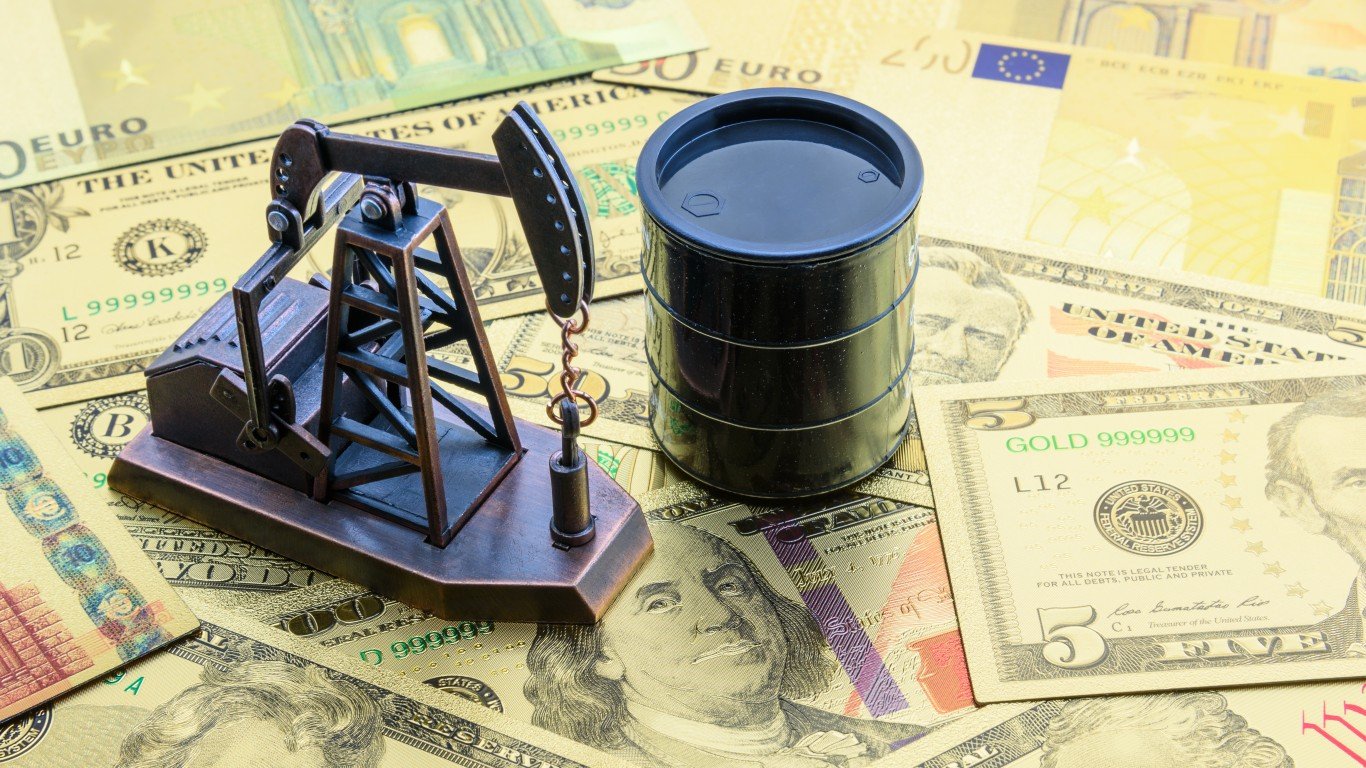
Oil markets are erupting as the Strait of Hormuz closes again, yet American drivers are somehow still paying less at the pump than they were two months ago. One country holds the key, and its patience is running out.

This post may contain links from our sponsors and affiliates, and Flywheel Publishing may receive compensation for actions taken through them.

The Strait of Hormuz, the chokepoint carrying roughly 20% of the world’s oil, was declared closed again on July 11 by Iran’s Revolutionary Guard Navy. Within 72 hours, US forces struck roughly 140 military targets, Iran launched missile and drone retaliation against the UAE, Qatar, Kuwait, Oman, and Bahrain, and Washington reinstated a naval blockade of Iranian ports. Brent crude jumped more than 4% on July 13 to $79.26, its highest level since June 22, and by this morning was trading around $84 to $86, up roughly 5% on the week, according to CNBC and Al Jazeera. The two largest oil ETFs are up roughly 10% to 13% over the past week.
Yet the US regular gasoline national average sits at $3.855 per gallon as of July 13, down about 7% from a month ago and well below its May peak near $4.50. One country is the reason.
How We Got Here
The war began in late February, when US and Israeli strikes on Iran triggered Tehran’s mining and harassment campaign in the strait. Macquarie warned in late March that oil could reach $200 if the conflict ran through June. By mid-June, JPMorgan wrote that “as the conflict enters its fourth month, one development stands out: prices have become remarkably calm,” with crude near $94, down from $104 a month earlier. A June 17 US-Iran memorandum of understanding pushed prices toward pre-conflict levels. Then Treasury revoked a 60-day sanctions waiver on Iranian oil on July 8, oil spiked more than 4%, and by July 11 the strait was shut again.
The Mechanism
China is buying less crude while holding its strategic reserve intact. Chinese crude imports fell from a roughly 11 million barrel-per-day five-year average to 7.8 million bpd in May, the lowest in nearly a decade, per Bloomberg customs data cited by Fortune. JPMorgan calculates that single move accounted for about 74% of the entire world’s decrease in global crude oil trade. Beijing pulled it off without materially drawing down its combined strategic and commercial stockpile of roughly 1.4 billion barrels, or about 120 days of net imports, according to the Energy Information Administration. The reserve is the backstop that lets China cut buying, and the buying cut is what suppresses the price.
Bigger Shock, Smaller Move
Societe Generale’s Mike Haigh notes that the Hormuz closure has removed about 14% of global crude supply as of June, pushing prices up roughly 30%. The 1973 OPEC embargo disrupted only 7% of supply but sent prices up more than 130%. Haigh calls China the “key rebalancing force,” but warns “the market will require higher prices to restore balance” as reserves eventually need rebuilding.
What Breaks the Cushion
Michal Meidan of the Oxford Institute for Energy Studies frames the open question: “How low could imports (and refinery runs) go before China must tap into its stocks more meaningfully or resume crude buying even at higher costs?” Shipping through Hormuz, normally about 130 vessels a day, collapsed to only six in one 12-hour window and nine in another, per Windward via Al Jazeera. Asian markets absorbed the hit on July 13: Japan’s Nikkei 225 fell more than 2%, South Korea’s Kospi more than 8%, Hong Kong’s Hang Seng about 0.2%.
XAnalysts’ Mukesh Sahdev expects Brent in the “upper $70s” through August and September, citing refiners’ long-lead procurement shifts away from the Middle East. IG’s Fabien Yip cites slow demand recovery, stranded-tanker releases, and OPEC+ output quota expansion as reasons a repeat of the earlier extreme spike is unlikely. The signal to watch is whether Chinese imports rebound in August customs data. When Beijing stops sitting out the market, the cushion under $3.85 gasoline goes with it.
Contact [email protected] for any questions or corrections.
I've spent more than 15 years inside enterprise software, working alongside the finance, sales operations, and HR leaders who run the revenue engines at some of the largest tech companies in the country.
My day job is helping enterprise executives make smarter decisions about retention, compensation, and growth. These are the same operational levers that show up in every earnings report investors actually read. That perspective shapes my writing for 24/7 Wall St.
The headline numbers are easy. The interesting stuff is underneath: how companies make money, what executives are worried about, and what any of it means for the person checking their 401(k) on a Sunday afternoon. I write about personal finance and business as someone who has spent her career inside the rooms where these decisions get made.