Hormuz Tolls Are Just the Beginning: The World’s Busiest Shipping Route Could Be Next
When Iran attempted to impose transit tolls on ships through the Strait of Hormuz this spring, Secretary of State Marco Rubio dismissed it as illegal: “No country is allowed to charge tolls or fees on an international waterway.” Treasury Secretary…

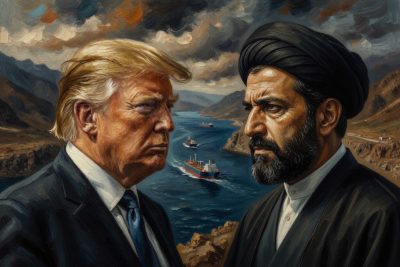
When Iran attempted to impose transit tolls on ships through the Strait of Hormuz this spring, Secretary of State Marco Rubio dismissed it as illegal: “No country is allowed to charge tolls or fees on an international waterway.” Treasury Secretary Scott Bessent warned Washington would “aggressively target any actors involved directly or indirectly in facilitating tolls for the Strait.” The tolls were blocked at the negotiating table, but the idea never went away — and this week it came roaring back. For the first time in the modern era, a state has demonstrated that a maritime chokepoint can be weaponized for cash flow as well as conflict, and every vulnerable waterway is now being reassessed.
How Hormuz Rewrote the Playbook
The trigger was Operation Epic Fury, the coordinated US and Israeli airstrikes on Iran launched February 28, 2026. Within days, Tehran effectively shut the strait through which nearly a fifth of the world’s oil and LNG supply flowed prior to military action. The International Maritime Organization reported that roughly 2,000 ships and about 20,000 mariners were stranded in the Persian Gulf at the peak of the disruption. QatarEnergy declared force majeure on all LNG shipments on March 4, cutting a supply line that had covered 12–14% of Europe’s LNG. Brent spiked to $138 per barrel on April 7.
The picture then whipsawed. An interim understanding reached in June allowed vessels to transit free of charge for a 60-day window while indirect US–Iran talks continued in Doha, and by early July those talks were described by mediator Qatar as making “positive progress.” That fragile calm broke down this week. On July 7, at least two tankers were struck by projectiles in the strait — one, a Qatari gas tanker (the Al Rekayyat), caught fire off the Omani coast — with the UK Maritime Trade Operations centre confirming the strikes and Qatar calling the attack a “serious and explicit violation” of international law. The same day, the US Treasury revoked a waiver that had permitted Iranian oil and petrochemical sales, tying the reversal directly to Iran’s conduct in the waterway; a US official said the arrangement was “entirely performance-based.” Iran’s foreign minister responded that Tehran would not resume negotiations under continued US threats, after President Trump said Washington would reach a deal or “finish the job.”
Crucially, the toll idea itself is still very much alive. On July 5, Iran’s ambassador to China said vessels transiting Hormuz would be charged new fees, with “special considerations” for China and other “friendly” countries, even as the US maintains that no final agreement will permit tolls. The playbook wasn’t shelved; it was paused, and Tehran is signaling it intends to run it again.
Malacca Is the Next Pressure Point
The Strait of Malacca handles roughly 22% of all global maritime trade, more than Hormuz, with about 440 commercial vessels transiting daily. Roughly 75% of China’s seaborne crude imports move through it, and it narrows to just 1.7 miles at its tightest point. In April 2026, Indonesia’s Finance Minister floated a Malacca toll system; Singapore and Malaysia pushed back, but the proposal signaled a new willingness among littoral states to monetize chokepoint leverage. A month later, Chinese Foreign Minister Wang Yi told his Singaporean counterpart that keeping shipping lanes open is “a shared aspiration of all countries.” A direct blockade remains unlikely. Coercion, tolls, and insurance repricing are the near-term risks.
The contagion is visible. Panama Canal traffic surged in March 2026 with tankers overtaking container ships, and Malacca volumes climbed as vessels rerouted. As S&P Global put it, “Network congestion, rather than a single point of failure, is becoming the primary channel for global trade disruption.” With Houthi Red Sea attacks resuming in late February, both major east-west routes are impaired. The Taiwan Strait sits behind this as the tail risk: CSIS notes “China faces more of a Taiwan Strait dilemma than a Malacca dilemma” because Beijing would harm itself first.
Where the Repricing Shows Up
Frontline (NYSE:FRO | FRO Price Prediction) posted Q1 2026 EPS of $2.51 versus a $1.58 estimate, with management attributing the surge to Hormuz-driven route lengthening. Shares are up 81.56% year-to-date. International Seaways (NYSE:INSW) delivered adjusted EPS of $3.90 against a $2.72 consensus and paid a $4.55 combined dividend. CEO Lois Zabrocky warned that “the world cannot substitute more than 20 million barrels per day of oil and refined product” if disruption drags on. Nordic American Tankers has booked nearly two-thirds of Q1 2026 spot days at roughly $55,000 per day.
The defense side is repricing. RTX (NYSE:RTX) reported Raytheon segment adjusted operating profit up 25% on Patriot and naval munitions demand, and a $271 billion backlog. Lockheed Martin (NYSE:LMT) signed framework agreements to lift Patriot, THAAD, and PrSM production 3 to 4 times current rates. Oil producer Devon Energy captured a Q1 WTI realization of $72.10 per barrel, though shares have lagged as Brent has round-tripped to $73.63. Broader exposure sits in transportation-focused ETFs.
The signal to watch over the next two quarters is whether war-risk insurance premiums, which jumped from 0.125% to 0.2–0.4% of ship insurance value per Hormuz transit — a roughly $250,000 hit for a VLCC — begin printing similar quotes around Malacca. Once underwriters price a chokepoint as weaponizable, the market rarely prices it back.
Contact [email protected] for any questions or corrections.
I've spent more than 15 years inside enterprise software, working alongside the finance, sales operations, and HR leaders who run the revenue engines at some of the largest tech companies in the country.
My day job is helping enterprise executives make smarter decisions about retention, compensation, and growth. These are the same operational levers that show up in every earnings report investors actually read. That perspective shapes my writing for 24/7 Wall St.
The headline numbers are easy. The interesting stuff is underneath: how companies make money, what executives are worried about, and what any of it means for the person checking their 401(k) on a Sunday afternoon. I write about personal finance and business as someone who has spent her career inside the rooms where these decisions get made.