Nvidia Might Be a Massive Winner as SpaceX’s Orbital Data Centers Take Off
SpaceX is building data centers in orbit, and the partner positioned to profit most may surprise even the analysts watching Nvidia's every move.

This post may contain links from our sponsors and affiliates, and Flywheel Publishing may receive compensation for actions taken through them.
It really does feel like shares of Nvidia (NASDAQ:NVDA | NVDA Price Prediction) have finally reached a bit of a ceiling, and while the new high bar is set just north of $235 per share, it’s not all that much higher than the consolidation channel that the stock spent most of the past year hovering around. Like it or not, Nvidia stock is delivering a sliver more than market returns this year, and that’s despite what I believe is a wave of positive new developments.
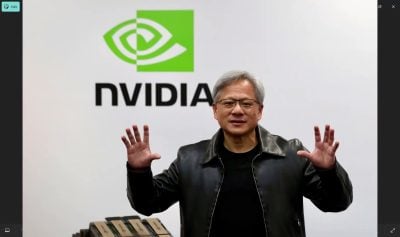
With the Vera Rubin boom still up ahead, with Nvidia’s top boss Jensen Huang shooting down recent reports that there were delays in production, it feels like the one big catalyst is ready to finally deliver for the $5.2 trillion titan.
Nvidia’s path going into the second half
As it stands, Vera Rubin hasn’t been delayed; it’s actually poised to deliver “giant amounts” of chips, and that may very well set the stage for blowout quarters to come. If you’ve been around Nvidia stock for more than a year, though, you’ll know that even a strong quarterly showing is no guarantee of a soaring stock.
The expectations bar still seems quite high, even though shares trade at a significant discount to the better-performing peers in the semi scene.
At 32.6 times trailing price-to-earnings (P/E), it’s clear that the seemingly low price of admission isn’t enough to convince investors to jump in, especially given the massive uncertainties surrounding whether or not the hyperscalers will keep buying after they’re done building AI data centers and what the risks could be if it’s discovered that there’s been significant overinvestment in three years from now.
Perhaps Nvidia shares can’t be cheap enough, given the cyclicality of the sector, no matter how many blowout quarters the firm posts or how many circular deals the firm makes to expand its dominance across AI layers that go beyond just hardware. Perhaps the biggest wild cards that could send Nvidia stock into a roaring bull market are the potential sales opportunity in China.
GPUs sold for space data centers?
If a sales boom in China sounds too far-fetched, perhaps Nvidia’s role in supplying GPUs to Space Exploration Technologies (NASDAQ:SPCX) as it begins work on its orbital data center buildout might act as a surprise needle-mover that sell-side analysts haven’t yet baked in fully.
Of course, it’s really hard to analyze just how impactful SpaceX’s space-based data centers will be and what the implications could be for the partners it does business with. Indeed, there just have to be more beneficiaries than just SpaceX as the firm builds AI infrastructure in the skies above.
In my view, SpaceX’s orbital data center buildout is a real catalyst, one that could help Nvidia sell even more products. Jensen Huang and company might not be well-positioned to sell more GPUs, but software and other infrastructure that goes into something like a Starmind AI satellite.
Any way you look at it, Nvidia is treating the new market very seriously and, arguably, they’ve already set a launchpad, with space-ready Vera Rubin chips, CUDA software (meant for operating in orbit), and more. As Elon Musk moves at lightspeed with orbital data centers, perhaps the uplifting effects for Nvidia could come sooner rather than later.
The bottom line
It’s tough to gauge how the space economy will jolt Nvidia’s pocketbook, especially considering AI1 satellites will feature interchangeable hardware. Once Terafab is up and running, SpaceX will, in due time, probably swap out third-party chips with its own. Either way, though, Nvidia is ready to bridge the gap.
Contact [email protected] for any questions or corrections.
Joey is a 24/7 Wall St. contributor and seasoned investment writer whose work can also be found in publications such as The Motley Fool and TipRanks. Holding a B.A.Sc in Computer Engineering from the University of British Columbia (UBC), Joey has leveraged his technical background to provide insightful stock analyses to readers.
Joey's investment philosophy is heavily influenced by Warren Buffett's value investing principles. As a dedicated Buffett disciple, Joey is committed to unearthing value in the tech sector and beyond.