Analysts Still See Massive Upside for SK Hynix — The AI Cycle Isn’t Done But Questions Remain
SK Hynix just landed on Nasdaq carrying the biggest slice of the high-bandwidth memory market, but arriving at a moment when semis are getting punished raises a pointed question about whether this heavyweight is a steal or a trap.


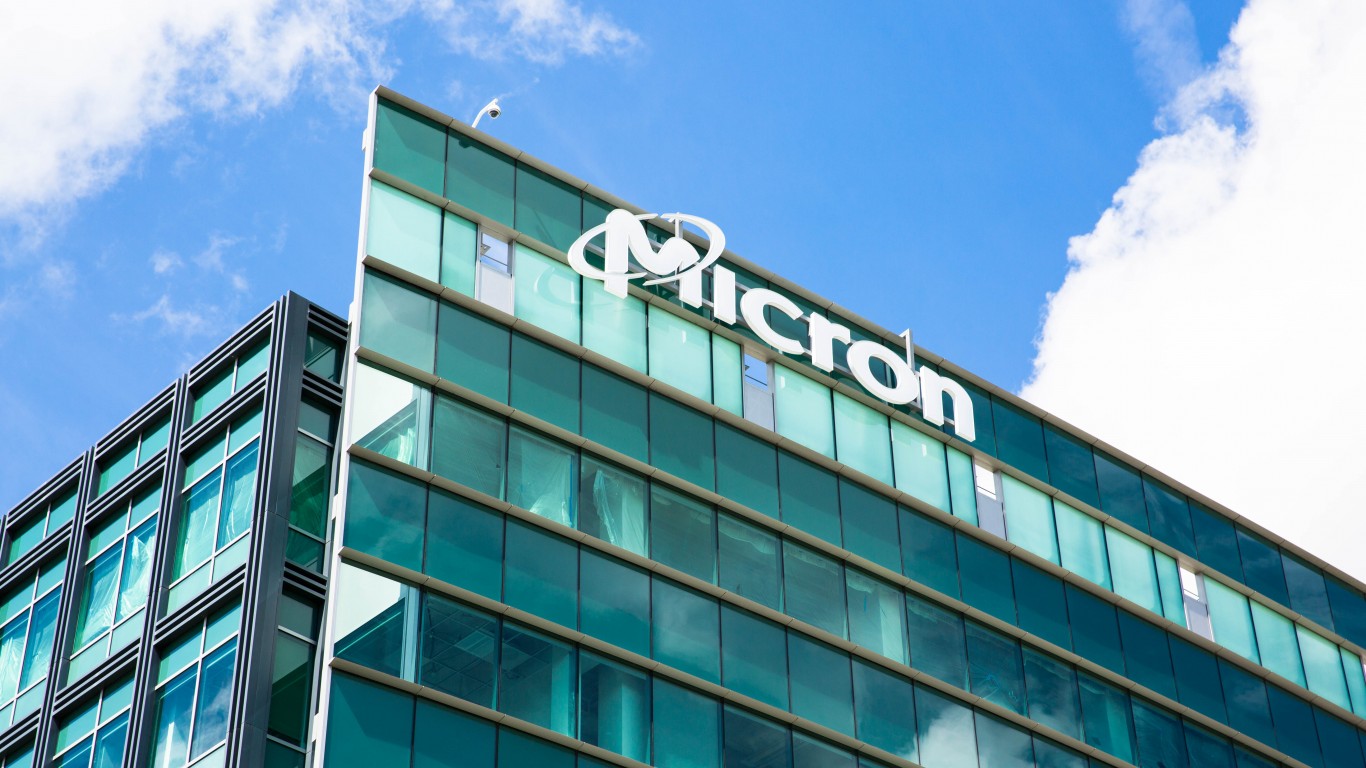
It took long enough for shares of SK Hynix (NASDAQ:SKHY) to trade on a U.S. exchange. Now that it’s landed on the Nasdaq, questions linger as to whether it’s a better way to bet on the memory boom than Micron (NASDAQ:MU | MU Price Prediction), the only option that U.S. investors had for the past few years of the AI boom.
Undoubtedly, Micron’s ascent has been historic, but SK Hynix is a heavyweight champ that controls more of the global high-bandwidth memory market. For those looking for the optimal bottleneck in the AI revolution, it’s hard to find anything more significant than SK Hynix.
A fiercer memory play at a “discount?”
Whether the “Korean discount” (relative to U.S.-based comparable firms) will be going away, though, remains the trillion-dollar question. With investments rushing out of South Korea and the KOSPI, questions linger as to whether shares of SK Hynix are arriving in the U.S. market just a few minutes before midnight.
It certainly feels like this, given the vicious wave of selling hitting the semiconductors. In my view, the “Korean discount” might always exist to some extent, even as it looks to shrink with every relative bout of outperformance it has over Micron.
While it’s an uneasy time to be a buyer of SK Hynix, I do think the value proposition gets louder with every single-day double-digit percentage move lower. The biggest discounts tend to arise when investors panic-sell, fearing the bursting of an AI bubble. With AI demand heating up as ever, it feels like the selling wave, specifically surrounding South Korean memory makers, is a bit premature and nothing to hit the panic button over.
Just another correction in semis?
Explosive ascents tend to require more painful corrections, and the AI cycle doesn’t need to provide evidence of a topping out. But just because the AI cycle is going strong doesn’t mean memory demand is going to stay this explosive forever. Indeed, the AI data center buildout is furious, and memory will stay in short supply for years. But that narrative is more than baked in already.
What’s changed?
With a hawkish-sounding Kevin Warsh in the Fed chair, and the market’s relentless punishment of CapEx-heavy hyperscalers, it feels like the solution for the big spenders is easy: cut spending, get rewarded with relief gains, even if it means giving up ground in the AI compute race.
At the end of the day, it might be more about research and breakthrough innovation than sheer spending that helps the AI racers move to that first spot. For the firm that can shrink down models while finding ways around bottlenecks, rather than physical scaling, I do see significant gains to be had that don’t require exorbitant spending.
Any way you look at it, the recent aura of efficiency surrounding this market isn’t going away anytime soon. And if brute-force scaling continues to be punished by the market, we might ultimately avoid a widespread AI bubble altogether. But, of course, that could mean the bubble floats from the buyers to the sellers of AI infrastructure.
The bottom line
Of course, the AI bull story goes that CapEx will only move higher, given none of the hyperscalers want to surrender any ground in such a critical race. That could be the case, especially if AI applications pay off, which they haven’t quite yet.
But what happens if rates go up and hyperscalers give investors what they want (smarter spend and focus on efficiencies) and the titans are finally satiated with what they have? Indeed, Meta Platforms‘ (NASDAQ:META) decision to sell compute might have caused shivers across the semis. It seems like the semi trade might be far more fragile than initially expected, even with AI demand still powering ahead.
In any case, some of the more bullish analysts see SK Hynix gaining as much as 100-120% from here. Perhaps a doubling could be in the cards if all goes well, but, at the same time, so too can a halving or worse for a stock that posted massive multi-bagger gains well before it landed on the U.S. public market last week.
Contact [email protected] for any questions or corrections.
Joey is a 24/7 Wall St. contributor and seasoned investment writer whose work can also be found in publications such as The Motley Fool and TipRanks. Holding a B.A.Sc in Computer Engineering from the University of British Columbia (UBC), Joey has leveraged his technical background to provide insightful stock analyses to readers.
Joey's investment philosophy is heavily influenced by Warren Buffett's value investing principles. As a dedicated Buffett disciple, Joey is committed to unearthing value in the tech sector and beyond.