Nvidia Chips Aren’t the Whole AI Story — Another Industry Dominates AI Sales
Nvidia (NASDAQ:NVDA | NVDA Price Prediction) has arguably been the biggest story of the AI boom thus far, with shares gaining more than 1,800% since the lows of 2022. Undoubtedly, the innovation going on behind the scenes has not slowed…

Nvidia (NASDAQ:NVDA | NVDA Price Prediction) has arguably been the biggest story of the AI boom thus far, with shares gaining more than 1,800% since the lows of 2022. Undoubtedly, the innovation going on behind the scenes has not slowed down one bit. Arguably, it’s accelerating as the era of Vera Rubin arrives while the company expands its footprint into more critical growth categories across the AI revolution.
\Whether we’re talking about RTX Spark and its potential to transform the way we think about AI PCs, or the other critical pieces of high-end hardware needed for these next-generation AI data centers, Nvidia has continued to raise the bar. Yet, you probably wouldn’t know it just by looking at the shares, which have slowed to a still-respectable 78% gain in the past two years. Either way, the lengthy pause might be in the rearview as Nvidia shares look to march choppily higher.
When you compare the past year of gains in Nvidia shares, up 56%, to the rest of the semiconductor scene, though, with the iShares Semiconductor ETF (NASDAQ:SOXX) up closer to 180%, it’s clear that something else is doing the heavy lifting in AI, and it’s not GPUs.
Undoubtedly, memory and storage chip makers have been these massive movers. They were the “next Nvidia.” And now the real question is whether they’ll be on for a digestion phase that sees shares go sideways for some time, much as Nvidia had prior to its latest second-quarter breakout.
The memory chip makers have been explosive. They’re not slowing down
When we’re talking about the bill of materials that goes into the AI data center boom, high-bandwidth memory (HBM) has stood out in a big-time way. And with pretty much a triopoly around that market, the kind of pricing power in the hands of just a trio of companies has been off the charts.
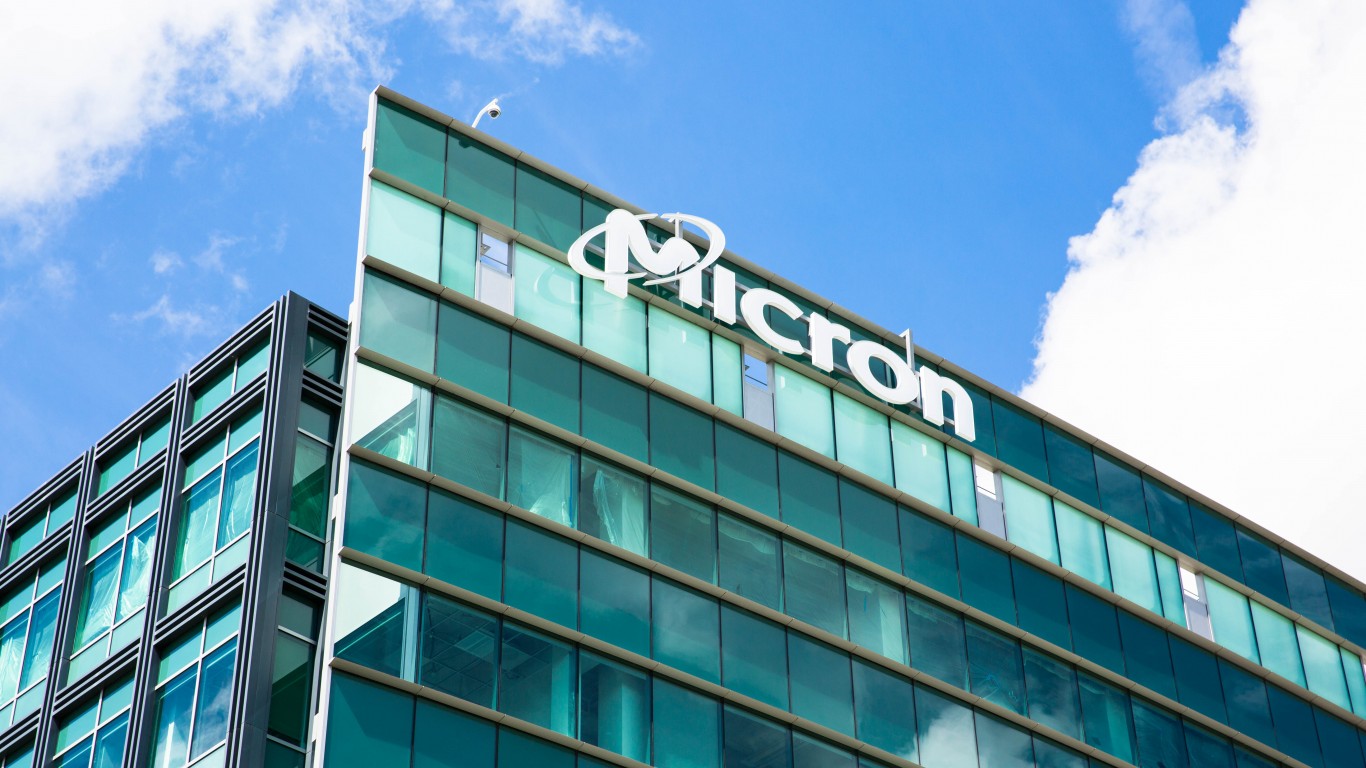
Whether it’s Micron (NASDAQ:MU) in the U.S. or Samsung and SK Hynix in South Korea, memory has been the latest phase of the AI gold rush. As hyperscalers and beyond look to spend even more money going into 2027, questions linger as to just how much of the spending will go towards chips and how much will go to HPM.
Any way you look at it, the memflation is real, and it might not back down anytime in the near future. If Nvidia’s latest and greatest GPUs are the “picks and shovels,” it appears that the memory chips are the steel that goes into making the tools needed for innovators to unearth real gold in this AI revolution. Any way you look at it, memory chips’ slice of the AI pie is growing at a staggering rate. And that’s a major reason why many analysts still see gains ahead for Micron and its South Korean peers.
High-end AI chips were the start
According to Deloitte, high-value AI chips (think the very best GPUs) now account for less than 0.2% of total unit volume but close to half of total revenue. And with a growing number of firms getting into the AI chip scene, including the big hyperscalers, rolling up their sleeves to invest in the effort, the high-end AI chip makers face stiff competition. And questions linger as to whether this will impact the margins to be had in the high-end.
In other words, there might be more firms starting up shop to sell picks and shovels. But that might just mean more heated demand for the steel that goes into making more tools going on the market. Any way you look at it, Micron, SK Hynix, and Samsung are the AI trade’s new leaders. They represent a look further behind the curtain of this AI data center buildout. And it’s not like one of the hyperscalers can just start making memory chips tomorrow.
The memory giants have set their stage a long, long time ago, and given the high CapEx requirements, it feels as though the memory giants are pretty much untouchable, with unprecedented pricing power.
Contact [email protected] for any questions or corrections.
Joey is a 24/7 Wall St. contributor and seasoned investment writer whose work can also be found in publications such as The Motley Fool and TipRanks. Holding a B.A.Sc in Computer Engineering from the University of British Columbia (UBC), Joey has leveraged his technical background to provide insightful stock analyses to readers.
Joey's investment philosophy is heavily influenced by Warren Buffett's value investing principles. As a dedicated Buffett disciple, Joey is committed to unearthing value in the tech sector and beyond.