NVIDIA Just Released a Seriously Impressive AI Model for Robots—This Could Be the Big Catalyst
Nvidia just pulled the curtain on a generative world foundation model built for robots, and most investors are completely missing what it signals about where the GPU giant is actually headed next.

Shares of Nvidia (NASDAQ:NVDA | NVDA Price Prediction) have been looking for a big needle-moving catalyst for quite some time now. And while this year’s version of GTC was absolutely packed, with some intriguing surprises, nothing was quite enough to charge a breakout. Just when Nvidia finally broke past its ceiling of resistance, the semiconductor trade got slapped with some pretty nasty turbulence.
With a brutal technical setup for the semis and growing odds of an interest rate hike (maybe two), courtesy of new Fed chair Kevin Warsh, it’s looking like investors who are up big and in a rush to book their gains before the latest dip into a bear market has the chance to get worse.
Of course, past plunges were met with V-shaped bounces, but, after several failed attempts to climb back, it’s finally looking like things are ready to roll over. With Nvidia pulling the curtain on a new AI model named Cosmos 3 Edge, the GPU titan looks ready to make a massive leap into the realm of physical AI and robotics.
Indeed, Nvidia’s new AI model isn’t just another large language model (LLM); it’s a generative world foundation model (WFM), and one that looks seriously impressive and perhaps underestimated by a market that’s selling anything tied to chips indiscriminately. Of course, time will tell how long it takes for Nvidia’s latest world model to nudge the shares higher. For the bulls, I think a semi sell-off, one that drags down Nvidia, could open a window to buy at a discount, the likes of which hasn’t been seen in shares in some number of years.
Physical AI is coming, and it might hold the next “ChatGPT moment”
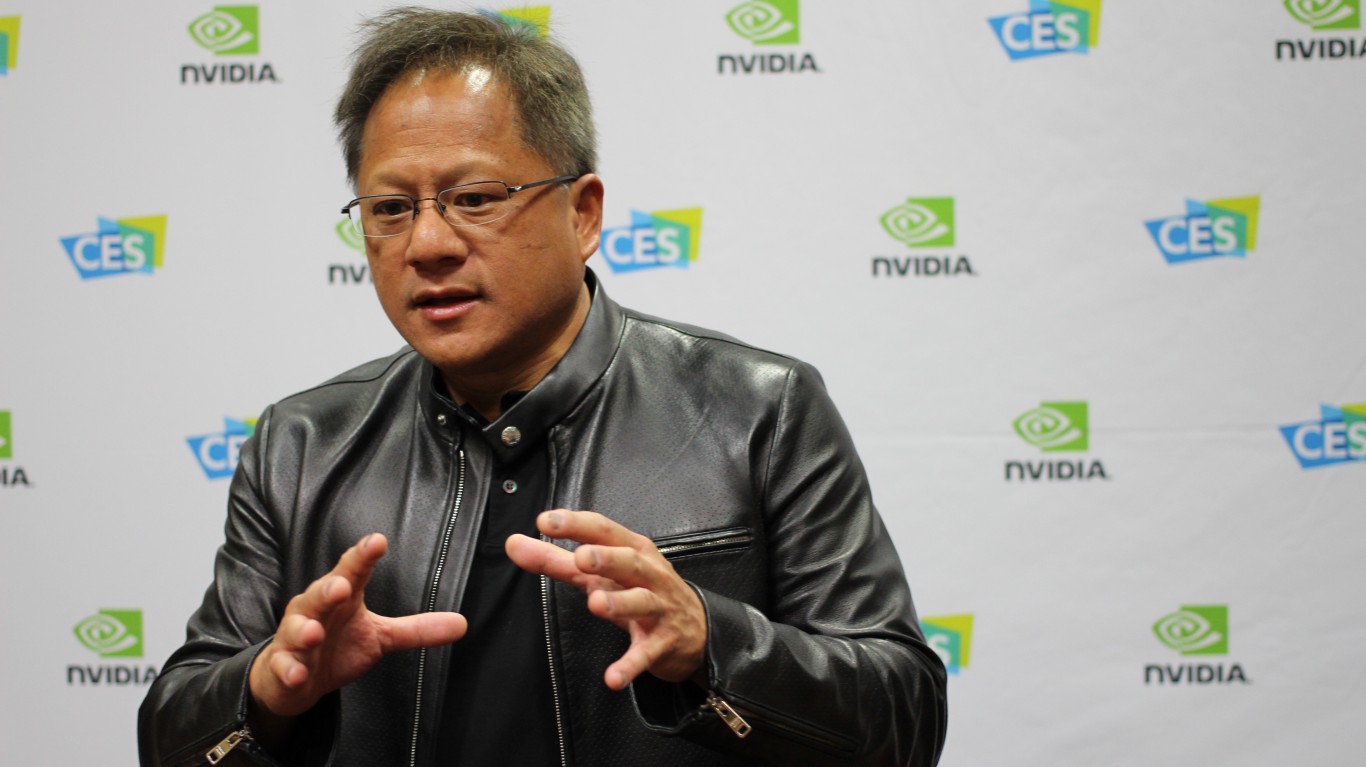
We’ve heard Nvidia’s CEO Jensen Huang talk up the physical AI opportunity before and how it could be in for a “ChatGPT moment,” so to speak. In my view, Cosmos 3 Edge is a big deal, as the company looks to power into an entirely different kind of market while most investors are buying into an AI bubble thesis, viewing Nvidia as a peaking cyclical whose best days are numbered, rather than a firm that’s already ready to move onto the next big thing.
In a past piece, I highlighted Nvidia’s efforts on tailoring its chips for the age of orbital data centers. And while it’s hard to grasp how big that opportunity is, I do think that physical AI stands out as much timelier.
Of course, it’s hard to make sense of what Jensen Huang’s up to in Japan as he meets up with the nation’s brightest minds in AI and robotics.
As a growing number of firms, including Apple (NASDAQ:AAPL), which has a rumored desktop robot in the works, take robotics seriously, I do think that analysts will have every reason to revisit the drawing board, perhaps with major upside revisions as we all gain a better grasp of what the earlier days of the rise of physical AI and robotics entails, not only at the warehouse but in the home.
What makes Cosmos 3 such a standout, in my view, is its profoundly impressive next-frame prediction, its absurd speed of adaptation, and, perhaps most exciting, its open-source nature, which could make Nvidia’s models the foundation that future robotics innovators build off of.
The bottom line
Whenever robots take off, Nvidia’s ecosystem looks like it’ll be hard to top, especially given that rapid frame prediction and adaptation are key question marks standing in the way of broader adoption. As Jensen Huang collaborates with leading innovators in Japan, my bet is that Nvidia is poised to get a considerable second wind in the next two to four years.
The timeline of physical AI’s ascent is uncertain, but if you believe Jensen Huang, I do think that the shares look too cheap, especially if physical AI and the Cosmos platform wind up being the next big catalyst.
Contact [email protected] for any questions or corrections.
Joey is a 24/7 Wall St. contributor and seasoned investment writer whose work can also be found in publications such as The Motley Fool and TipRanks. Holding a B.A.Sc in Computer Engineering from the University of British Columbia (UBC), Joey has leveraged his technical background to provide insightful stock analyses to readers.
Joey's investment philosophy is heavily influenced by Warren Buffett's value investing principles. As a dedicated Buffett disciple, Joey is committed to unearthing value in the tech sector and beyond.