‘You Might Lose Your Shirt By Monday’: Jim Cramer’s Blunt Warning to Investors Buying Micron on Margin
Jim Cramer says Micron just delivered one of the best quarters in memory chip history, yet he still wants you out of the stock before Monday. The reason has nothing to do with earnings and everything to do with who…


Jim Cramer has a message for anyone who bought Micron, Corning, or Seagate with borrowed money: get out now, before the margin clerks make the decision for you.
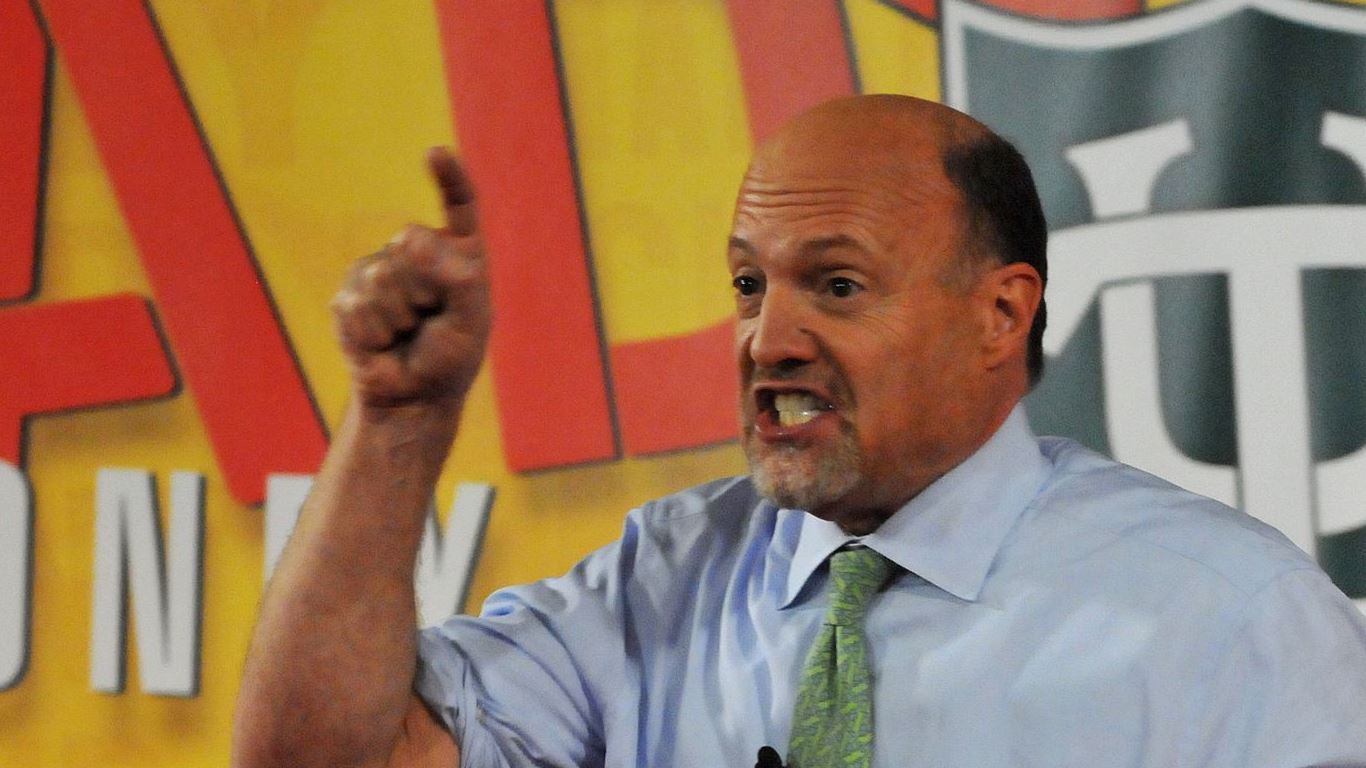
On Mad Money, the CNBC host laid out why the current unraveling in tech and semiconductor stocks has almost nothing to do with how these companies are actually performing, and everything to do with leverage. “Panic is not a strategy,” he said, before explaining exactly why panic is winning anyway.
Cramer’s Core Argument: Leverage Beats Fundamentals
Cramer’s central point is that strong fundamentals cannot save a stock once a leverage-fueled rally goes into reverse. His words: “When you get these parabolic rallies that they’ve had based on overconfidence and leverage on the part of overexuberant traders, well, if you buy a stock thinking that it can fly all the way to the sun, you’re going to get burned no matter how good the fundamentals are, especially if you use margin, something I abhor and will be the bane of your existence if you’re not careful.”
Corning Was Exhibit A
Corning (NYSE:GLW | GLW Price Prediction) drew Cramer’s sharpest example. “When you watch Corning go from $77 to $271 in a short period of time, you know that you have to sell some,” Cramer said. “Maybe you have to cut the position in half because the fundamentals are no longer in the driver’s seat. The crazies are.” Those price points align precisely with Corning’s verified 52-week range of $77.39 to $271.78. The stock was trading around $158 at the time of Cramer’s warning, down nearly 18% on the week, exactly the kind of violent round trip he was describing.

The Mechanics of a Forced Unwind
Once big institutions start selling, no buyers with sufficient firepower remain to hold prices up. Cramer put it plainly: “When you get the professionals selling huge chunks of stock, as we have right now, the margin amateurs and the call buyers and inexperienced hedge fund managers cannot possibly prop up the share prices. So what happens? The calls quickly cease to be worth anything. The margin buyers don’t have enough money to fend off the margin calls, so they’re forced to sell at bad prices.”
Company quality becomes beside the point in that environment. “At this very moment, it doesn’t matter one bit how these companies are actually doing. Do you know that what matters is how the margin clerks are doing? That’s why, by the way, I like to wait until 2 p.m. to see if there’s a real bottom. That’s when the margin clerks are done selling for the day.” In a forced-selling cascade, the bottom arrives when liquidations exhaust themselves, not when earnings stabilize.
Micron: A Blowout Quarter Meets a Margin Flush
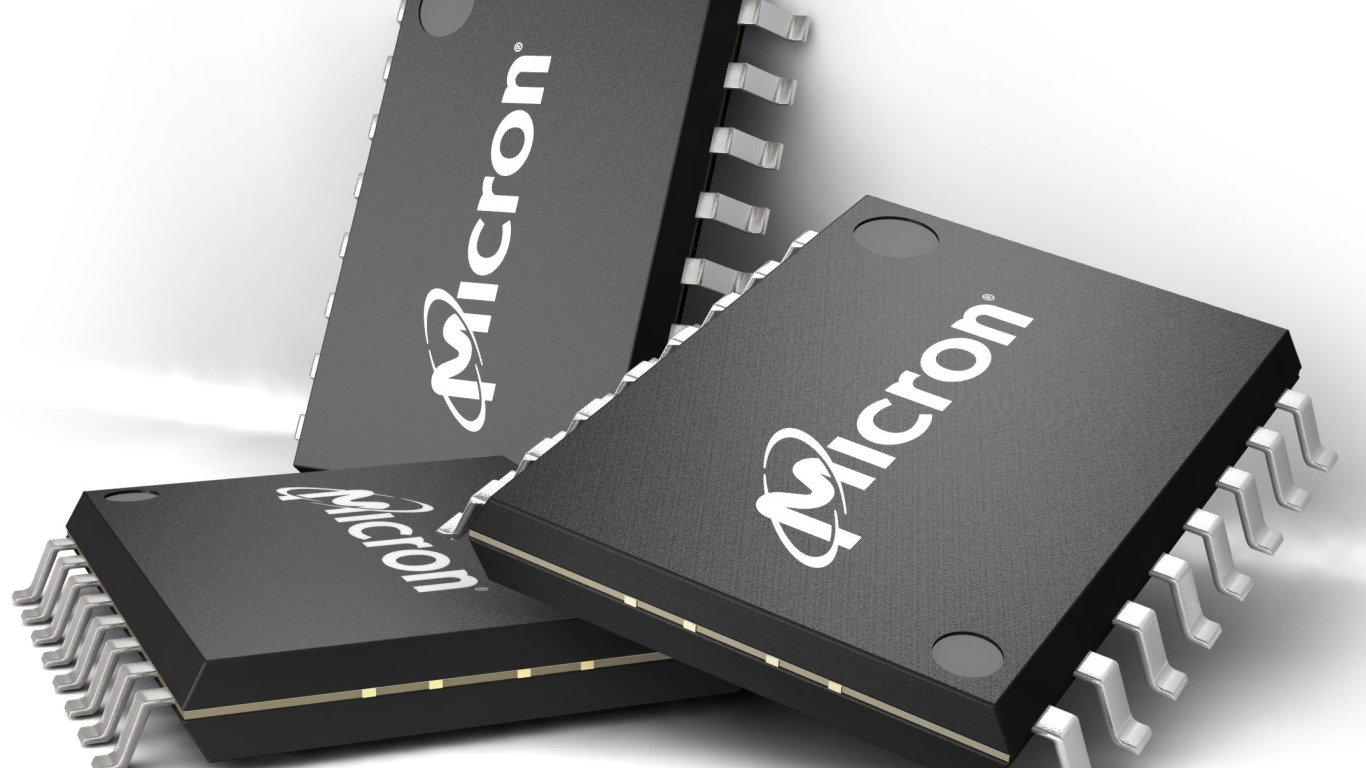
The companies themselves are fine. Micron Technology (NASDAQ:MU) delivered a fiscal Q3 that raised the bar for the entire memory complex. Per the company’s 8-K filing, revenue came in at $41.46 billion against an LSEG consensus estimate of $35.84 billion, non-GAAP EPS hit $25.11, and non-GAAP gross margin reached a company record of 84.9%. CEO Sanjay Mehrotra told investors that “Micron’s record fiscal Q3 financial results and even stronger outlook for Q4 reflect the strategic value of memory in the AI era.” Guidance for Q4 calls for $50.0 billion in revenue and $31.00 in non-GAAP EPS.
Then the stock rolled over anyway. Micron fell 14% on the week even as it sat up nearly 199% on the year at the time of Cramer’s warning. Options positioning told the same story: the nearest expiration carried 337,818 calls of open interest against 577,051 puts, evidence of the leveraged, speculative crowd Cramer was describing. Events since proved his thesis: the stock went on to shed roughly 30% from its early July peak before recovering and crossing back above $1,000 per share in late summer.

Seagate Rides the Same Wave
Seagate Technology (NASDAQ:STX) sits in the same AI storage demand story and was caught in the same drawdown. Fiscal Q3 revenue hit $3.11 billion, up 44.1% year over year, with non-GAAP EPS of $4.10 beating the $3.47 consensus. In the company’s earnings release, CEO Dave Mosley said: “We believe Seagate is entering a new era of structural growth as AI applications amplify data creation and support sustained storage demand.” Despite all of that, the stock slid 16.25% over the week Cramer issued his warning.
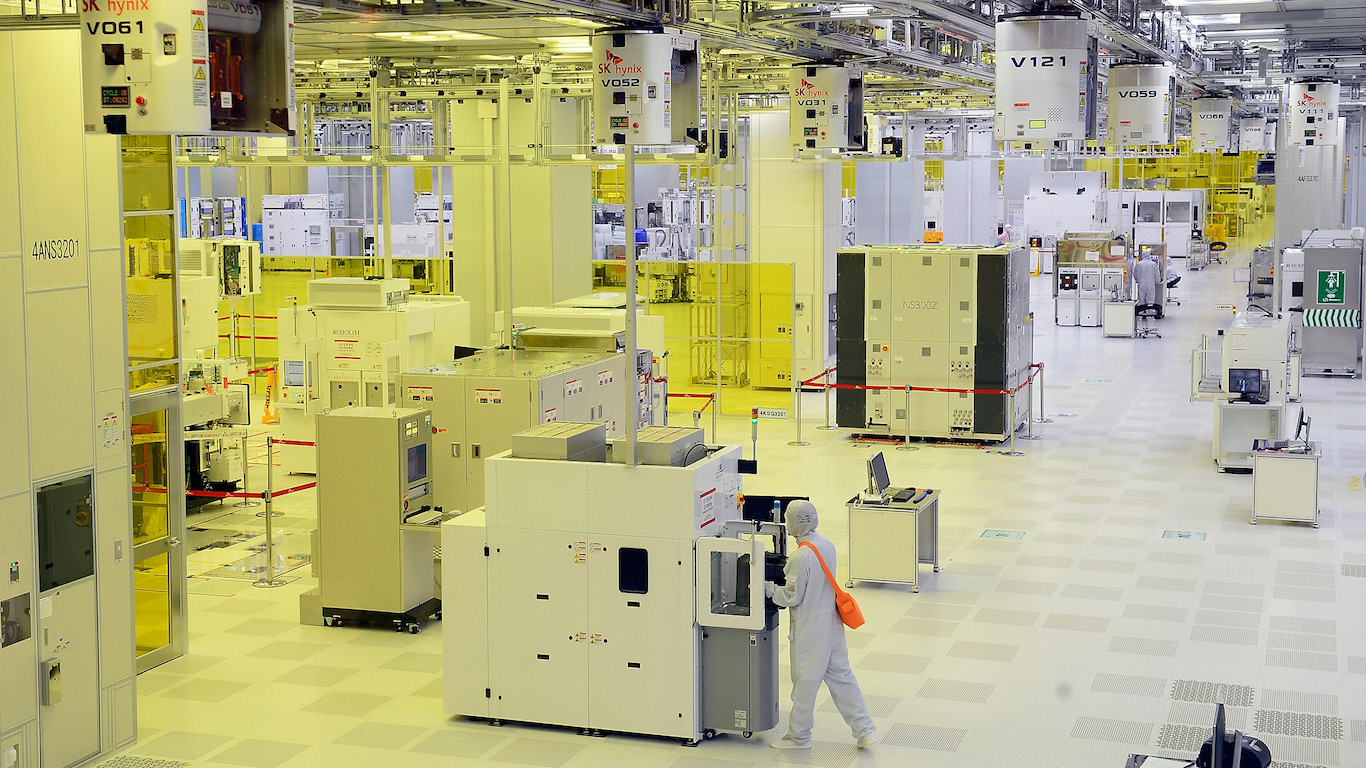
That gap between fundamentals and price action is exactly what Cramer flagged as a feature of a healthy flush, not a flaw. “The faster you get rid of those who borrow the money to buy an SK Hynix or Micron, the healthier this market will be. The unwind is good news.”
The Warning That Gives This Story Its Edge
“If you’re borrowing money to buy stocks, I think you’ll still have a chance to get out with your shirt on. But if you persist, you might be naked by Monday.”
Parabolic moves unwind faster than they build, and margin turns a good company into a perilous position the moment sentiment cracks. Cramer saw Micron and Corning as fundamentally sound businesses. His warning was that borrowed money in a forced-selling market is a trap, and the exit was closing fast. Sell the leverage, he argued, and once the margin clerks finish their work, opportunity returns.
Editor’s note: This update corrects Micron’s fiscal Q3 2026 gross margin figure to 84.9% on a non-GAAP basis per the company’s SEC 8-K filing, adjusts the analyst revenue consensus to $35.84 billion per LSEG data, fixes the Seagate CEO quote to include its proper “We believe” attribution per the official press release, and adds context on Micron’s subsequent 30% correction and recovery that played out after Cramer’s warning was issued.
Contact [email protected] for any questions or corrections.
I've spent more than 15 years inside enterprise software, working alongside the finance, sales operations, and HR leaders who run the revenue engines at some of the largest tech companies in the country.
My day job is helping enterprise executives make smarter decisions about retention, compensation, and growth. These are the same operational levers that show up in every earnings report investors actually read. That perspective shapes my writing for 24/7 Wall St.
The headline numbers are easy. The interesting stuff is underneath: how companies make money, what executives are worried about, and what any of it means for the person checking their 401(k) on a Sunday afternoon. I write about personal finance and business as someone who has spent her career inside the rooms where these decisions get made.