The 5 Hyperscaler Stocks Most at Risk If AI Capex Spending Hits a Wall in 2026
One hyperscaler may already be signaling a capex plateau, and if Jim Cramer's read is right, the selloff cascading through Oracle, Amazon, Alphabet, Meta, and Microsoft has barely started.

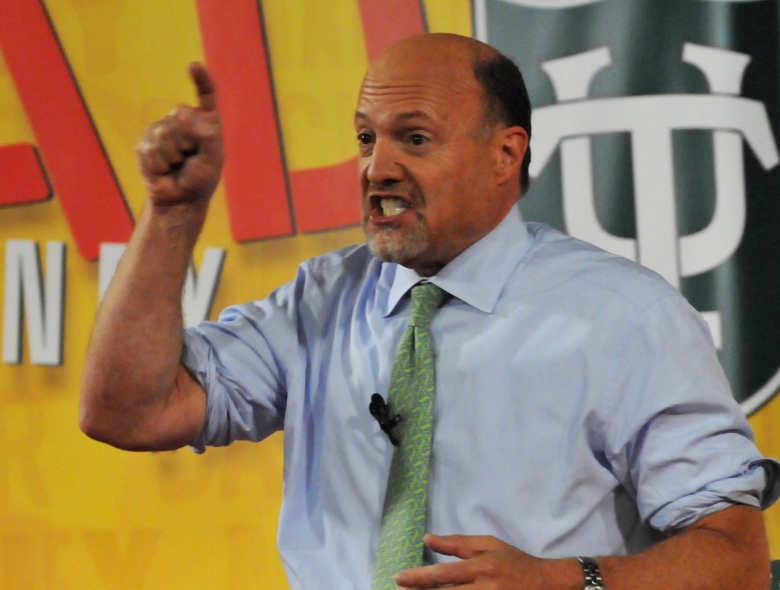
Jim Cramer just put a name on the action. In a post today, he wrote: “We are seeing a sea change based on one of the hyperscalers saying it will NOT increase capex or a realistic re-valuation of OpenAI DOWN so its credit may not be that good. That’s what this selloff is about.” Oracle (NYSE:ORCL | ORCL Price Prediction) is down 3.85% intraday, and Alphabet (NASDAQ:GOOGL) has shed 7.22% over the past week after guiding 2026 capex to $195 billion to $205 billion.
The actual balance sheet damage sits if enterprise AI demand cools, GPU ROI disappoints, or OpenAI’s credit deteriorates. Ranked from most exposed to most cushioned.
1. Oracle (ORCL)
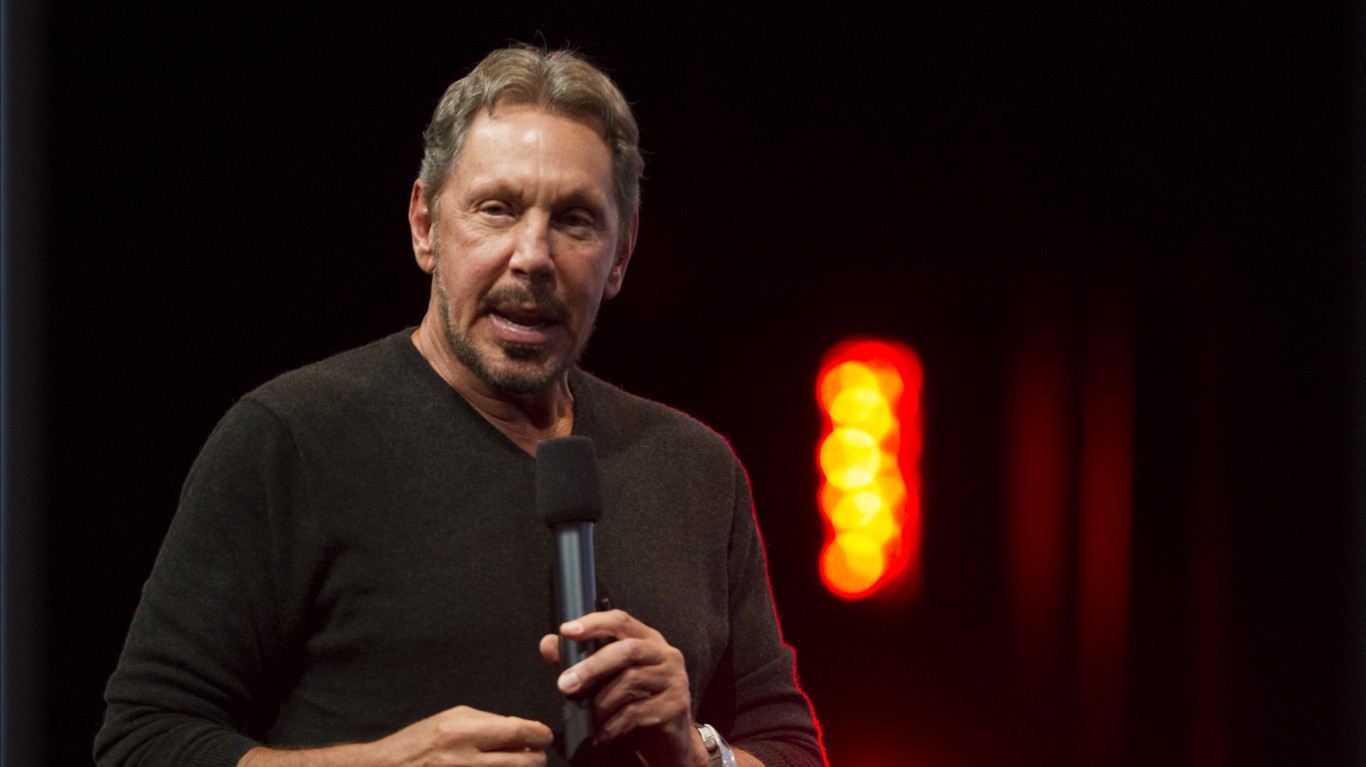
Oracle is the cleanest short if the AI capex cycle rolls over. Cloud infrastructure revenue grew 93% year over year in Q4 FY2026 to $5.79 billion, and RPO exploded to $638 billion, up 363%, with $75 billion tied to prepaid or customer-supplied GPU arrangements. The problem is what funds it. Free cash flow was negative $23.69 billion in FY2026, capex hit $55.66 billion, and management plans roughly $40 billion in FY2027 financing via debt and equity. Shareholders’ equity is only $43.06 billion against $218.70 billion in total liabilities. Recent headlines about 21,000 job cuts to fund a $300B OpenAI contract and a $7 billion Wisconsin power hurdle underline the fragility. Shares are down 50.53% year over year.
2. Amazon (AMZN)
Amazon (NASDAQ:AMZN) carries the largest absolute capex commitment in the industry at roughly $200 billion for 2026. AWS printed $37.59 billion in Q1 2026, up 28%, its fastest growth in 15 quarters, but trailing free cash flow collapsed 95% to $1.2 billion as property and equipment additions surged. Trainium commitments include roughly 2 gigawatts for OpenAI and up to 5 gigawatts for Anthropic. If either counterparty renegotiates, AWS becomes a very expensive landlord. Q1 capex alone was $44.20 billion, up 76.7%. Shares are essentially flat on the year and off 1.08% today.
3. Alphabet (GOOGL)
Alphabet is the most likely candidate for Cramer’s implied catalyst. Q2 capex hit $44.92 billion, up 100.1% year over year, and management raised the 2026 range to $195 billion to $205 billion from $180 billion to $190 billion. Q2 free cash flow turned negative $5.9 billion. To finance the buildout, Alphabet raised roughly $70 billion in combined equity and debt, suspended its buyback program, and doubled long-term debt to $98.2 billion. Cloud backlog reached $514 billion, and cloud grew 82% to $24.77 billion. CFO Anat Ashkenazi warned that “free cash flow will remain under pressure”. Reddit chatter has followed suit, with sentiment scores bottoming at 28 (bearish) on July 24.
4. Meta Platforms (META)
Meta Platforms (NASDAQ:META) raised 2026 capex guidance to $125 billion to $145 billion, the largest single-year hike among peers, with no external cloud rental stream to defray the cost. Q1 capex was $19.00 billion, up 46.8%, and Reality Labs still bled $4.03 billion in operating losses. Free cash flow grew only 11.7% to $12.39 billion despite 33.1% revenue growth. The risk is dual exposure: if the ad market cools while AI ROI stays unproven, Meta absorbs both hits. Shares are down 16.4% over the past year.
5. Microsoft (MSFT)
Microsoft (NASDAQ:MSFT) is the least exposed, but that is a relative call. Q2 capex hit $37.5 billion, and Q3 came in at $30.88 billion, up 84.4%. What separates Microsoft is quality: operating margin of 45.6%, ROE of 33.3%, and Azure and other cloud services growing 40%. Commercial RPO stands at $625 billion, and CFO Amy Hood said GPU contracts for the largest customers “are contracted for the entire useful life of the GPU, so the risk you’re concerned about isn’t present.” BNP Paribas has flagged Microsoft’s free cash flow as the most resilient of the hyperscalers. Shares are still down 19.19% year to date.
Conclusion
The common thread is leverage to a single assumption: enterprise AI demand keeps compounding fast enough to earn a return on hundreds of billions in silicon. If Cramer’s read is correct and one hyperscaler is signaling a capex plateau, the multiple compression cascades down the risk stack fastest at Oracle, then Amazon, then Alphabet. Watch OpenAI’s private valuation and any softening in Q3 capex commentary.
Contact [email protected] for any questions or corrections.
Joel South covers large-cap stocks, dividend investing, and major market trends, with a focus on earnings analysis, valuation, and turning complex data into actionable insights for investors.
He brings more than 15 years of experience as an investor and financial journalist, including 12 years at The Motley Fool, where he served as an investment analyst, Bureau Chief, and later led the Fool.com investing news desk. He has also co-hosted an investing podcast and appeared across TV and radio discussing market trends.