Intel Stock Drops After $15 Billion Share Sale. Is AI Spending Getting Too Expensive?
Intel just chose to sell $15 billion worth of its own stock rather than borrow more money, and shareholders are already paying the price. The question hanging over the entire AI infrastructure boom is whether anyone building it will ever…

This post may contain links from our sponsors and affiliates, and Flywheel Publishing may receive compensation for actions taken through them.
The AI boom is creating an unusual problem for investors: The companies spending the most to build the infrastructure behind it are increasingly being asked to prove that the spending will produce returns.
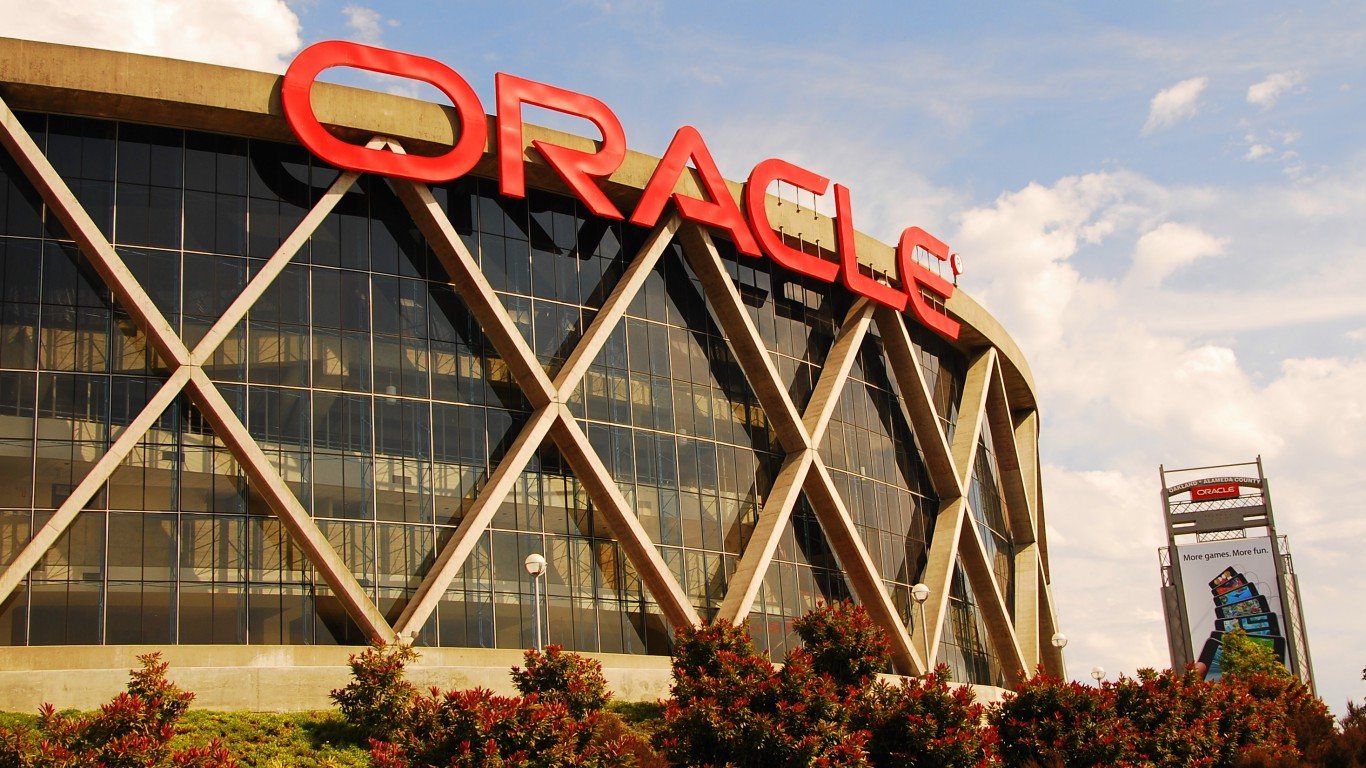
Alphabet (NASDAQ:GOOG | GOOG Price Prediction) has pursued an $84.75 billion equity raise, Oracle (NYSE:ORCL) has turned to both debt and equity to fund its data-center expansion, and the five largest U.S. AI data-center builders have added roughly $350 billion of debt over five years, according to Bloomberg data reported by the Los Angeles Times.
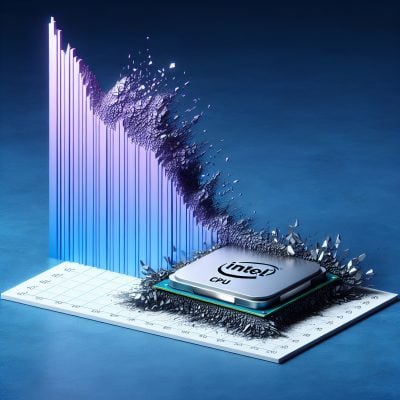
Now Intel (NASDAQ:INTC) is adding another wrinkle. It isn’t borrowing $15 billion. It’s selling stock.
Intel Is Choosing Dilution Over More Debt
Intel announced this morning that it plans to raise $15 billion through a public offering of common stock, with underwriters also receiving an option to purchase another $2.25 billion. The company said the proceeds will support general corporate purposes, including capital expenditures and working capital, as it expands to meet demand tied to AI compute and semiconductor manufacturing. The Wall Street Journal reported that Intel has already raised its 2026 capital-expenditure forecast from $18 billion to more than $20 billion.
The market’s response was immediate: Intel shares are down more than 3% in morning trading today.
Let’s be clear about what shareholders are seeing. Debt creates interest expense. Stock issuance creates dilution. Intel is effectively telling investors it would rather increase its share count than pile even more debt onto the balance sheet.
That’s not necessarily the wrong decision. Intel issued $6.5 billion of senior notes in April, including bonds carrying coupons ranging from 4.65% to 6.20%. But shareholders still pay a price.
AI Infrastructure Has a Financing Problem
Intel’s move makes more sense when viewed alongside the industry’s broader spending spree.
Oracle provides the clearest warning. After announcing plans to raise nearly $40 billion through debt and equity in fiscal 2027, its shares fell 8.9% in after-hours trading. Reuters reported that investors were concerned about the cash required to build AI infrastructure.
Google turned free cash flow negative for the first time in its history as a public company because of its AI buildout. Last week, it also announced plans to raise as much as $25 billion through a new debt offering.
Surprisingly, Intel’s stock sale may be the more conservative financing choice. At least shareholders know exactly what the cost is: dilution.
The Bigger Risk Is Whether AI Pays
Yet, that is the crux of the matter. Intel generated $16.1 billion of revenue in its latest quarter, up 25% year over year, while its 2026 capital-spending target has climbed above $20 billion. Intel, though, has also accumulated roughly $44 billion of negative free cash flow from 2022 through 2025.
That makes the $15 billion offering more than a routine financing exercise. Intel needs its investments in leading-edge manufacturing and AI-related products to generate returns that exceed the cost of the capital being deployed.
In short, investors aren’t simply worried about AI debt anymore. They’re worried about AI financing itself.
Granted, Intel is using equity rather than adding another large debt burden. That strengthens the balance sheet and preserves investment-grade ambitions. But it also means existing shareholders will own a smaller percentage of whatever Intel ultimately builds.
Key Takeaway
Intel’s $15 billion stock sale is a warning sign for investors chasing the AI infrastructure boom. Not because spending on chips and fabs is necessarily misguided, but because the capital requirements are becoming so large that even companies with access to debt markets are looking for new money.
For Intel shareholders, dilution is preferable to excessive leverage — but it isn’t free.
Smart investors should watch returns on invested capital and free cash flow, not simply AI-related revenue growth. If Intel can turn billions in new investment into durable cash generation, today’s dilution could prove worthwhile. If it cannot, shareholders will have financed the AI boom while owning less of the company that built it.
Contact [email protected] for any questions or corrections.
After two decades of patrolling the dark corners of suburbia as a police officer, Rich Duprey hung up his badge and gun to begin writing full time about stocks and investing. For the past 20 years, he’s been cruising the markets looking for companies to lock up as long-term holdings in a portfolio while writing extensively on the broad sectors of consumer goods, technology, and industrials. Because his experience isn’t from the typical financial analyst track, Rich is able to break down complex topics into understandable and useful action points for the average investor. His writings have appeared on The Motley Fool, InvestorPlace, Yahoo! Finance, Money Morning, and, of course, 24/7 Wall St. He has been featured in both U.S. and international publications, including MarketWatch, Financial Times, Forbes, Fast Company, and USA Today.