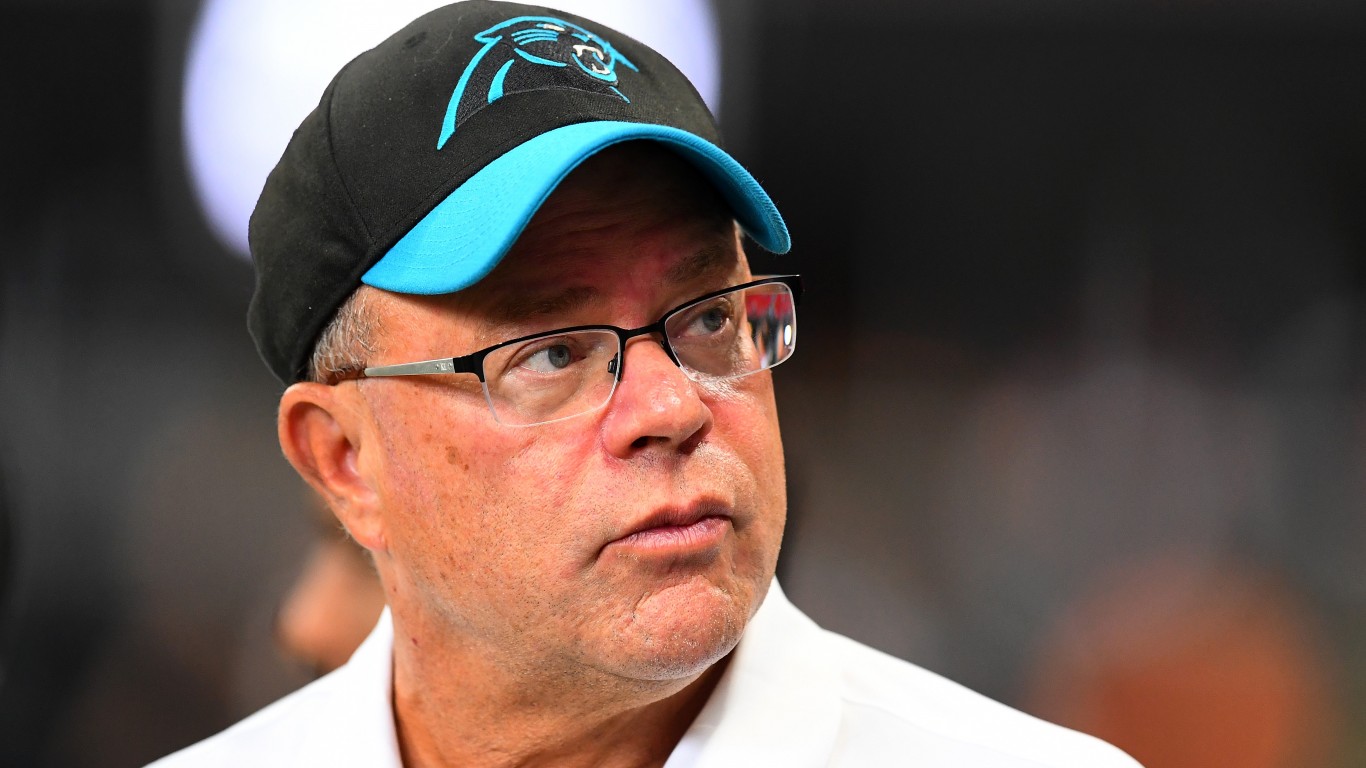
Billionaire David Tepper Trimmed Micron and Sold out of SanDisk. Here’s the New AI Stocks He’s Buying
David Tepper just posted a 32% return in six months riding memory chips, then quietly dumped his winners and moved the money somewhere most AI investors are completely ignoring.

David Tepper’s Appaloosa Management filed its Q2 2026 13F on August 14, 2026, and the disclosure told a specific story: the hedge fund manager whose portfolio returned 32% in the first half of 2026 on memory-chip makers spent the second quarter pulling chips off that table and reallocating the winnings deeper into the AI stack. He trimmed Micron Technology (NASDAQ:MU | MU Price Prediction) by 690,000 shares to 975,000, a position still valued at $1,125,432,750, and exited SanDisk (NASDAQ:SNDK) entirely, dumping all 281,250 shares.
Remember, this is a point-in-time snapshot as of June 30, 2026, disclosed roughly 45 days later. Positions today can differ. Still, it’s interesting to review Tepper’s portfolio as he’s been ahead of the curve on many AI bets.
What He Sold, and What He Kept Buying
The trim extended beyond memory. Tepper also cut fabless chip designers: Advanced Micro Devices was reduced by 23,900 shares to 197,500, and Qualcomm was cut by 248,613 shares to 250,000. AMD is up 140.19% year-to-date; Micron has run 240.65%; SanDisk has ripped 591.34%.
The proceeds moved largely to some of the biggest stocks in the AI trade. Tepper added 680,000 shares to Amazon, pushing that line to 5,000,000 shares worth $1,191,700,000, now his largest disclosed position. He added 322,500 shares to Taiwan Semiconductor Manufacturing, lifting it to 1,650,000 shares valued at $787,990,500, and topped up NVIDIA by 53,500 shares. He also opened a brand new stake in CoreWeave of 1,078,248 shares ($107,328,806).
The Power Trade Nobody Is Talking About
The most interesting leg has nothing to do with silicon. Tepper added 192,940 shares of Vistra (NYSE:VST), taking the position to 2,215,272 shares worth $351,408,597, and added 25,558 shares of NRG Energy (NYSE:NRG), lifting that stake to 1,760,000 shares valued at $257,065,600.
Independent power producers are the unglamorous, unloved corner of the AI trade. Vistra is down 7.91% year-to-date and NRG is down 19.95%, even as the chipmakers have surged. Yet management commentary makes the demand undeniable. Vistra just formed Helix Digital Infrastructure with NVIDIA, KKR, and Kuwait Investment Authority, and NRG committed $3.2 billion to a 1.2-gigawatt Texas facility for an investment-grade hyperscaler, targeting $500 million in annual EBITDA and a pre-tax unlevered IRR of 12% to 15%. The Department of Energy projects data centers could reach 12% of U.S. electrical demand by 2028.
The Thesis and the Take
This is a rotation within the AI theme. Tepper is stepping out of the volatile component makers, whose earnings live and die with pricing cycles (Micron already guided to a meaningful moderation in the rate of price increases), and into the layers that get paid regardless of which chipmaker wins. Amazon Web Services grew 37% year-over-year last quarter; TSMC fabricates for effectively everyone; CoreWeave’s $104 billion revenue backlog is booked; and every one of those workloads needs electricity.
For a retirement-focused investor, the utility trade looks compelling. Vistra trades at a forward P/E of 16 and NRG at 14, versus 25 for TSMC and 63 forward for the chip designers. Tepper was early on memory before the crowd arrived. Being early on the power that runs the memory is the same trade, one layer down.
Contact [email protected] for any questions or corrections.
Eric Bleeker, CFA has been investing for more than 20 years. He began his career working at Microsoft before joining Motley Fool, one of the largest publishers of financial research. In his 15 years at Motley Fool Eric served as the General Manager for Fool.com and led coverage in the Technology & Telecom sector. In addition, he was a featured columnist and has hosted dozens of investing seminars attended by more than a million total investors. Eric has more than 1,000 financial bylines to his name and has been featured in The Wall Street Journal, CNBC, Fox Business, and many other leading publications. He is currently focused on artificial intelligence investing and is a CFA Charterholoder.