Plug Power Falls 5%, Bloom Energy Sinks 8% With the 10-Year Yield Near a 52-Week High
Rising Treasury yields are dragging hydrogen and fuel cell stocks lower Tuesday, but the selling is hitting each company differently, and the pattern reveals something specific about what the market fears most right now.


Hydrogen and fuel cell stocks are sliding Tuesday morning as the 10-year Treasury note yield sits near the top of its 52-week range. Plug Power (NASDAQ:PLUG) stock is down 5% to $2.17.
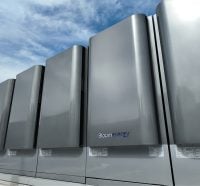
Meanwhile, Bloom Energy (NYSE:BE) stock is falling 8% to $214.44. FuelCell Energy (NASDAQ:FCEL) stock is holding relatively steady, as it’s only down 0.5% to $22.25.
Plug Power, Bloom Energy, and FuelCell Energy fund plants, manufacturing capacity, and long-duration projects, so higher discount rates compress their valuations while higher borrowing costs raise the price of buildout. Both effects push the same way.
The Yield Backdrop
The 10-year Treasury yield at 4.728% sits below the 52-week high of 4.747% and inside a 52-week range that starts at 3.947%. Rate-sensitive corners of the market feel this immediately, and Plug Power, Bloom Energy, and FuelCell Energy sit at the sharp end given cash burn and long project horizons.
A higher discount rate compresses the present value of profits that management projects years out. Higher borrowing costs raise the tab on capital these companies need to build capacity.
Plug Power’s Q2 2026 Cushion
Plug Power stock trails its peers on YTD gains despite a Q2 2026 report showing margin progress. The company’s revenue reached $178.3M, representing 2.5% year over year (YoY) growth from $168.8M. The company’s adjusted earnings were -$0.07, essentially in line.
The margin picture told a sharper story. The company’s adjusted EBITDA margin was negative 25.4%, and service margin reached 27%. CEO Jose Luis Crespo described a “meaningful step” in gross margin, approaching breakeven, and attributed it to improved service reliability and better utilization at hydrogen production plants.

On the earnings call, Crespo told Colin Rusch of Oppenheimer that better unit reliability, more efficient technician coverage, and recent service price adjustments drove the service margin gain. He told Eric Stine of Craig Hallum that refreshes for two major customers follow normal fleet renewal timing, with roughly 2,000 units expected in 2026 and further activity across the next three years. CFO Paul Middleton, replying to Manav Gupta of UBS, pointed to equipment volume growth, manufacturing cost reductions, and service reliability improvements as the main levers for the second half.
Rate exposure runs directly through liquidity at Plug Power. Middleton told Sameer Joshi of H.C. Wainwright that Plug Power’s convertible debt is long-dated and low cost, and that asset monetization and working capital improvements are supporting liquidity needs for the foreseeable future. A business running a negative 25.4% adjusted EBITDA margin that leans on asset monetization for cash faces more exposure to the price and availability of capital than a self-funding peer.
Peers Diverge: Bloom Energy and FuelCell Energy
Bloom Energy stock is falling 8% to $214.44 Tuesday, giving back a slice of a year to date (YTD) advance of 167% through Monday’s close. The company makes solid oxide fuel cell systems for onsite power and has become a meaningful supplier to AI data center operators, including major U.S. hyperscalers and neocloud and colocation operators.
FuelCell Energy stock is essentially flat, down 0.5% to $22.25, with a YTD gain of 206% through Monday. Its business designs and operates carbonate fuel cell systems for distributed power generation, with a generation portfolio of approximately 62.8 MW across U.S. sites under long-term power purchase agreements.
Selling in Bloom Energy is heaviest despite AI data center exposure, while selling in FuelCell Energy is minimal. This points to a rate event rather than a demand event.
Plug Power’s 16% YTD gain through Monday trails both of the company’s peers by wide margins. A smaller run-up means less air to give back in a derating. PLUG stock has not been rewarded for the operational progress the second quarter showed, and the low absolute share price means small dollar moves produce large percentage swings.
Meanwhile, the Global X Hydrogen ETF (NASDAQ:HYDR) is up 44% year to date through Monday’s close. This narrow thematic vehicle carries significant concentration risk. A single-theme hydrogen basket offers little protection when the entire theme derates on rates.
What to Watch
Investors could look for signs that the 10-year yield breaks above its 52-week high, as another leg higher can keep pressure on the group. Plug Power management has guided to positive gross margin in the second half, a key operational milestone for the stock. The material handling refresh cycle and its 2,000-unit 2026 target are the concrete milestones behind that path.
Plug Power’s bull case rests on margin progress, the 27% service margin, reduced cash burn, and long-dated, low-cost convertible debt. The bear case is real: a negative 25.4% adjusted EBITDA margin, continued losses, reliance on asset monetization for liquidity, and 2.5% revenue growth that is modest for a company still valued on future scale.
Given the low share price and volatility in Plug Power stock, your position sizes should stay moderate (we wrote a free playbook on speculating with just 5% of a portfolio, here: Small Stakes, Big Swings). Market action into the close and any further move in yields could set the tone for the hydrogen group through the rest of the week.
Contact [email protected] for any questions or corrections.
David Moadel is financial writer specializing in stocks, ETFs, options, precious metals, and Bitcoin. David has written well over 1,000 articles for leading online publications, helping investors understand markets, income strategies, and risk.His work has appeared in The Motley Fool, InvestorPlace, U.S. News & World Report, TipRanks, ValueWalk, Benzinga, Market Realist, TalkMarkets, Finmasters, 24/7 Wall St., and others.With a master’s degree in education, David has taught at the elementary, high school, and college levels. That teaching background shapes his writing style: clear, educational, and practical. David has also built a loyal social-media audience by providing trustworthy financial content on YouTube, X/Twitter, and StockTwits.