WSJ Report Sends Memory Stocks Down. SanDisk Down 9%, Micron Down 7%, Western Digital Down 5%
A Wall Street Journal report on hidden tech commitments just triggered a brutal midday selloff in memory stocks, and the sheer size of the drops exposes exactly how crowded this trade had become.


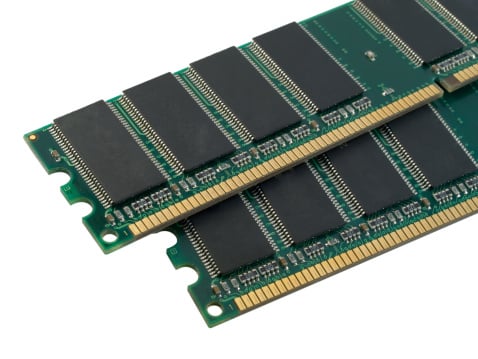
Shares of memory chip makers are selling off hard midday Tuesday as investors rotate out of AI hardware. SanDisk (NASDAQ:SNDK | SNDK Price Prediction) is down 9.1%, Micron Technology (NASDAQ:MU) is down 7.3%, and Western Digital (NASDAQ:WDC) is down 5.3% as of late morning trading.
WSJ Report on Hidden AI Commitments Sparks Rotation
The trigger is a Wall Street Journal analysis of tech-company footnotes showing that nine top tech companies had some $3 trillion of off-balance-sheet commitments mostly related to AI, obligations that are growing faster than traditional “capex,” which totaled about $600 billion over the past year they reported. The WSJ noted those commitments are about triple what the companies owe under their outstanding leases and long-term borrowings.
The report landed at a fragile moment. Anthropic told investors over the weekend that its annualized revenue run rate hit $65 billion at the end of July, while OpenAI has said its ARR recently hit $40 billion. Both are growing fast, but both came in below numbers that had been circulating privately. Reuters separately reported Anthropic is guiding to 2028 revenue of $190 billion to $200 billion, again short of the most bullish whisper figures. When frontier-lab revenue looks softer than expected and tech’s forward AI obligations look larger than expected, the AI hardware trade gets hit first.
Rates Add Another Weight
Long rates are compounding the pressure. The 10-year Treasury yield sits near 4.7%, in the 96th percentile of its trailing 12-month range, and the 30-Year Treasury hit a 19-year high today. Higher discount rates disproportionately hit capital-intensive, high-multiple semiconductor names. The broader market backdrop remains calm. The VIX sits near 15, still in the low-volatility range, which frames today’s action as a sector rotation rather than a macro flush.
How Extended the Trade Had Become
The magnitude of the drops reflects how far these stocks had already run into Tuesday. SanDisk entered the session up 44% on the week and 653% year to date, while Micron had climbed 18% on the week and 255% YTD, and Western Digital was up 22% on the week and 211% YTD.
There is no memory-specific bad news today, and fundamentals from the last earnings cycle were strong across the group. Per Micron’s most recent SEC filings, the company guided fiscal Q4 revenue to $50 billion ± $1 billion and gross margin to approximately 86%, with CEO Sanjay Mehrotra saying “DRAM and NAND industry demand continues to significantly exceed industry supply”. Today’s move is profit-taking on the most crowded corner of AI hardware, and riding a run like this without a plan for the exit is exactly the question we tackled in a free bubble survivor’s handbook.
Peers and Positioning
The pattern is textbook AI-hardware risk-off. Money is rotating into healthcare, consumer defensive, utilities, and energy, while technology lags. Prediction markets are already pricing in continued near-term weakness in Micron, with Polymarket assigning a 97.5% probability that MU finishes Tuesday lower and only a 51.5% probability that it closes above $940 by month-end. On the retail side, Reddit sentiment on Micron has already flipped back to Very Bullish, with the top-engaged post framing the selloff as institutional accumulation.
What to Watch
Prices are still moving intraday. I would watch whether SanDisk and Micron stabilize into the close or accelerate lower on volume, and whether analysts push back on the WSJ read-through this afternoon. Micron’s next earnings report will be the cleanest read on whether AI memory demand durability still supports these multiples.
Contact [email protected] for any questions or corrections.
Eric Bleeker, CFA has been investing for more than 20 years. He began his career working at Microsoft before joining Motley Fool, one of the largest publishers of financial research. In his 15 years at Motley Fool Eric served as the General Manager for Fool.com and led coverage in the Technology & Telecom sector. In addition, he was a featured columnist and has hosted dozens of investing seminars attended by more than a million total investors. Eric has more than 1,000 financial bylines to his name and has been featured in The Wall Street Journal, CNBC, Fox Business, and many other leading publications. He is currently focused on artificial intelligence investing and is a CFA Charterholoder.