Walmart Just Posted Its Weakest US Sales Growth in Six Years: 2 Dividend Kings Built for a Squeezed Consumer
Walmart just flashed a consumer stress signal that income investors cannot afford to ignore, and two Dividend Kings with decades of unbroken payout growth may be the only safe harbor left for retirees watching their portfolio checks.

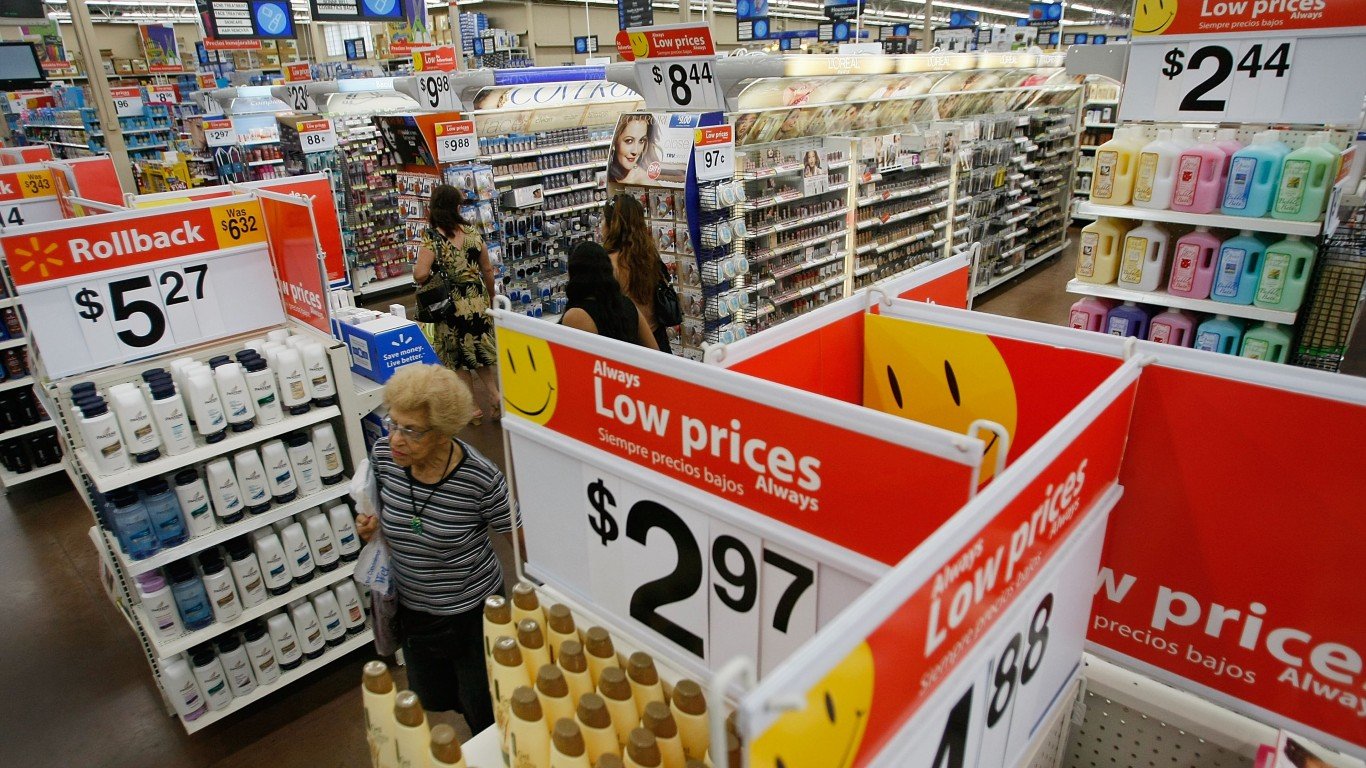
The signal from the country’s biggest retailer just got loud. Walmart (NYSE:WMT | WMT Price Prediction) reported Q2 US comparable sales growth of 2.6% versus the 3.5% Wall Street expected, the weakest US sales growth in over six years, and shares are down 8.77% on the session to $104.28. When the everyday-low-price leader tells you the consumer is stretching, retirees living on portfolio income should listen. Two Dividend Kings, Coca-Cola and Procter & Gamble, are built to keep sending checks while shoppers trade down.
What the Walmart Report Actually Signals About the US Consumer
Don’t read the headline miss as a broken business. Walmart’s total revenue was $187.94 billion versus $186.77 billion expected, with adjusted EPS of 81 cents and total revenue up 5.9%. Management actually raised full-year guidance to net sales growth of 4% to 5% (from 3.5% to 4.5%) and adjusted EPS to $2.80 to $2.87 (from $2.75 to $2.85). A material chunk of the US comp miss was structural, not cyclical: a 0.8 percentage point headwind from health and wellness as price caps on certain drugs took effect. On top of that, CFO John David Rainey pointed to just over $2 billion of incremental cost headwinds from higher fuel prices this year, and Walmart is eligible for roughly $2.9 billion in tariff refunds that it plans to plow back into lower shelf prices.
The read for income investors is straightforward. Fuel costs are eating household budgets, price caps are pulling reported comps down, and Walmart is choosing to reinvest windfalls into price rather than let them fall to the bottom line. That is consistent with what University of Michigan is showing: consumer sentiment sits at 49.5 in June 2026, well below the 60 recessionary threshold flagged by the source. Walmart itself only yields 0.83% at these levels, so it isn’t a natural income holding. But its message frames the setup for the two staples heavyweights below.
Coca-Cola: The Buffett-Owned Cash Machine Built for Trade-Down
Coca-Cola (NYSE:KO) trades at with a dividend yield of and a $0.53 quarterly payment, or an annualized forward dividend of $2.12. The company most recently stepped the payout from $0.51 in the 2025 cycle to $0.53 in the 2026 cycle, extending more than six decades of consecutive annual increases.

Dividend safety read. Trailing EPS of $3.33 comfortably covers the $2.08 dividend per share. Coca-Cola threw off approximately $6.9 billion in free cash flow in the first half, up from the prior year, and management raised the full-year 2026 FCF target to roughly $12.4 billion. Net debt leverage is 1.4 times EBITDA, below the company’s own 2 to 2.5 times target range, so the balance sheet has plenty of slack. Return on equity runs at 42%, and operating margin expanded to 34.9% from 34.1% in Q2. Regarding ownership: per Berkshire Hathaway’s 13F as of 6/30/2026, filed 8/14/2026, Berkshire disclosed 400,000,000 KO shares, about 10.9% of its disclosed portfolio and roughly 9.3% of Coca-Cola’s class. That’s a point-in-time filing and is not necessarily the current position.
Bull case for income. KO is designed for exactly the environment Walmart described. When shoppers trade down, they don’t quit soft drinks; they buy the mini cans and multipack entry price points Coca-Cola is deliberately merchandising. Volume grew 5% in Q2, Coca-Cola Zero Sugar volume grew 16%, and Trademark Coca-Cola posted its strongest volume growth in 17 years excluding COVID recovery. Guidance now calls for comparable EPS growth of 9% to 10% for the year. Investors have already noticed: shares are up 30.98% year to date.
The risk. The IRS tax dispute now sitting at the 11th Circuit is a real overhang. Management says it expects to prevail, but a negative decision would force a large cash settlement that could pressure buyback capacity even if the dividend itself is untouchable.
Procter & Gamble: 70 Straight Years of Dividend Hikes and Counting
Procter & Gamble (NYSE:PG) trades at and yields , with a quarterly dividend of $1.0885 and an annualized forward payout of $4.354. Per the Q4 filing, this is P&G’s 70th consecutive year of dividend increases and 136th consecutive year of dividend payments. That is Dividend King status without any asterisks.

Dividend safety read. Fiscal 2026 core EPS came in at $6.89 against dividends per share of $4.259, so coverage is comfortable. Cash generation is the real story: operating cash flow of $19.56 billion and free cash flow of $15.84 billion (+12.74%) for the year, with adjusted free cash flow productivity of 100% for fiscal 2026 and 133% in Q4. Management plans to return $15 billion of cash to shareholders in fiscal 2027, over $10 billion in dividends and approximately $5 billion in share repurchases. Interest coverage is 10.66x and return on equity is 30.3%.
Bull case for income. P&G’s portfolio is exactly the kind of daily-use consumable that resists trade-down. Beauty grew 6% in Q4, and Tide Original Liquid, following a product upgrade at the same price, moved from decline to high single-digit growth. Shares trade at 22 times trailing earnings, roughly in line with a forward multiple of about 21, and are down 6.21% over the past year while KO ran higher. For income buyers rotating out of hot names into defensive cash flow, that relative laggard status is an opportunity for patient income buyers.
The risk. Fiscal 2027 embeds an approximately $1 billion after-tax commodity, energy, and transportation headwind, and management explicitly warned that first-quarter EPS could be down 5% or more versus prior year. Guidance for core EPS growth of 0% to 3% leaves no room for another shock.
Bottom Line for Retirement Income
Walmart’s report is the clearest US consumer-stress signal in years, and the market is repricing exposure to discretionary demand in real time. Coca-Cola and Procter & Gamble sell what stretched households still buy every week, they generate more cash than they need to fund the dividend, and their balance sheets are ready for a slower spending environment. Between KO’s 2.39% yield paired with double-digit EPS growth and PG’s 2.97% yield backed by a 70-year increase streak, retirees get the two things that matter most when the consumer wobbles: a growing check and the balance sheet to keep sending it.
Contact [email protected] for any questions or corrections.
Don Lair writes about options income, dividend strategy, and the kind of boring-but-durable investing that actually funds retirement. He's the founder of FITools.com, an independent contributor to 24/7 Wall St., and a former writer for The Motley Fool.