The Bear Case on Agents and Compute is Wrong So I Buy More Nvidia
Bears insist smarter AI agents will shrink the GPU compute bill, and that argument sounds reasonable until you do the math on what an agent actually burns per task.

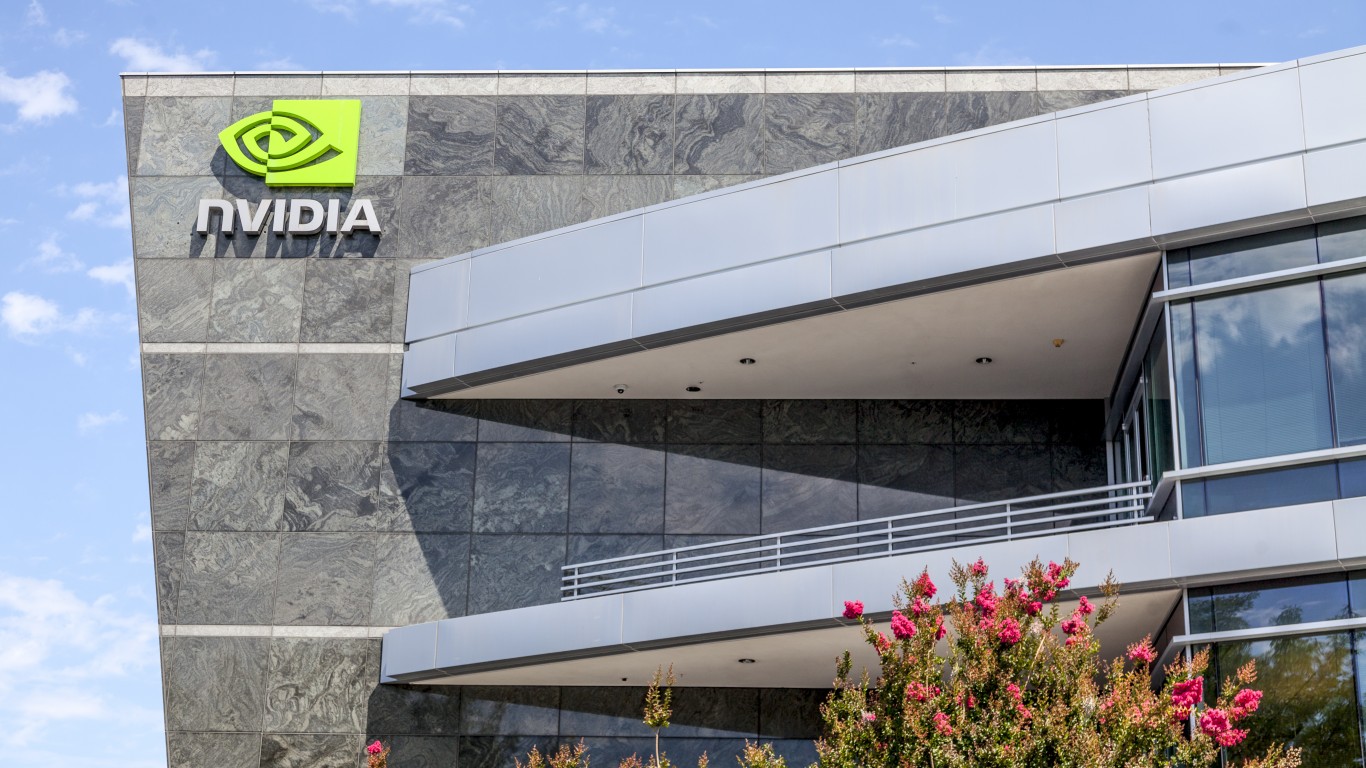
I keep hitting the buy button on NVIDIA (NASDAQ:NVDA | NVDA Price Prediction), and the loudest bear argument I hear against it is exactly what pulled me back in this month. The claim goes like this: cheaper models and smarter agents will shrink the compute bill. My read of the data lands somewhere else entirely. Agents multiply compute demand across every workload they touch.
A one-shot chatbot answer burns tokens once. An agent that plans, calls APIs, verifies code, and runs self-correction loops burns 10x to 100x more tokens per task. Jensen Huang put it plainly on the last call: “Demand has gone parabolic. The reason is simple. Agentic AI has arrived.” That is my thesis in one sentence, and NVIDIA’s Q1 FY27 numbers back it up.
Numbers That Keep Me Adding
Data Center revenue reached $75.246 billion, up 92% year over year, and Networking alone climbed 199% as InfiniBand and Spectrum-X shipped with every rack. Total revenue hit $81.61 billion, up 85.23%, and management guided Q2 to $91.0 billion at a 75.0% non-GAAP gross margin. That was the fourth consecutive quarter of beating expectations.
Free cash flow of $48.554 billion in a single quarter is what a retirement-focused investor should care about. The board raised the dividend from $0.01 to $0.25 per share and authorized an additional $80.0 billion in buybacks. The balance sheet carries debt-to-equity of 0.073 and interest coverage of 503x, with return on equity of 101.5%. This is a compounder in the classic sense.
Why Not AMD or Broadcom
Most readers reach first for Advanced Micro Devices (NASDAQ:AMD) or Broadcom (NASDAQ:AVGO). I pass on both. NVIDIA’s Data Center Compute line by itself was $60.400 billion in a single quarter, dwarfing AMD’s data center run rate. Broadcom’s custom ASIC pitch is real, and I respect it, but Jensen described NVIDIA as “the only platform that runs in every cloud, powers every frontier and open source model, and scales everywhere AI is produced”. Software rentability across every hyperscaler and every sovereign is a moat custom silicon does not match. Forward P/E of 25 with a PEG of 0.591 looks reasonable for a business growing revenue 85% year over year.
Risk I Refuse to Wave Away
The number that could actually bite is $119.0 billion in supply-related commitments. If demand softens, that becomes inventory risk. China is the second overhang: NVIDIA shipped no H20 compute products to China in Q1 and excluded China Data Center compute from the outlook. I hold anyway because the visibility is there. Management pointed to $1 trillion in Blackwell and Rubin revenue from 2025 through calendar 2027, and hyperscale capex is forecast to exceed $1 trillion in 2027. Vera Rubin production begins in Q3, and Huang expects NVIDIA to be “supply constrained throughout the entire life of Vera Rubin”.
Why the Buy Button Stays Active
The stock is up 22.87% over the last year and 935.04% over five years. It sits below its 52-week high of $236.26, and it just gave back 4.64% last week. Every agent spun up by every enterprise on the planet routes back to a GPU, and Jensen framed the arithmetic of the decade in one sentence: “In the AI era, compute capacity is revenue and profits.” That is the sentence that keeps me buying.
Contact [email protected] for any questions or corrections.
Alex Sirois is a financial writer with experience spanning both retail and institutional investing. He has written for InvestorPlace and held roles at BNY Mellon and Bernstein, giving him a perspective that bridges Main Street portfolios and Wall Street analysis.
Alex holds an MBA from George Washington University and has built his career across multiple industries, including e-commerce, education, and translation — a breadth of experience that informs how he breaks down complex financial topics for everyday investors. His writing is conversational, actionable, and grounded in long-term, buy-and-hold investing principles.
At 247 Wall St., Alex focuses on delivering analysis that is both accessible and useful, with a clear emphasis on helping readers make more informed decisions with their money.