Google TPU Volume Could Triple to 8.8 Million by 2027
Google is quietly betting its entire cloud future on a chip most investors have never heard of, and a new forecast suggests the volume ramp coming by 2027 is far larger than anyone expected.

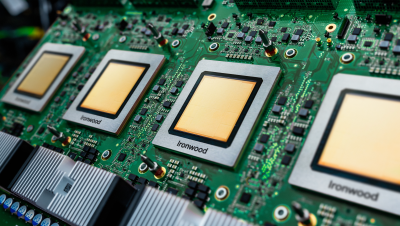
Alphabet (NASDAQ:GOOG | GOOG Price Prediction) has moved from quietly designing its own AI chips to openly staking its cloud roadmap on them. A recent forecast from GF Securities Brokerage now suggests Google’s next-generation Tensor Processing Units could see shipment volumes more than triple by 2027, a scale-up that would reshape how investors think about the AI compute stack.

Tripling TPU Shipments by 2027
Based on the brokerage’s build, TPU shipments could rise from 2.76 million units in 2024 to 2.854 million in 2025, then accelerate to 4.504 million in 2026 and 8.84 million in 2027. That implies roughly 3.2 times growth over three years, with the steepest jump landing in the final year of the projection.
The curve is driven by a generational transition. v7 (Ghostfish) begins contributing, followed by higher volumes of v8AX (Sunfish/Hellcat) and v8x (Zebrafish/Maddog). The shift from older generations to these nodes is meant to deliver better performance-per-watt and more scalable capacity for both training and inference.
Why Custom Silicon Matters for Google
Running search, ads, YouTube, and Cloud at Alphabet’s scale makes owning the chip design a durable cost lever. On the Q2 call, management said it was “very pleased with our TPU roadmap progress and the value in terms of performance and the edge it gives.” Alphabet began recognizing revenue from TPU system sales delivered to customer data centers for the first time in Q2 2026, with the vast majority of revenue from those agreements expected in 2027. Demand context is already extreme: Google Cloud backlog hit $514 billion, and Gemini models now process 22 billion API tokens per minute.

Capex Is Already Reflecting the Buildout
Q2 2026 capex hit $44.9 billion, up 100.14% year over year, with roughly 60% flowing into servers and 40% into data centers and networking. CEO Sundar Pichai told investors 2026 capex would land at $175 to $185 billion. To fund it, Alphabet raised roughly $70 billion in combined equity and debt, pushed long-term debt from $46.5 billion to $98.2 billion, and suspended the stock buyback.
Risks and What to Watch
This is one analyst’s model and Google has not itself committed to those numbers, though other estimates also point to multi-million-unit growth into 2027 and 2028. Pichai flagged a “supply constrained environment” and said Alphabet will lean on third-party capacity in Q3 2026 while its own capacity comes online. Free cash flow already turned to negative $5.9 billion, and interest expense rose nearly 5x year over year. With GOOG up 67.17% over the last year, the stock is pricing in execution. If Alphabet masters the supply chain, its vertical integration and data center head start could make TPUs a genuine surprise through 2027 (and the power, cooling, and networking suppliers riding the same buildout are the subject of a free report we put together here: 7 Stocks Powering the AI Boom (That Aren’t Chipmakers)).
Contact [email protected] for any questions or corrections.
After two decades of patrolling the dark corners of suburbia as a police officer, Rich Duprey hung up his badge and gun to begin writing full time about stocks and investing. For the past 20 years he’s been cruising the markets looking for companies to lock up as long-term holdings in a portfolio while writing extensively on the broad sectors of consumer goods, technology, and industrials. Because his experience isn’t from the typical financial analyst track, Rich is able to break down complex topics into understandable and useful action points for the average investor. His writings have appeared on The Motley Fool, InvestorPlace, Yahoo! Finance, and Money Morning. He has been featured in both U.S. and international publications, including MarketWatch, Financial Times, Forbes, Fast Company, and USA Today.